

In the late winter days, in Lao Chai village, Y Ty commune, the vibrant yellow of wild sunflowers stretches across the landscape, carrying with it stories and aspirations for change from the Ha Nhi community living there.
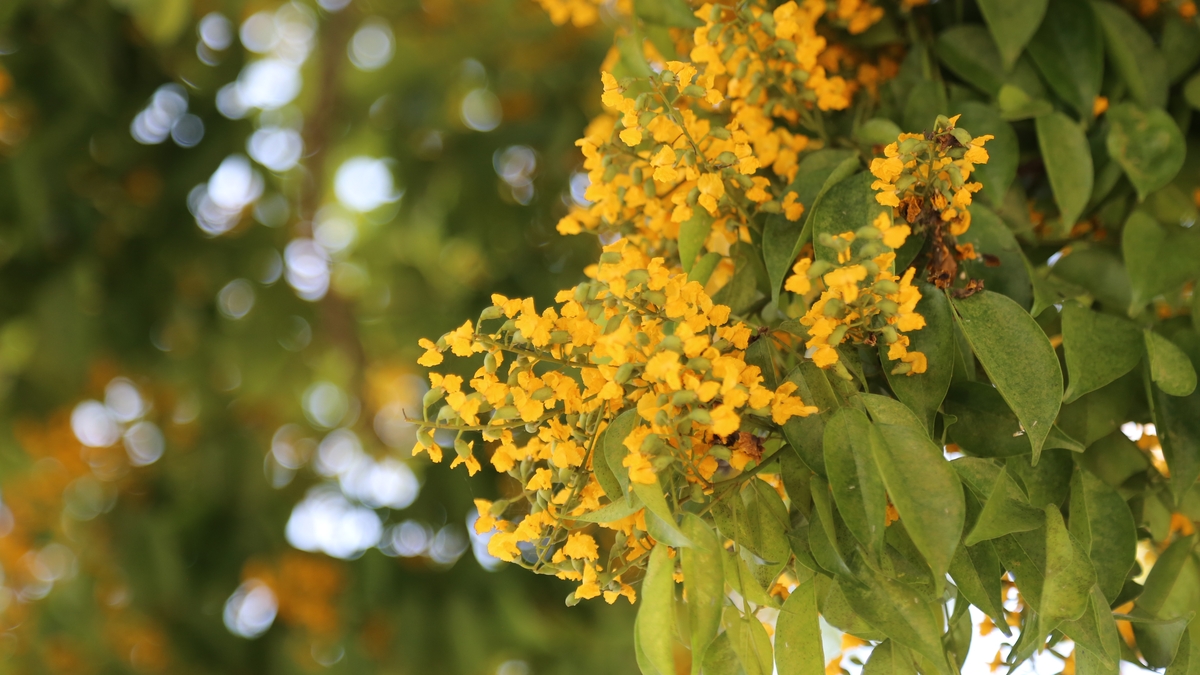
These days, visitors to Lao Chai village are delighted to stroll along a nearly 2-kilometer-long road lined with vibrant yellow wild sunflowers, stretching from the Thien Sinh bridge intersection to near the village center. Currently in full bloom, the sunflowers display their golden hues under the sun, creating an impressive highlight for tourism in Y Ty.
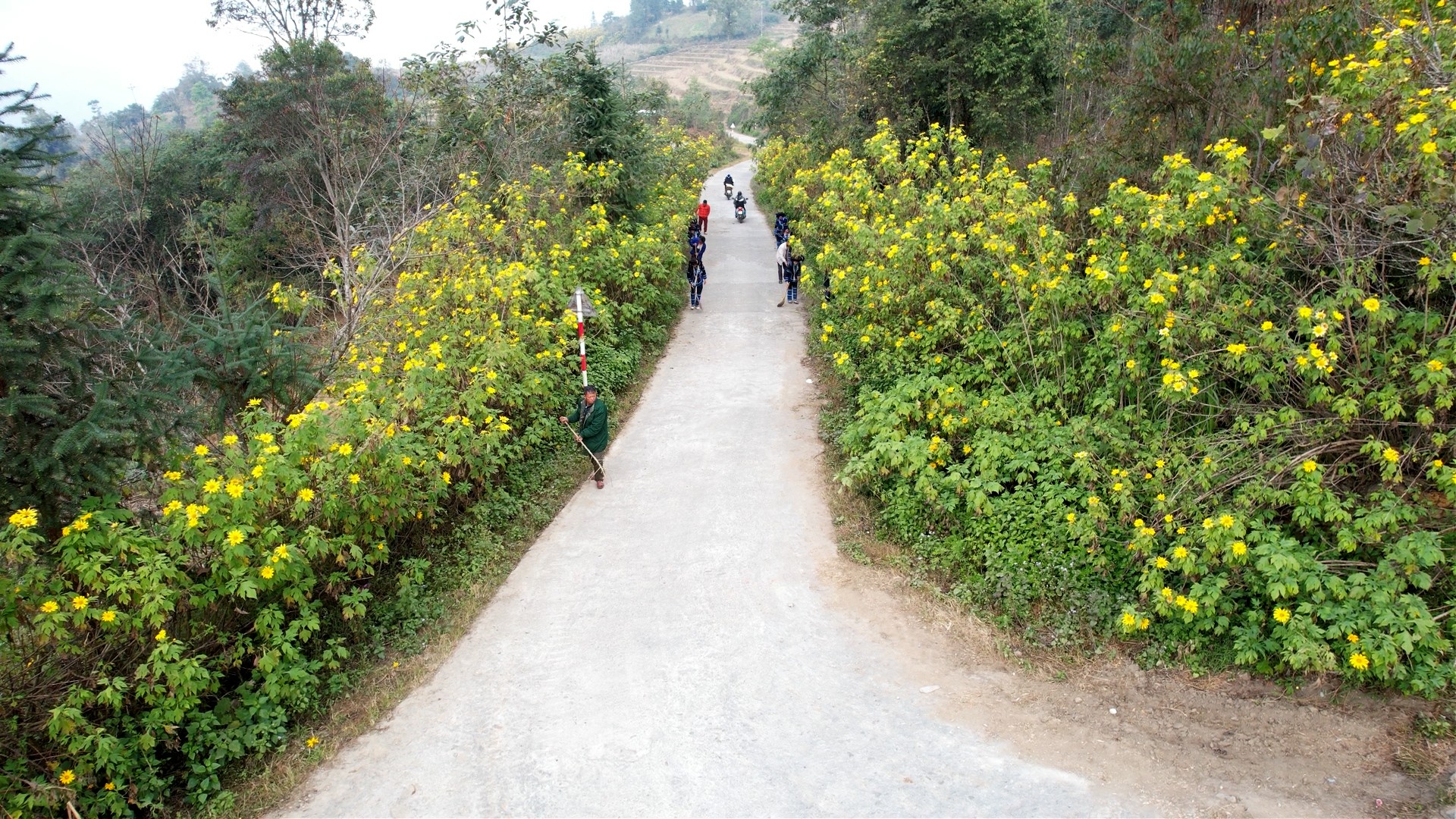
Ms. Phu Ca Cho, a resident of Lao Chai, enthusiastically introduced: "The villagers are very proud of this flower-lined road. Before, there were only a few wildflowers growing along it, not a whole road like it is now. Since we started planting and caring for the flowers together, we are very happy and feel that our village is more beautiful."
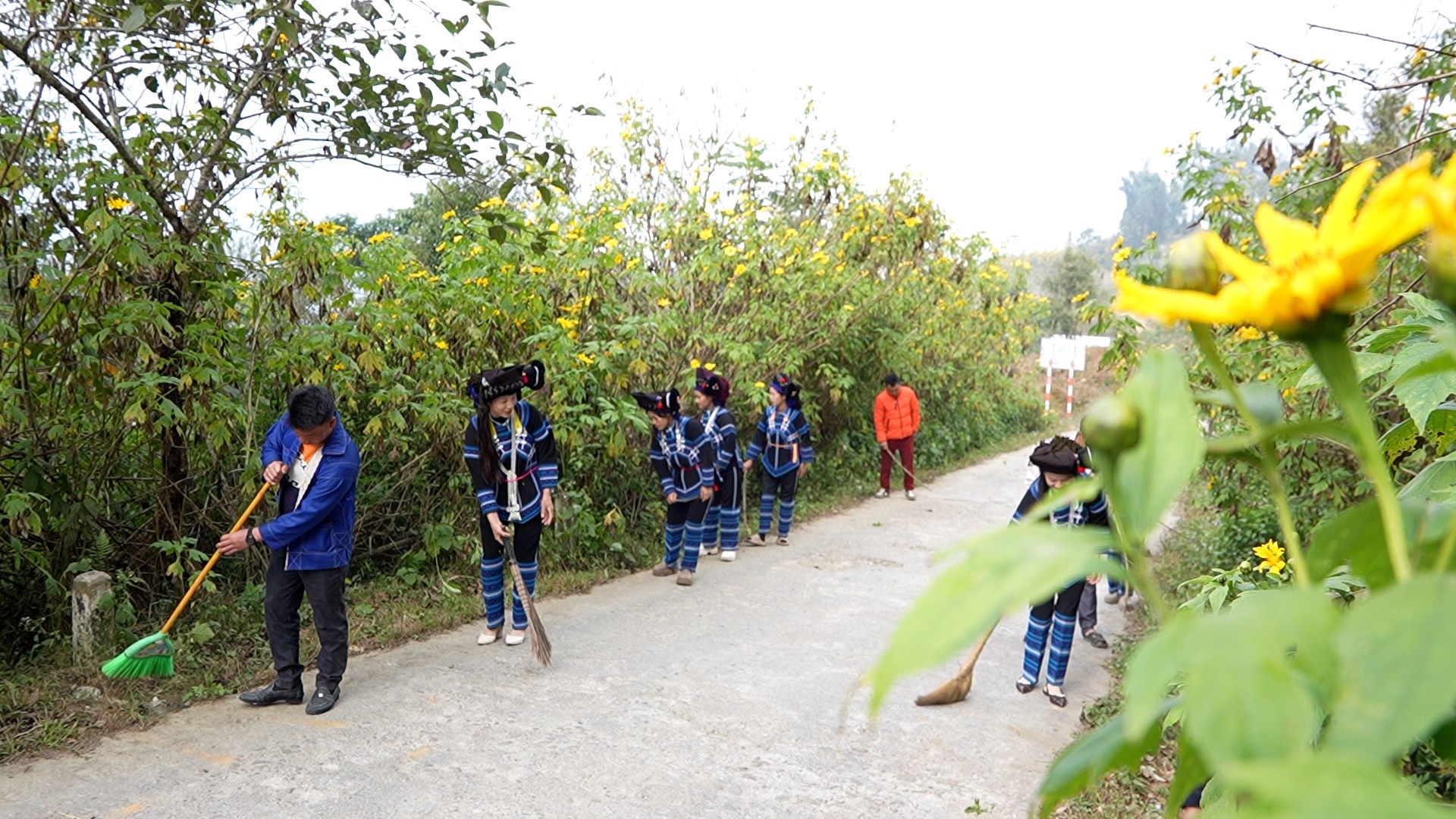
According to Mr. Chu Che Xa, Secretary of the Lao Chai village Party branch, the wild sunflower road was planted in 2018, when he was still the village head. At that time, the trend of taking photos with wild sunflowers was spreading in many localities.
Through his research, he realized that wild sunflowers are easy to grow, fast-growing, and bloom precisely in late autumn and early winter – the time when Y Tý is crowded with tourists. From there, he, along with other Party members and respected figures in the village, mobilized the villagers to work together to create this flower-lined road.
“Initially, the villagers weren’t really interested in creating a landscape for tourism. But we were determined to do it, hoping to bring a new look to the village and work towards longer-term goals,” Mr. Xa recalled.
Inspired by the wild sunflower-lined road, this creates additional opportunities for community-based tourism in Lao Chai.
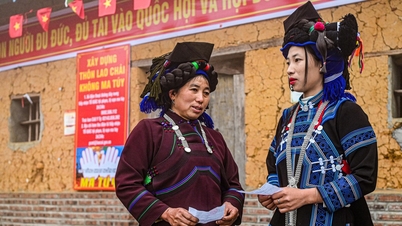
In Lao Chai village, nearly 100% of the residents are Ha Nhi people, living harmoniously, diligently, and deeply connected to the mountains and forests. Their houses, built with yellow clay walls and moss-covered roofs, stand silently in the valley, as sturdy as the character of the people here. For Mr. Chu Che Xa, preserving these traditional houses is a way to create a unique identity to attract tourists.
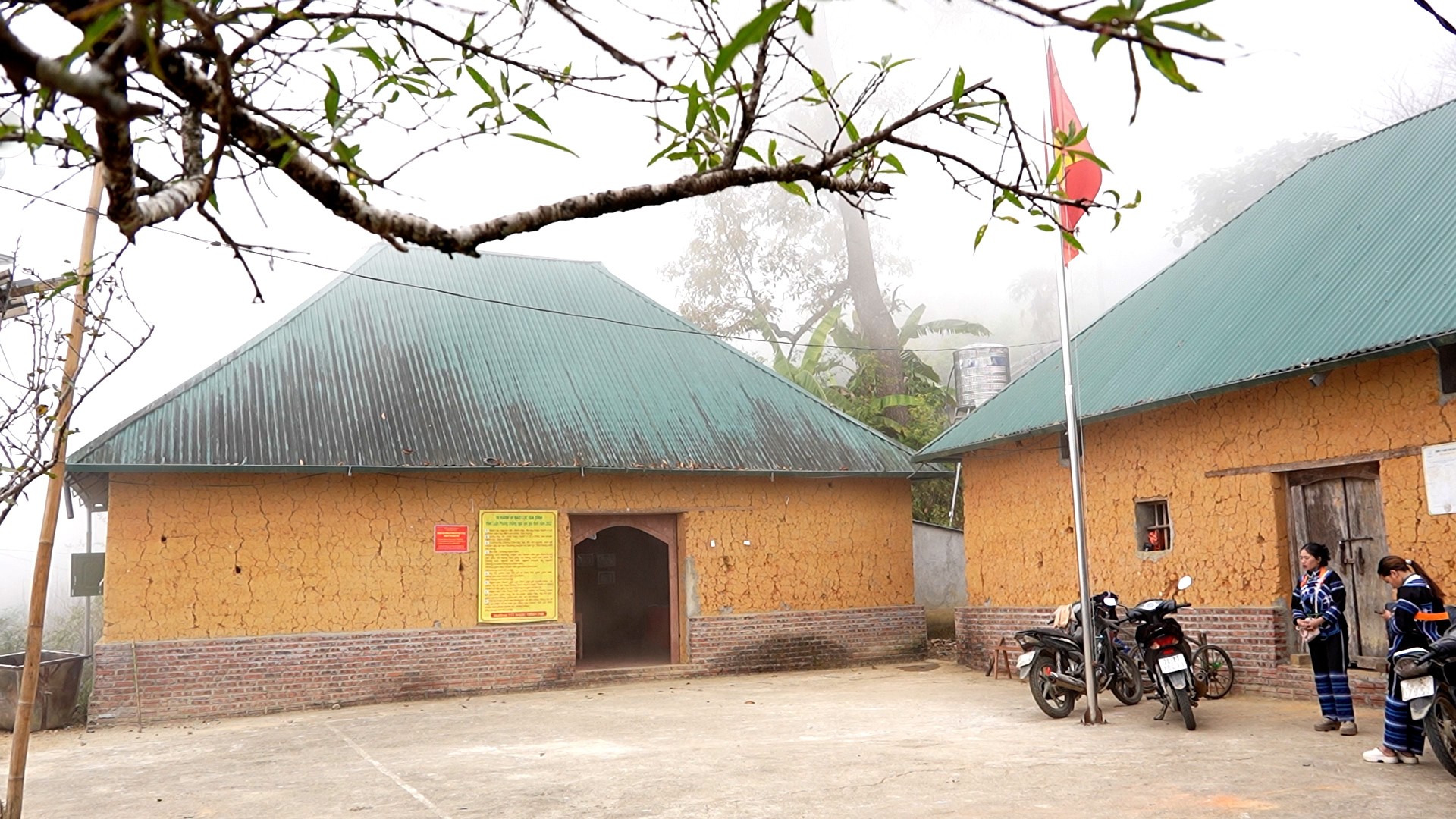
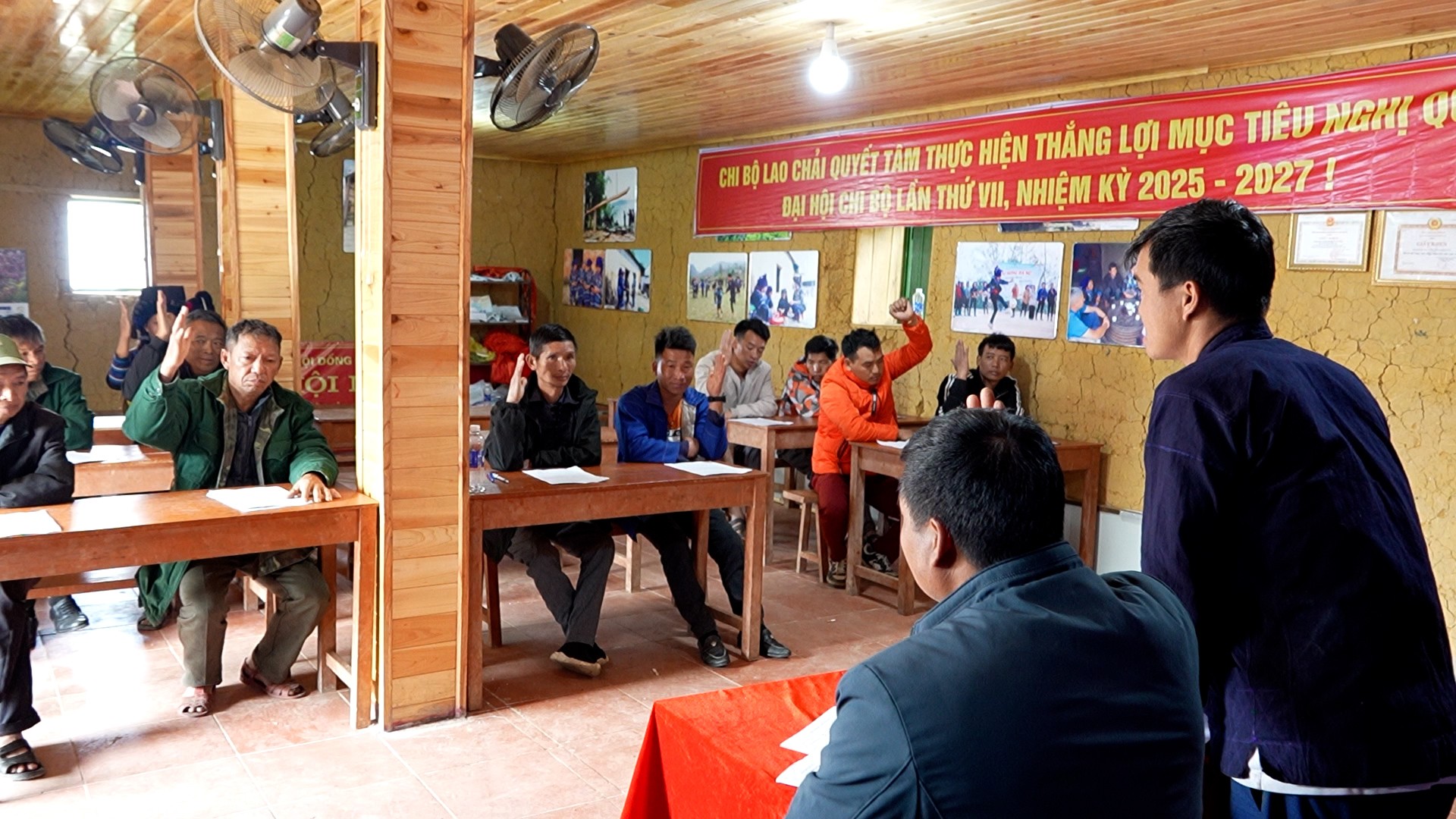
In 2019, Mr. Xa and his fellow villagers renovated the village's cultural center. The building was constructed in the traditional architecture of the Ha Nhi people: a square house with a four-tiered roof and thick earthen walls nearly 50 cm thick. Inside, dozens of photographs and paintings showcasing the cultural identity of the Ha Nhi ethnic group are displayed. The cultural center serves as both a community gathering place and a venue for welcoming tourists and organizing cultural and artistic activities. Nearby is a park – a space for traditional festivals. The villagers worked together to build stone embankments, maintain environmental hygiene, plant trees and flowers, and beautify the shared space.
In 2018, when the flower-lined road began to take shape, Chu Che Xa's Xa Ha Nhi homestay was established, becoming the first accommodation facility in the village. He renovated his family's old rammed-earth house into guest rooms, then built six more private rooms and a dormitory. As a pioneer, Mr. Xa hopes to open up a new direction for community-based tourism development in Lao Chai.
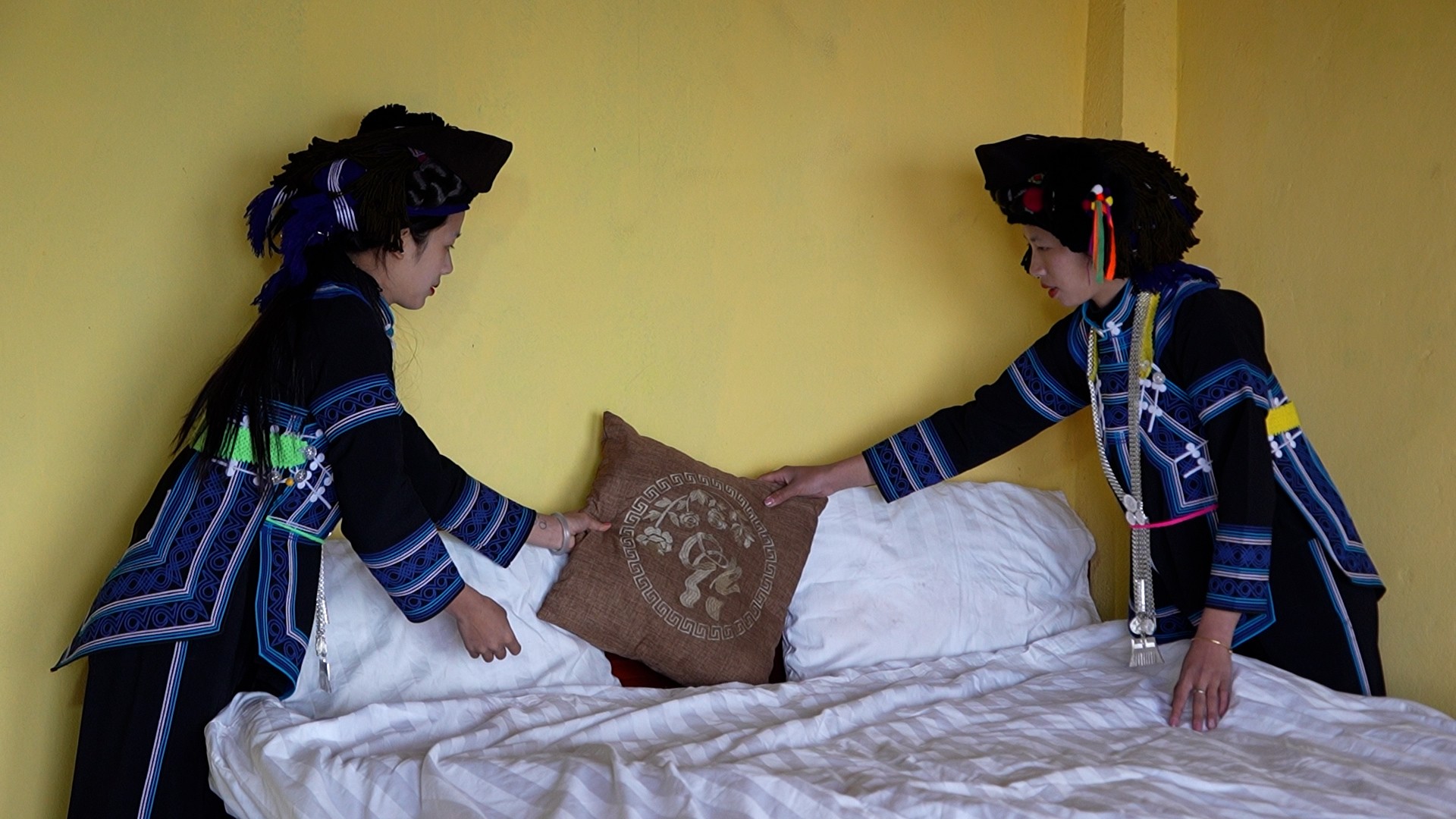
To date, Lao Chai village has two operating homestays; established a performing arts group to serve tourists; and five households have received support to build community tourism models from the National Target Program. Recently, the Y Ty Tourism Club was established, and Lao Chai also has five members.
“Thanks to tourism, the lives of the villagers are becoming more prosperous. Out of 138 households in the village, only about 30 are now poor. More importantly, the Ha Nhi youth have become much more confident and assertive,” – Party Secretary Chu Che Xa happily shared.
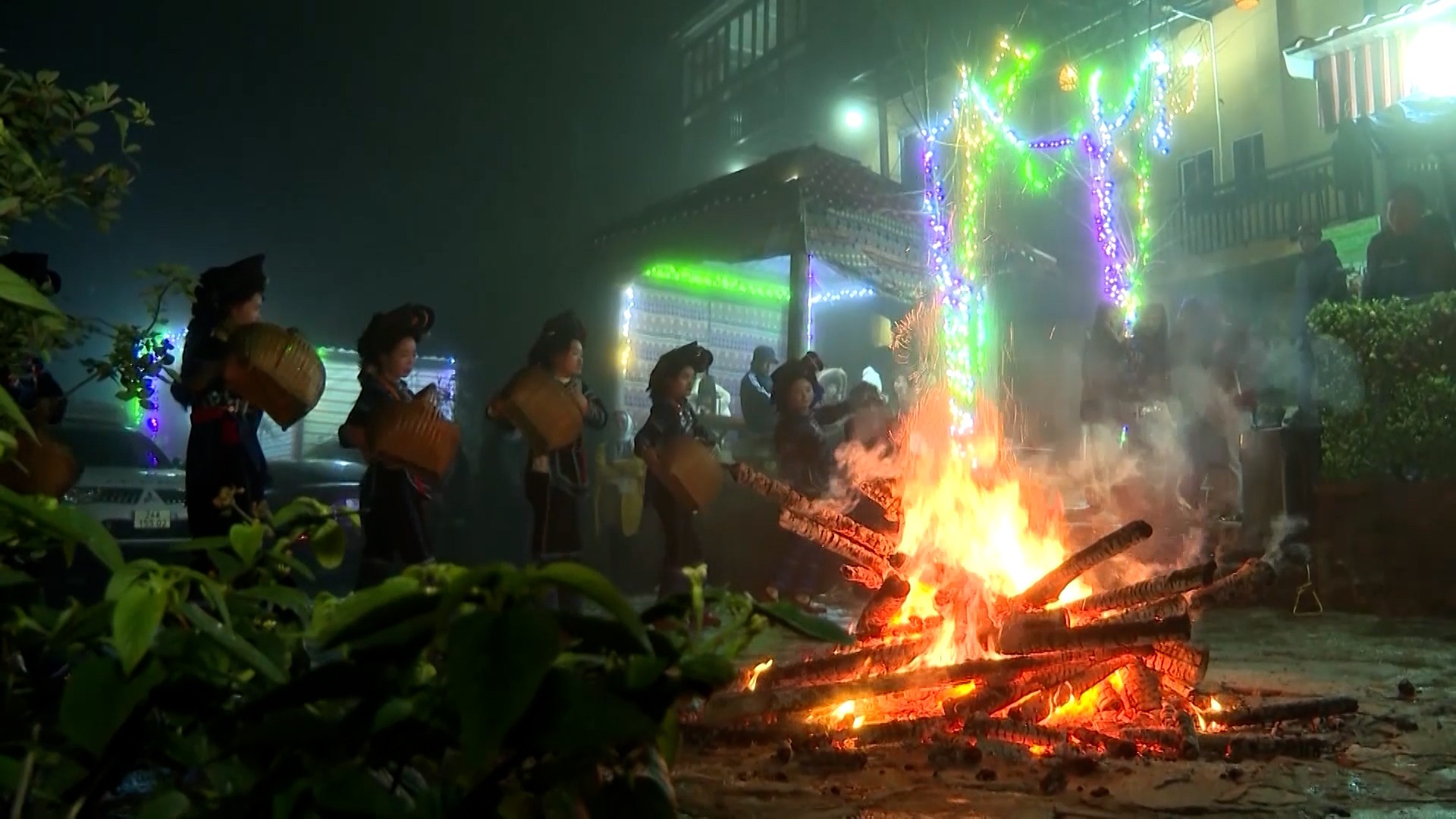
Lao Chai – an ancient village of the Ha Nhi ethnic group on the border of Y Ty – is transforming day by day. Amidst the peaceful traditional houses, a new life is gradually taking shape, more civilized and modern, yet still preserving its traditional cultural identity. This transformation begins with simple yet meaningful ideas, such as the flower-lined road.
Source: https://baolaocai.vn/duong-hoa-mang-khat-vong-doi-thay-post889810.html
![[Photo] Mrs. Ngo Phuong Ly meets and exchanges views with Mrs. Peng Li Yuan](https://vphoto.vietnam.vn/thumb/1200x675/vietnam/resource/IMAGE/2026/04/16/1776277858080_phu-nhan-1-jpg.webp)
![[Image] Bridges and roads connecting the eastern part of Ho Chi Minh City](https://vphoto.vietnam.vn/thumb/1200x675/vietnam/resource/IMAGE/2026/04/16/1776328595108_ndo_br_bh-vt5-jpg.webp)



















































Comment (0)