

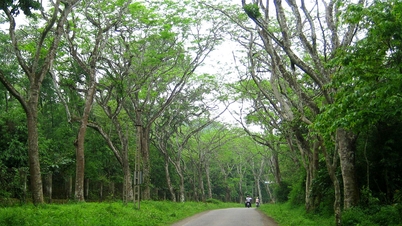
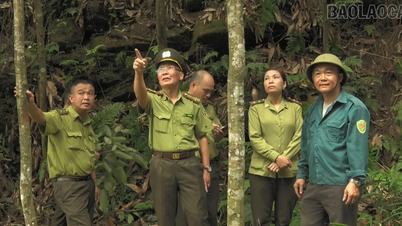
During the dry season in Púng Luông commune, strong winds from the mountain streams create a constant red alert risk of forest fires. However, beneath the vast pine forests of Nả Háng Tâu village, the forest protection self-management team maintains its patrol work in an orderly and rigorous manner.
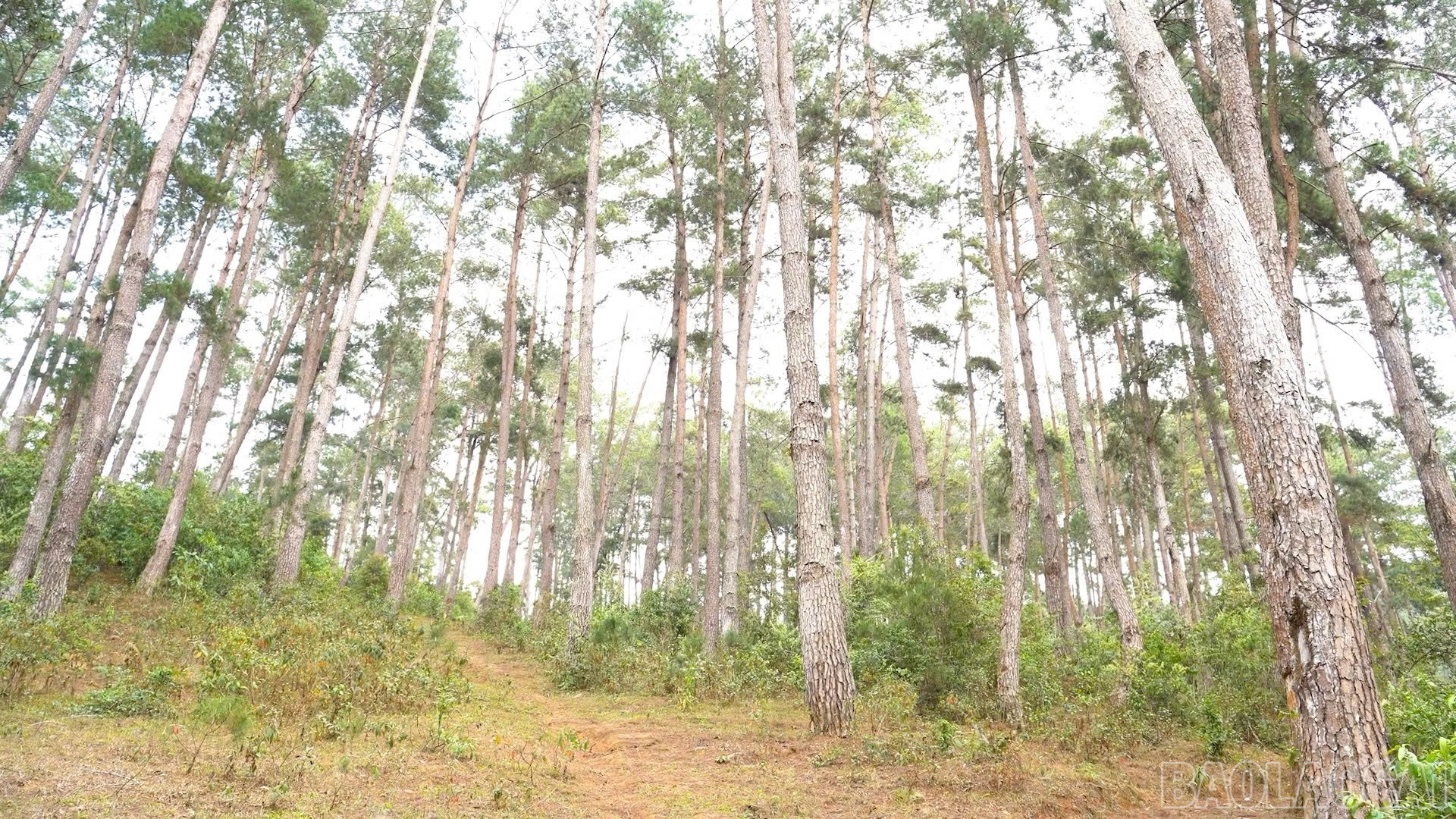
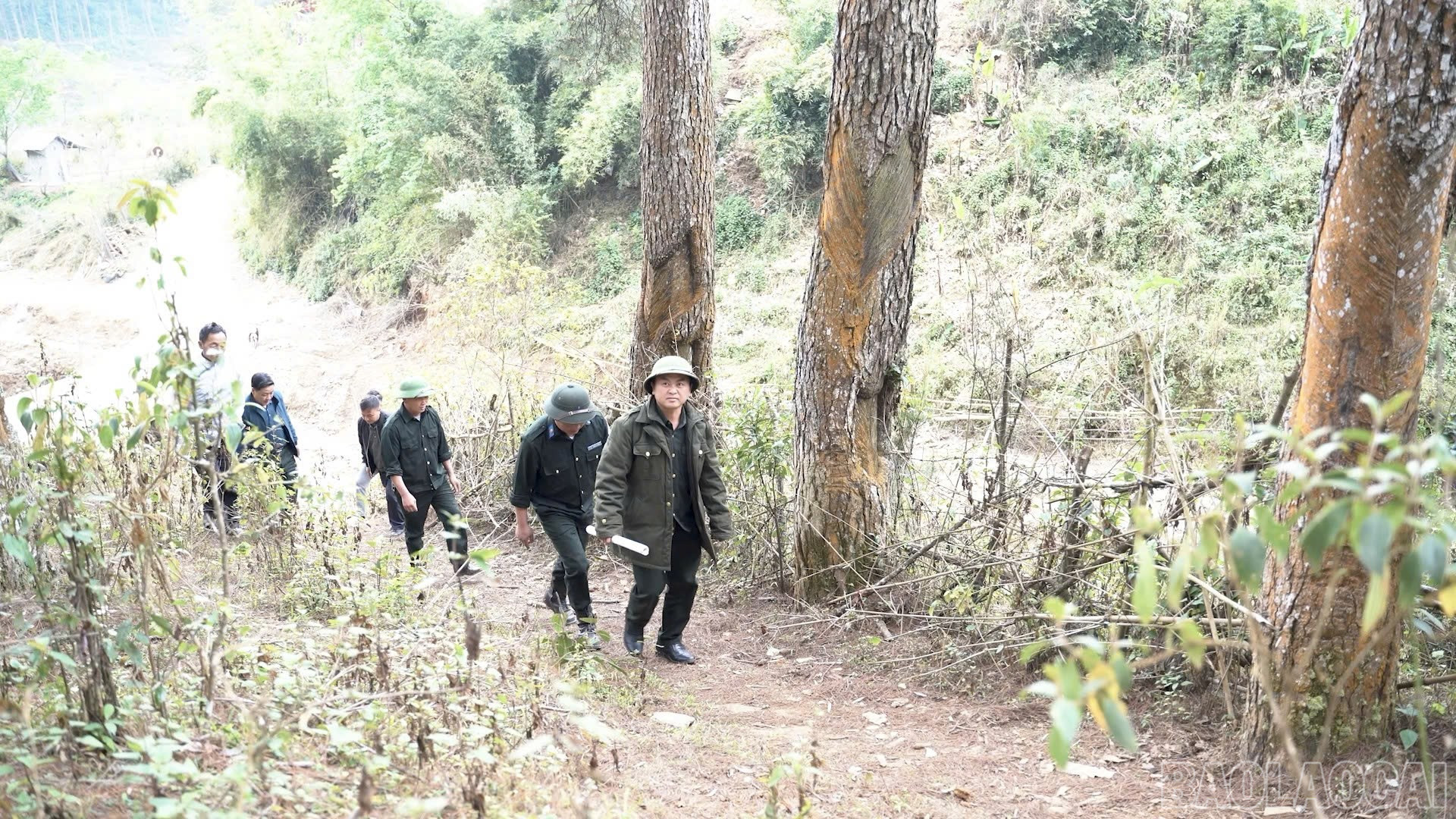
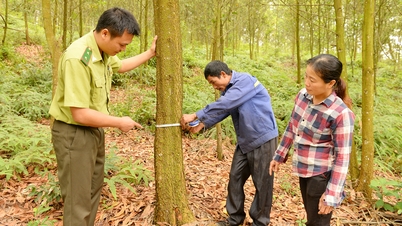
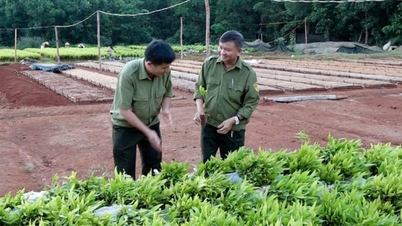
Currently, the village is contracted to protect over 374 hectares of forest, primarily pine forest. According to the assignment, at least one family is responsible for patrolling the contracted forest area daily. To ensure effective management, the village has established a detailed duty roster. Families on patrol are responsible for observing and detecting early signs of forest fires, encroachment on forest land, or illegal logging.
Mr. Thào A Khày, head of Nả Háng Tâu village, shared: "This work is maintained 24/7. The household on duty today will hand over the register to the next household at 6:00 AM the following day. If any problems are detected, the person on duty must immediately report to the contractor and relevant authorities such as the Forest Ranger Station and the Commune People's Committee for timely coordination and handling."
This approach goes beyond simply assigning people to patrol; it has become a regular part of the lives of the 84 households in the area. The awareness that "the forest is our home" has deeply permeated each person, helping to keep the pine forest in Na Hang Tau lush and green, preventing serious violations for a long time.
A highlight of forest management and protection in Na Hang Tau is the seamless integration of state regulations with the customs and traditions of the village.
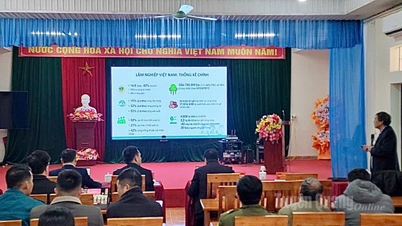
Every year, the village Party branch includes forest protection in its resolutions to guide mass organizations and the people in their implementation. During the monthly Party branch meetings, forest fire prevention and control are always given top priority. In particular, before each planting season, the village organizes meetings to educate residents on the proper procedures for burning straw in the fields, ensuring that fires do not spread into the protected forest.
The role of respected individuals, village elders, and clan leaders is also clearly demonstrated.
Mr. Ly Chung Tu, Secretary of the Party Branch of Na Hang Tau village, emphasized: "Once a year, we hold a meeting of village elders and clan leaders to gather their opinions and contributions to the village's regulations. Once the elders agree and sign the minutes, the content will be widely disseminated to all the villagers. The weight of their words has a significant impact on the awareness of the children in the village."
For violations, the village applies strict disciplinary measures according to established regulations. First-time offenders receive a warning; repeat offenders will be dealt with according to village regulations or referred to relevant authorities if the severity exceeds their jurisdiction.
Deducting payments for forest environmental services from households that do not comply with patrol regulations is also an effective deterrent, ensuring fairness within the community.
Protecting forests is no longer a thankless task when the State implements the policy of paying for forest environmental services. This has become an important economic lever, helping people to have a close connection with the forest.
With over 374 hectares of forest under contract, the Na Hang Tau village community receives approximately 221 million VND annually for forest environmental services. After successful completion of the project, this money is divided equally among 84 households. Although the income is not substantial, for the people in this mountainous region, it is a stable source of income, helping them cover living expenses, purchase household items, and send their children to school.
Ms. Vang Thi Say , a member of the self-governing forest protection team in Na Hang Tau village, happily shared: "My family always adheres to the patrol schedule. When patrolling the forest, we not only protect the pine trees but also collect dry branches for fuel, saving on costs. The forest environmental service fees are usually received at the end of the year, just in time for Tet (Lunar New Year) preparations, so everyone is happy and reminds each other to patrol on time."
In reality, in mountainous communes like Púng Luông, where a large number of Mong ethnic people live, forests are most effectively protected when the people are in agreement and their rights are guaranteed. The close coordination between the Protective Forest Management Board, local authorities, and the community has created a solid "green shield" for the forests in Nả Háng Tâu.

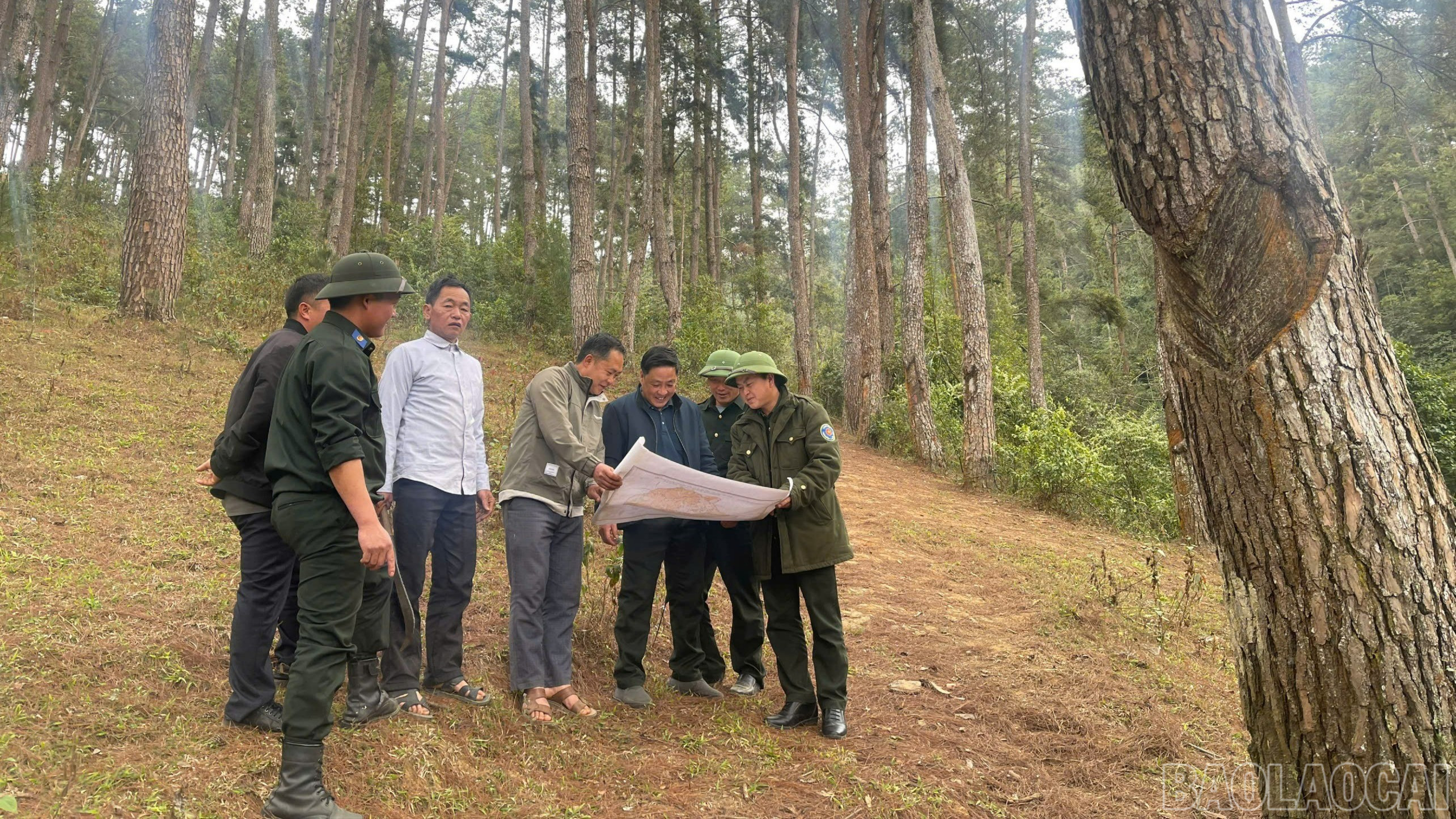
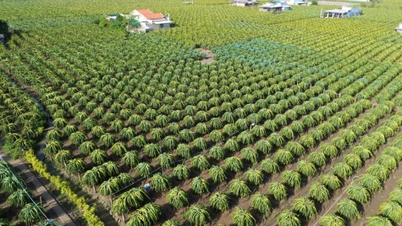
However, for forest protection efforts to be truly effective, closer attention from all levels and sectors is essential. Along with that, localities need to continue researching and replicating sustainable livelihood models under the forest canopy, such as cultivating medicinal plants and developing ecotourism , thereby improving the lives of ethnic minorities in mountainous areas.
Source: https://baolaocai.vn/nguoi-mong-giu-rung-post894665.html






















































![[Video] Sunset at Lap An Lagoon – Where the sun sets over the fishing nets](https://vphoto.vietnam.vn/thumb/1200x675/vietnam/resource/IMAGE/2026/05/31/1780192137701_beach-landscape-sea-water-nature-grass-745871-pxhere-com.jpeg)




































Comment (0)