(Photo: AP)
Why is the world still on alert for Ebola?
International health organizations, including the World Health Organization (WHO), warn that the rate of Ebola spread remains alarming and the risk of further expansion cannot be ruled out. Ebola is a dangerous infectious disease belonging to the group of hemorrhagic fevers caused by viruses, transmitted through direct contact with the blood or bodily fluids of infected people and animals. It is one of the diseases with the highest mortality rates ever recorded in humans. Ebola can cause patients to rapidly develop multi-organ failure, internal bleeding, and death if not treated promptly.
Some predictive models from the US Centers for Disease Control and Prevention (CDC) suggest that, if not contained promptly, the Ebola outbreak in Congo has the potential to develop on a scale comparable to previous major outbreaks.
The risk lies not only in the rapidly increasing number of infections but also in the geographical and social characteristics of the affected area. Ituri and neighboring provinces such as North Kivu and South Kivu are areas frequently unstable due to years of armed conflict, a weak healthcare system, and inadequate living conditions, making disease prevention and control extremely difficult.
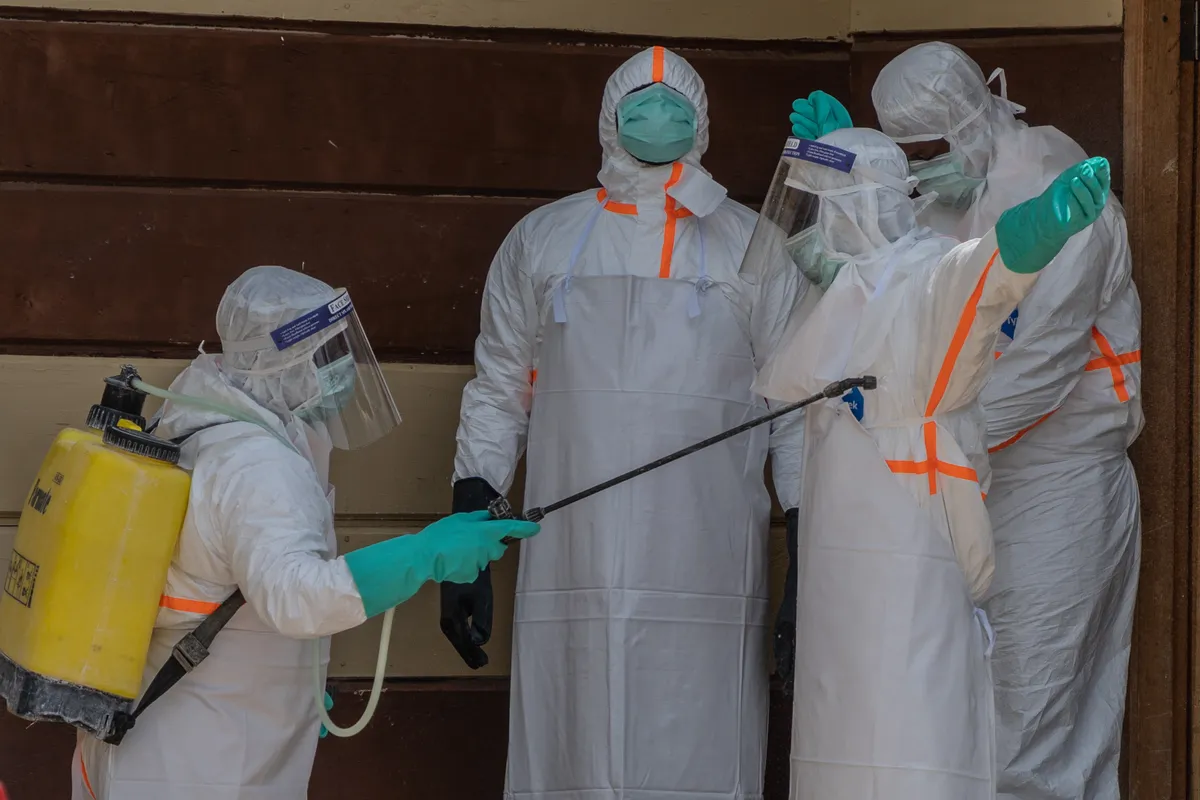
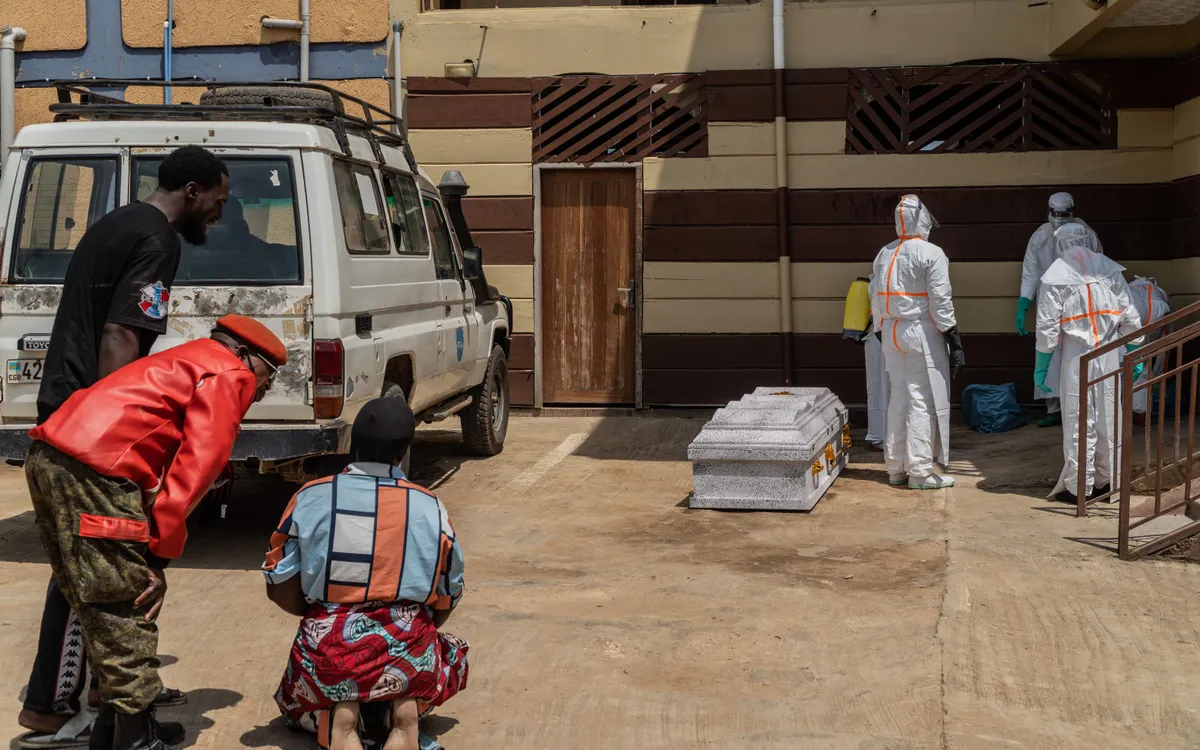
Medical personnel disinfect the area after moving the body of a victim who died from Ebola in Congo (Photo: AP)
Furthermore, the pandemic is spreading amidst a shortage of healthcare resources. Frontline workers report that many treatment facilities still lack personal protective equipment, testing equipment, and safe transportation for bodies. Doctors Without Borders (MSF) assesses testing as the "biggest weakness" in the current response.


Delayed detection allows the virus to spread within the community for weeks before cases are officially confirmed. Notably, children are among the hardest-hit groups. According to international humanitarian organizations, at least 52 children have been infected with Ebola in the current outbreak in the Democratic Republic of Congo, including 16 infants and young children. Healthcare workers are also at high risk due to direct contact with infected individuals and bodily fluids.
When the challenge is not just the pandemic.
The world today has more tools to combat Ebola than it did a decade ago. Ebola vaccines have been successfully developed for several strains of the virus. For the Bundibugyo strain circulating in Congo, scientists are accelerating research into a specific vaccine and evaluating the protective efficacy of existing therapies.
However, the reality is that the biggest challenge is the lack of trust among the population. In many areas of Ituri, a significant number of people still deny the existence of Ebola or believe it is a "conspiracy" by international organizations. Some misinformation on social media even accuses humanitarian workers of spreading the disease. This skepticism leads many families to refuse to take their loved ones to medical facilities, increasing the risk of infection in the community. In many African communities, washing, caring for, and having direct contact with the bodies of the deceased is an important part of funeral rituals. However, for Ebola, this is one of the most dangerous routes of transmission.
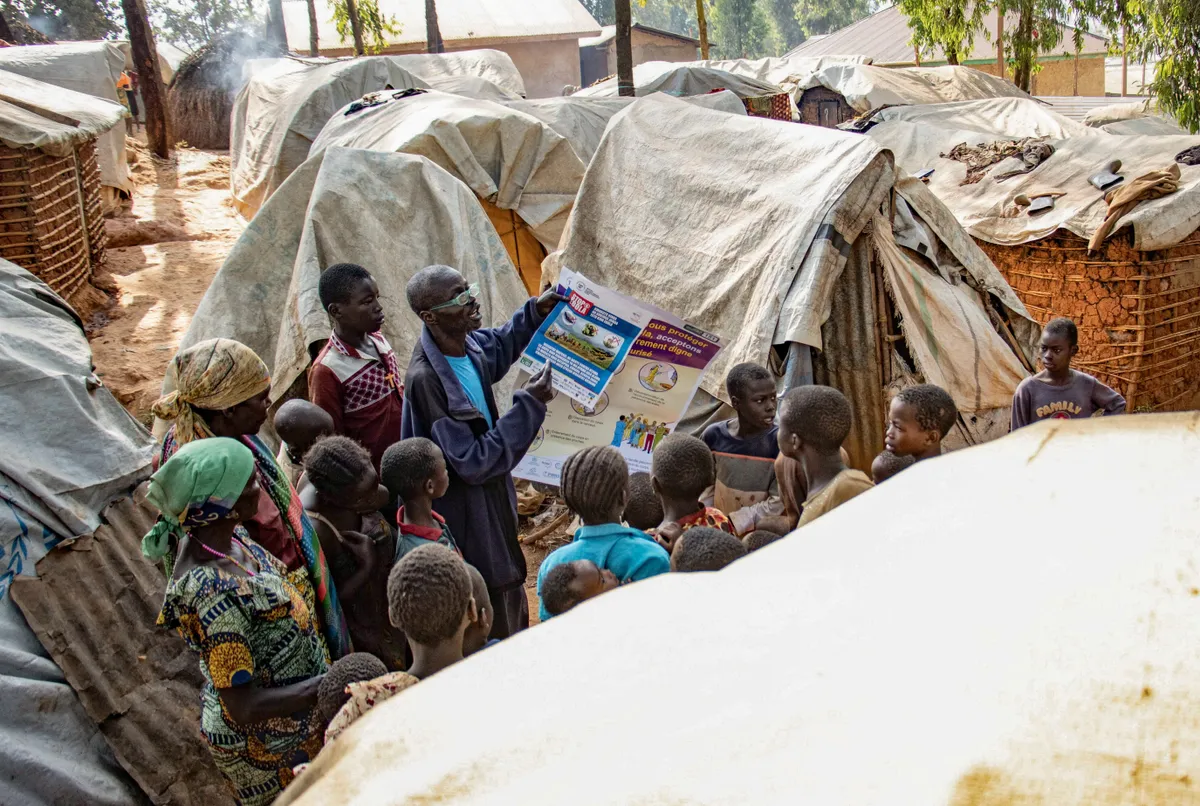
Congolese citizens are instructed on how to prevent Ebola (Photo: Reuters)
Meanwhile, contact tracing – a core measure to break the chain of transmission – continues to face significant challenges. According to the Africa CDC, with approximately 600 cases concentrated in one area, health authorities would typically need to track around 24,000 close contacts. However, currently fewer than 5,000 cases have been identified, with only about half under regular monitoring.
Another challenge is the financial aspect. Many international aid commitments remain undisbursed or have not reached the areas directly affected.



The fight against Ebola is not just a fight against a virus, but also a fight against poverty, conflict, misinformation, and inherent weaknesses in the global health system. And as long as those challenges persist, Ebola will remain one of the health threats that the international community must remain highly vigilant about.
Source: https://vtv.vn/ebola-moi-de-doa-van-hien-huu-10026062716524655.htm



![[Photo] Strengthening character and expertise: Intense training for artillery soldiers.](https://vphoto.vietnam.vn/thumb/1200x675/vietnam/resource/IMAGE/2026/06/30/1782815602541_lu-368-1875-4571-jpg.webp)