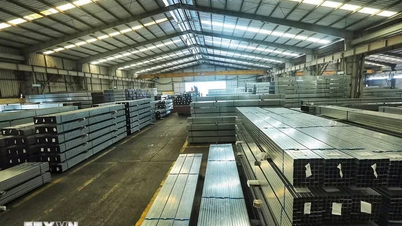
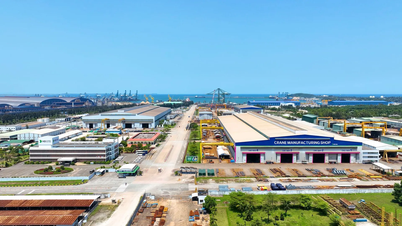
The European Union (EU) announced on June 30th the allocation of steel import quotas to its trading partners, in an effort to protect its domestic industry from a wave of cheap steel and growing global overcapacity. The new mechanism will take effect from July 1st.
Under the new regulations, the EU will maintain a total duty-free steel import quota of 18.3 million tonnes per year. Any steel imported beyond this quota will be subject to a 50% tariff, double the previous rate. This measure was approved by EU lawmakers last April.
EU Trade Commissioner Maros Sefcovic said that the allocation of quotas is based on transparency and objectivity, aiming to create stability and predictability for businesses, while ensuring fair treatment among trading partners.
The EU's move comes amid escalating trade tensions between the bloc and China . According to the EU, the majority of the world's steel surplus originates from China, putting significant pressure on European steel producers.
According to the Organization for Economic Cooperation and Development (OECD), the global steel industry's excess capacity could rise to 721 million tonnes by 2027, threatening jobs and the competitiveness of the EU steel sector.
Pressure on the European steel market intensified after the US imposed a 50% tariff on imported steel, causing some of the steel previously destined for the US market to be diverted to the EU.
A senior EU official said that the US imposition of tariffs had increased the amount of steel flooding the European market, forcing the EU to implement safeguard measures following an investigation.
In addition, the EU currently applies around 80 trade safeguard measures, including anti-dumping duties, mostly targeting cheap steel products imported from China.
Under pressure from close partners such as the UK, Switzerland, and Ukraine – who are concerned that the new measures will significantly affect steel exports to the EU – the European Commission decided to allocate half of the total quota of 18.3 million tonnes to countries and territories with free trade agreements with the EU, including the UK, Switzerland, and India.
For most of these partners, quotas will be allocated individually by country, based on the volume of steel exported to the EU during the 2022-2024 period.
Ukraine, in particular, enjoys a special mechanism aimed at supporting its economy, which is still affected by the conflict, while also ensuring the maintenance of a certain level of steel exports to the EU market.



Source: https://www.vietnamplus.vn/eu-cong-bo-phan-bo-han-ngach-nhap-khau-thep-post1121438.vnp

![[Photo] Strengthening character and expertise: Intense training for artillery soldiers.](https://vphoto.vietnam.vn/thumb/1200x675/vietnam/resource/IMAGE/2026/06/30/1782815602541_lu-368-1875-4571-jpg.webp)