

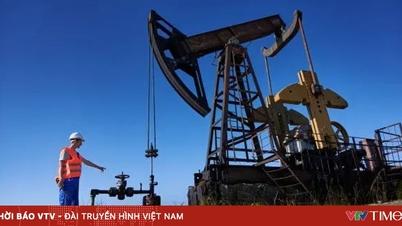
The European Union (EU) has begun implementing an automatic and flexible mechanism to adjust the ceiling on Russian crude oil prices, with the new ceiling set at $44.10 per barrel, effective February 1st. This is the first time this adjustment mechanism has been put into operation since its adoption in the latest package of sanctions against Russia.
According to the transitional provisions, from January 15th, contracts already signed at the old price ceiling are allowed to continue for a period of 90 days before being subject to the new price ceiling.
In its 18th round of sanctions, the EU lowered the ceiling on Russian crude oil prices from $60 per barrel to $47.60 per barrel, while also establishing an automatic adjustment mechanism to determine future ceilings. Under this mechanism, the price ceiling will always be 15% lower than the average market price of Urals crude oil during the preceding 22-week reference period. The application of the $44.10 per barrel ceiling reflects the recent downward trend in Urals oil prices on the international market.
The EU insists that continuing to tighten Russia's energy revenue is a top priority, aimed at weakening Russia's financial capacity.
According to the plan, the European Commission (EC) will conduct a review of the oil price ceiling every six months. In the event of significant volatility in the oil market or the emergence of force majeure events, extraordinary reviews may be implemented. The EC also maintains regular contact with EU member states and international partners to ensure close coordination in the implementation of these measures.
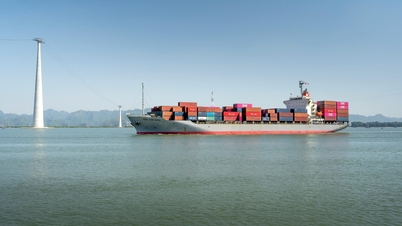
The oil price ceiling mechanism for Russia, established by the Group of Seven (G7) in 2022, applies to Russian crude oil and petroleum products transported by sea. Accordingly, businesses and operators in the EU are only permitted to provide shipping, insurance, and related services if Russian crude oil is traded at or below the stipulated price ceiling.
The EU emphasized that this mechanism is designed to increase pressure on Russia's oil revenues while contributing to the stability of the global energy market by ensuring that supply is not severely disrupted.
Source: https://vtv.vn/eu-ha-tran-gia-dau-tho-nga-10026011606523783.htm




















































































Comment (0)