|
| The EU is pushing for a plan for member states to jointly finance the development of key strategic capabilities primarily provided by the US. (Source: LinkedIn) |
According to Politico , citing sources within the European Parliament (EP), EU Defence and Space Commissioner Andrius Kubilius is pushing for a plan for member states to jointly finance the development of strategic capabilities currently primarily provided by the US, such as aerial refueling, command and control systems, satellite reconnaissance, space intelligence, and military logistics.
According to the proposal, participating countries could voluntarily allocate a portion of the increased defense budget approved by NATO last year to jointly invest in essential military capabilities.
The EU can then support countries in the procurement and deployment of equipment.
Currently, the United States still provides the majority of NATO's strategic support capabilities, which are considered the foundation for maintaining and deploying the alliance's large-scale military operations.
Kubilius argued that member states need to agree to allocate a portion of their national defense budgets to replace the capabilities currently provided by the United States.
According to his estimates, the total cost for this goal could reach around 500 billion euros. The EU official stated: "Clearly, we will not be able to finance this expenditure from the EU's next long-term budget framework."
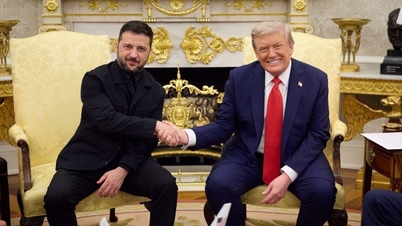
This new development comes amid growing concerns about the U.S. commitment to NATO under President Donald Trump.
Last month, Washington sent NATO allies a detailed list of military capabilities that the U.S. no longer wants to provide to the alliance. This list includes long-range reconnaissance drones and KC-135 aerial refueling aircraft.



Earlier, on the sidelines of the EU Defence Ministers' meeting in Cyprus, Kubilius emphasized that Europe needs to find more effective ways to develop joint defence projects, particularly in the area of strategic support capabilities – where the bloc remains significantly dependent on US resources.
The idea was discussed by Mr. Kubilius during a private meeting with 16 members of the European Defence Alliance Group in Brussels, Belgium, last week.
However, the initiative is still in its very early stages, and it is unclear whether it will be institutionalized into a legal proposal or remain merely a policy guideline.
A lawmaker attending the meeting said that all parties agreed that strategic support capacity is a top priority and that further details would be discussed in the future.
However, this plan is expected to face many obstacles. Many European governments remain cautious about the possibility of deeper EU involvement in defense procurement.
Furthermore, the US may not want to lose its share of defense exports in Europe, while the development and production of alternative systems needs to be accelerated to maintain deterrence against Russia.
In a report published last week, the European Council on Foreign Relations research organization argued that the European Commission needs to immediately implement a short-term procurement program to quickly add missing capacities, while also developing a medium-term industrial strategy to develop more complex technologies.
"If we don't start now, Europe will still be dependent on US systems by the mid-2030s," the report states.
The issue of cost is also a major challenge. According to estimates by the Kiel Institute for World Economy , replacing the command and control, satellite reconnaissance, communications, navigation, electronic warfare, military cloud computing, artificial intelligence, and strategic air transport systems supplied by the US alone would cost at least 200 billion euros and take more than a decade to complete.



Some experts even suggest that the total cost of replacing all of the US's non-nuclear military capabilities in Europe could reach around $1 trillion.
Dutch MEP Reinier van Lanschot, a promoter of the European Defence Union initiative, argues that no single EU country is capable of building all the necessary strategic support capabilities on its own.
Therefore, developing shared strategic capabilities at the European level is essential to building a more independent defense system for the continent.
Source: https://baoquocte.vn/eu-tinh-toan-thoat-my-404925.html

![[Image] Schools organize meetings and introduce teaching models to students admitted to grade 10.](https://vphoto.vietnam.vn/thumb/1200x675/vietnam/resource/IMAGE/2026/06/25/1782368077271_ndo_br_z7970052192242-1ec8daeb77a6eed1a4e9f58c564ddd3e-jpg.webp)
![[Photo] General Secretary and President To Lam receives Palestinian Ambassador Saadi Salama](https://vphoto.vietnam.vn/thumb/1200x675/vietnam/resource/IMAGE/2026/06/25/1782365384740_a1-bnd-9423-8322-jpg.webp)
![[Photo] General Secretary and President To Lam attends the 13th National Congress of the Ho Chi Minh Communist Youth Union](https://vphoto.vietnam.vn/thumb/1200x675/vietnam/resource/IMAGE/2026/06/25/1782356968989_ndo_br_1-jpg.webp)