Amidst piles of garbage, overflowing sewage, and rising temperatures, international organizations are warning of the risk of widespread disease outbreaks in the region, plunging the lives of more than 2 million people into a new and dangerous spiral.
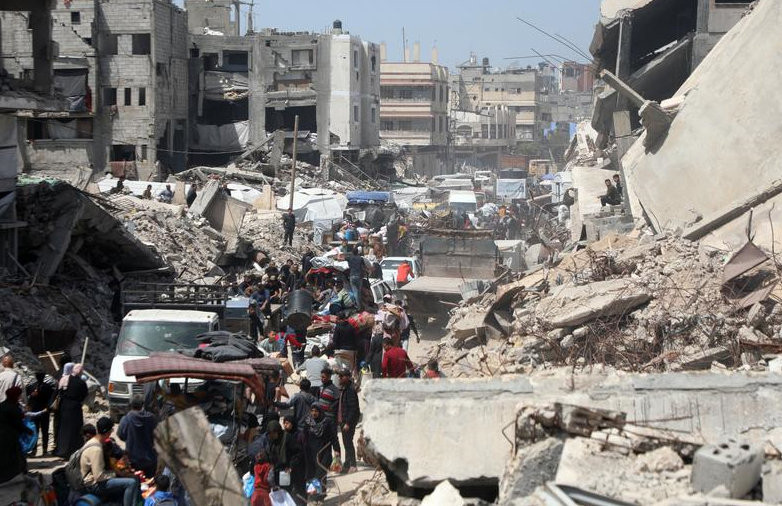
For hundreds of thousands of refugee families in Gaza, the threat of war extends beyond bombs and airstrikes, encompassing their daily lives. With devastated neighborhoods, sewage and waste disposal systems nearly shutting down, and overcrowded refugee camps quickly becoming breeding grounds for disease, garbage piles up, sewage overflows, and clean water sources dwindle, creating a vicious cycle of environmental and public health crises.
The United Nations Relief and Works Agency for Palestine Refugees (UNRWA) reported that between January and May of this year alone, more than 125,000 cases of skin infections linked to rats and parasites were recorded in the Gaza Strip. The organization warned that the increase in pests and the severely deteriorating sanitation are creating a risk of outbreaks of infectious diseases and other public health problems throughout the territory. Meanwhile, the World Health Organization (WHO) confirmed that nearly 90% of Gaza's clean water and sanitation systems have been destroyed or damaged, forcing approximately 80% of the population to rely on water transported by tankers, which is unreliable and difficult to control in terms of quality.
According to a rapid assessment report by the World Bank, the European Union, and the United Nations, Gaza needs approximately $71.4 billion for recovery and reconstruction over the next 10 years, with $26.3 billion needed in the first 18 months alone. However, amidst ongoing conflict, reconstruction remains a distant goal. Living conditions in the area are becoming increasingly harsh, with summer temperatures reaching 34-35 degrees Celsius. In makeshift camps, many families are forced to cool down by bathing in contaminated water, increasing their risk of disease.

Speaking to Arab News, Prue Coakley, emergency coordinator for Doctors Without Borders (MSF) in Gaza, said that the entire water, drainage, and electricity systems have been almost completely destroyed, leading to sewage overflowing into the streets during heavy rains, increasing sanitation-related illnesses ranging from skin diseases to respiratory infections.
The collapse of clean water, sanitation, and healthcare systems has created ideal conditions for disease spread. Diseases such as acute diarrhea, hepatitis A, scabies, and parasitic infections are rapidly increasing. In the first five months of 2026, the WHO recorded over 153,000 cases of acute diarrhea in Gaza, not to mention hundreds of thousands of children facing the risk of acute malnutrition, while the incidence of respiratory illnesses and infections remains very high.
Constant displacement has also severely impacted the health of the population, as they have lost access to basic services such as laundry, bathing, and healthcare. A WHO report indicates alarming water quality in Gaza. Of over 2,600 water samples tested, more than 73% failed to meet safety standards, with some contaminated with dangerous bacteria. Meanwhile, humanitarian agencies like UNRWA are striving to maintain access to clean water and sanitation in accessible areas, but are hampered by shortages of fuel, medicine, and medical supplies.
Fuel shortages directly impact the entire relief system, from hospitals and ambulances to wastewater treatment plants. This scarcity severely impairs the ability to monitor, detect, and respond to outbreaks, while increasing the risk of new outbreaks. Aid organizations warn that as temperatures continue to rise this summer, the pressure on healthcare and clean water systems will only intensify. Many humanitarian agencies are forced to scale back operations due to fuel shortages, while the demand for clean water and sanitation increases. This creates a dangerous paradox: urgent needs are increasing, but the capacity to respond is decreasing.
The International Rescue Committee (IRC) has stated that Gaza is facing a public health crisis. Without an urgent expansion of aid routes, including fuel, medicines, medical supplies, and sanitation equipment, the situation could continue to worsen. What aid agencies need now is to ensure that aid reaches Gaza quickly and without hindrance, in order to prevent the outbreak of new diseases in an environment already exceeding its carrying capacity.



While the world's attention remains focused on the political developments of the Middle East conflict, the lives of the people of Gaza continue to spiral deeper into crisis. For them, the war is now not just an armed conflict, but a struggle for survival against poverty, disease, and the collapse of their entire basic system of living.
Source: https://hanoimoi.vn/gaza-ben-bo-khung-hoang-y-te-1210045.html