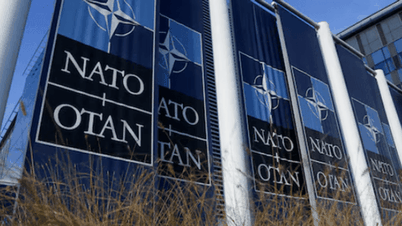
This event is of particular importance to the future of this military alliance, as it will partly show whether the long-standing security structure between Europe and the United States will be maintained and continue to play a central role in the world's political and security order. The conference will also reflect how NATO will behave in the context of the alliance facing pressure from challenges to its operational capacity and declining influence.
NATO is currently at a critical juncture: either demonstrate sufficient resolve and achieve internal consensus to overcome the immediate challenges, or continue to exist primarily to maintain its existence, as it has in the past. These challenges stem from both the prevailing circumstances and U.S. policy toward NATO.
The biggest challenge facing NATO today is how to truly keep NATO and the US "on the same page" and how NATO can continue to trust and rely on the US as before. If that is no longer possible, NATO will have to find a way to successfully transition from a security model based on the US to a Europe capable of security self-reliance, in the context of Europe facing its most serious security crisis since World War II. Essentially, this is a problem of managing the relationship between the US "security vacuum" and Europe's goal of strategic security autonomy.
Another major challenge is the discord and divisions within NATO. Gone are the days when NATO could achieve near-absolute consensus on all policy directions and strategic decisions. A similar situation exists in bilateral relations between some member states. Relations between the US and Canada, Denmark, or Spain are prime examples. The self-interests of individual member states and the centrifugal tendencies within the alliance are becoming increasingly apparent, while NATO has yet to find a sufficiently effective solution to address them.

Another challenge for NATO is the significant gap between declarations, decisions, and concrete actions. One of NATO's most important strategic decisions in recent times was for members to increase their defense and military budgets to 5% of their national GDP annually by 2035 and to cooperate in armament, procurement, and manufacturing of modern weapons. While all members agreed, only a few responded and implemented the decision. This exacerbated the discord between the US and NATO, in part.
The major challenge for NATO is how to reconcile internal strategic directions, such as: supporting Ukraine or confronting Russia and China, focusing on the war in Ukraine or on wars in the Middle East and the Gulf region.
Furthermore, another key challenge is the ability to adapt to rapid and fundamental changes in the methods of conducting warfare, as well as to respond to non-traditional security threats in the modern world.
The challenges mentioned above suggest that NATO is unlikely to have a truly successful summit, despite its significant importance. It is likely that NATO will continue to emphasize some symbolic outcomes and strong statements aimed at demonstrating internal unity and consensus. However, this is unlikely to mask the fact that the alliance has yet to find sufficiently effective ideas and solutions to overcome the challenges it faces.



Source: https://hanoimoi.vn/thach-thuc-truc-them-thuong-dinh-nato-1210407.html