|
British Prime Minister Keir Starmer. Photo: Reuters . |
For weeks, Labour leaders and close allies have repeatedly asserted that British Prime Minister Keir Starmer will fight to retain his position and is ready to participate in any leadership election.
However, the tone from the government shifted significantly on June 21 (local time), suggesting his political future is more precarious than ever, according to ABC News.
Starmer's credibility was pushed to the brink after Labour candidate Andy Burnham's overwhelming victory in the Makerfield by-election in northern England.
Mr. Burnham, currently the Mayor of Greater Manchester and consistently ranked as the most popular politician in Britain, had previously stated he would challenge for the prime ministership if he won in Makerfield.
Previous polls had suggested a close race between Burnham and the Reform Party candidate – a right-wing, anti-immigration force. However, Burnham's decisive victory has led many within the Labour Party to believe he is the better candidate to challenge the Reform Party in the next general election.
According to multiple sources, Foreign Secretary Yvette Cooper, Home Secretary Shabana Mahmood, and Transport Secretary Heidi Alexander directly advised Starmer to resign.
In addition, many high-ranking government officials have been continuously providing information to the press throughout the weekend, suggesting that the prime minister's position is no longer sustainable.
One of the clearest signals came from Business Secretary Peter Kyle – a key loyal ally of Mr. Starmer – when he appeared on a BBC programme.
When asked whether Mr. Starmer still intended to run if challenged for the leadership, Mr. Kyle said the prime minister was spending the weekend reflecting on the political challenges he faces.
"He's also considering how the current political reality is different from last week or even weeks before that," Kyle said.
The Business Secretary stressed that Mr. Starmer always puts the national interest first and that this will be the guiding factor in all his decisions, not only as prime minister but also regarding the future of the Labour Party.
Donald Trump unexpectedly speaks out.
The latest statements from the British cabinet mark a significant shift from Starmer's tough rhetoric on June 20, following his return from the G7 Summit in France.
"If there were a leadership race, I would participate. I have stated many times that I would not give up," Starmer told reporters.


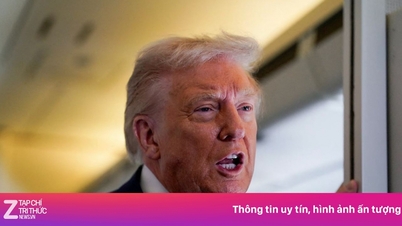
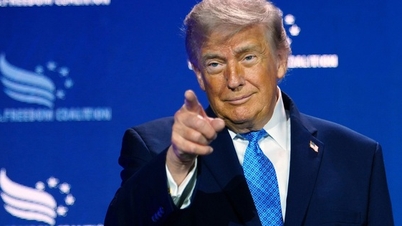
Pressure on the British leader intensified when US President Donald Trump posted on social media on June 21st that: "Keir Starmer will resign as Prime Minister of the United Kingdom."
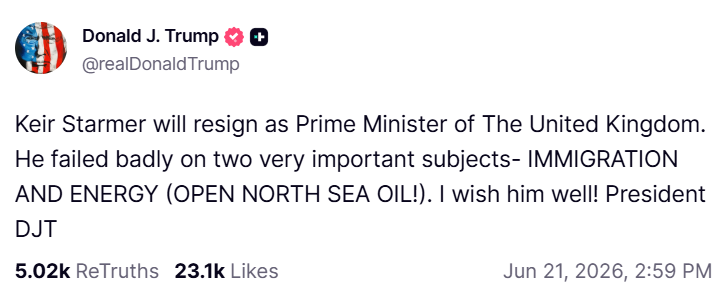 |
A post by US President Donald Trump on the social media platform Truth Social. |
Trump also reiterated previous criticisms, saying Starmer "had failed miserably" in controlling immigration and boosting oil and gas production in the North Sea.
The British Prime Minister's office said that Mr. Starmer had no conversations with the US President throughout the weekend.
The 63-year-old leader reportedly spent the weekend with his family at Chequers – the official country residence of the British prime minister – contemplating his political future.
Meanwhile, Burnham, 56, is also spending time with his family amid being seen as the leading candidate for the Labour Party leadership.
A leadership race or a power transition?
Even before Burnham's victory at Makerfield, Starmer's position had been steadily weakening.
The former head of the UK's Royal Public Prosecution Service is facing one of the lowest approval ratings for a British leader in modern political history.
Under his leadership, the government underwent numerous policy changes, witnessed a series of high-profile resignations, and faced controversies related to public spending as well as pressure from a prolonged cost of living crisis.
However, the decision to appoint former Business Secretary Peter Mandelson as the British Ambassador to the US – despite his previous connections to the late sex offender Jeffrey Epstein – is considered one of the most controversial events.
Voter dissatisfaction with Starmer was also evident in the Labour Party's heavy defeat in the local elections last May.
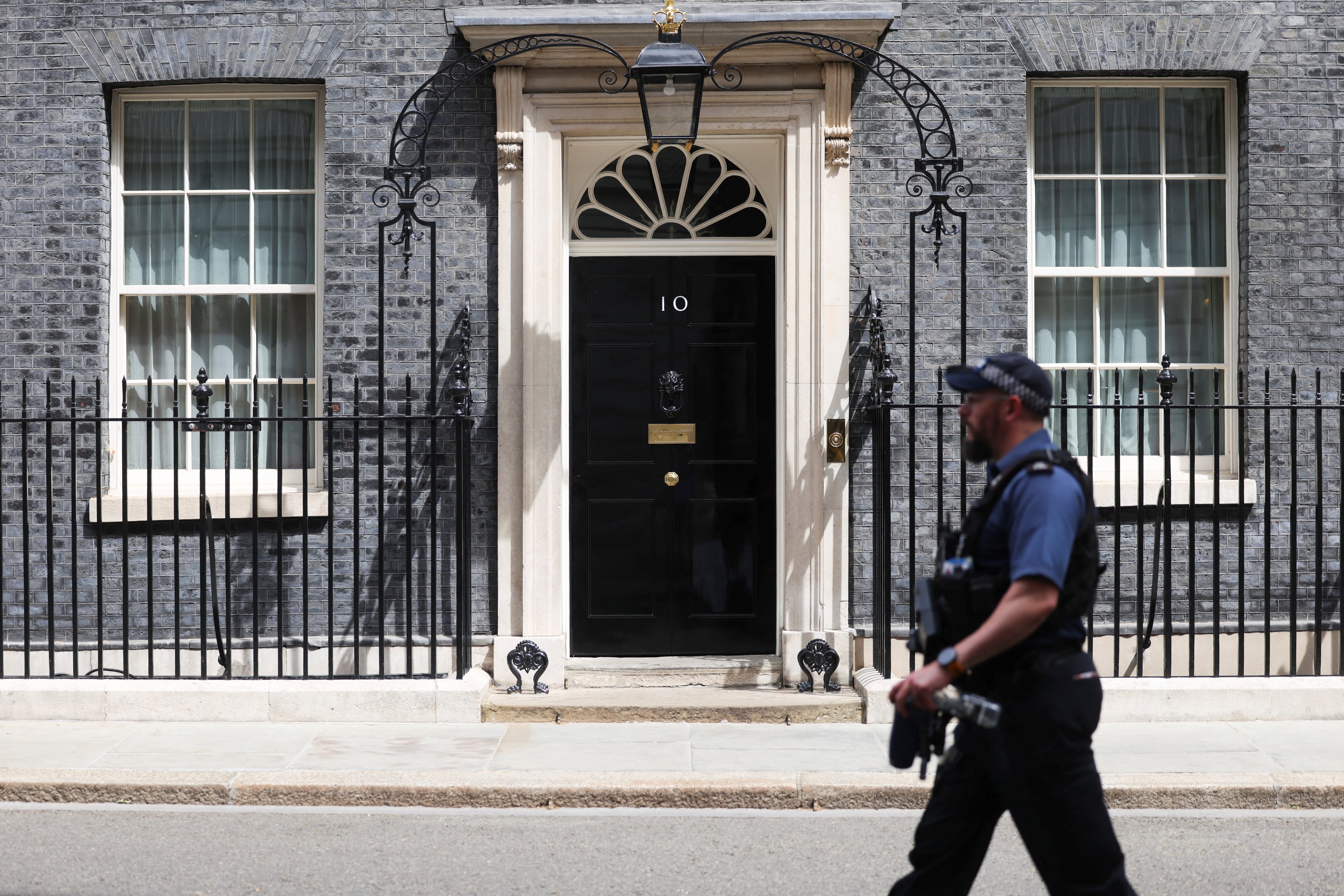 |
Outside 10 Downing Street in Westminster, British Prime Minister Keir Starmer declared he would stand up to any challenge following Andy Burnham's landslide victory in the Makerfield by-election in London on June 21. Photo: Reuters. |
Internal surveys suggest that if a formal leadership election were to take place, Burnham would most likely win.



If Makerfield's newly elected MP takes over the Prime Minister's Office at 10 Downing Street, he will become Britain's seventh prime minister in just 10 years.
In the event that Mr. Starmer resigns, the big question is whether the Labour Party will hold a genuine leadership election or simply hand over power to Mr. Burnham without significant opposition.
Former Health Secretary Wes Streeting, who left the cabinet due to disagreements with the Prime Minister, publicly stated that he has enough support to run for office. However, British media reports suggest he is also considering taking on a key role in Burnham's future government rather than directly entering the power race.
Source: https://znews.vn/ghe-thu-tuong-anh-lung-lay-du-doi-post1661940.html




![[Photo] "Hanoi Lotus Festival" honors the lotus flower that has been associated with Vietnam for thousands of years.](https://vphoto.vietnam.vn/thumb/1200x675/vietnam/resource/IMAGE/2026/06/27/1782516943048_sen-ha-noi-2026-minh-duy-1-jpg.webp)