

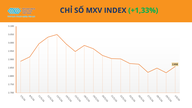
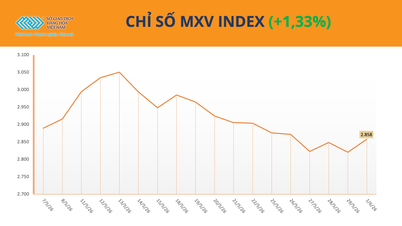
The global commodities market just experienced a booming week of trading, with the MXV-Index surging by over 7.6%, reaching 2,631 points. The main driver of this week's rally came from capital shifting into precious metals as a hedge against geopolitical and global macroeconomic risks. Meanwhile, seasonal supply constraints also pushed rubber prices back to their highest levels since December 2024.

MXV-Index
Buying pressure prevailed in the metals market.
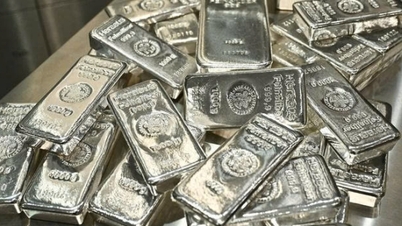
Closing out the past trading week, the metals market witnessed overwhelming buying pressure, with 8 out of 10 commodities experiencing price increases. The market's focus continued to be on COMEX silver, which surged by nearly 12.5% last week, reaching $92.98 per ounce.

Metal price list
According to the Vietnam Commodity Exchange (MXV), the deadlock in nuclear negotiations between the parties involved is increasing defensive sentiment in the market, as geopolitical risks continue to escalate. In the context of an increasingly unpredictable global environment, capital flows tend to shift towards safe-haven assets, with silver emerging as a notable option.
Against this backdrop, growing concerns about the stability of the US investment environment are putting downward pressure on the US dollar. Over the past week, the Dollar Index (DXY) recorded a nearly 0.2% decline, falling to 97.61 points – its lowest level in over a week. The weakening US dollar has increased the attractiveness of precious metals to investors holding other currencies. Furthermore, the yield on 10-year US Treasury bonds fell to 3.96%, the lowest level since the end of October 2025. The cooling bond yields have reduced the opportunity cost of holding non-yielding assets like silver, thereby strengthening buying interest in the market.
In terms of supply and demand, the upward trend in silver prices is further supported by the risk of supply chain disruptions in Mexico. At the same time, industrial production in the US is showing signs of improvement, especially in silver-intensive sectors such as electronics and computers, further strengthening the demand outlook.
Following the trend, speculative capital is beginning to return to buy at the bottom. Data from the US Commodity Futures Trading Commission (CFTC) shows that, as of February 24th, the net long position of managed money reached 8,523 contracts, a sharp increase of 71% compared to the beginning of the month.
Nevertheless, in the short term, the silver market still faces profit-taking pressure as analysts predict that the US Federal Reserve (Fed) is likely to keep interest rates unchanged at its March meeting to curb inflation. The latest statistics show that the Producer Price Index (PPI) for January in the world's number one economy rose 2.9% year-on-year, far exceeding expectations.

In the domestic market, silver prices are benefiting from both the global upward trend and a surge in demand during the God of Wealth festival. As of the morning of March 1st, prices of white metal products have adjusted upwards by approximately 11% compared to the previous week. Specifically, 999 pure silver is trading around 3.019 – 3.054 million VND/ounce, while 999 silver bars are listed at 3.505 – 3.613 million VND/ounce (buy-sell).
Rubber prices return to peak levels set at the end of 2024.
Meanwhile, in the industrial raw materials market, the prices of two rubber commodities recorded a strong upward trend, reaching their highest levels since December 2024. Specifically, the RSS3 rubber contract for April delivery increased by 7.16% last week, reaching $2,389/ton; while the TSR20 rubber contract for April delivery increased by more than 4%, reaching $2,007/ton.

Industrial raw material price list
According to MXV, the current consecutive price increases for rubber are being supported by seasonal supply constraints, combined with optimistic expectations of a recovery in consumer demand.
On the supply side, major producing countries such as Thailand and Indonesia are entering a low-production cycle. Adverse weather conditions, with heavy rains in many key harvesting areas, have disrupted harvesting activities, leading to a decrease in raw material production compared to the same period last year. Meanwhile, in China's inland production regions such as Yunnan and Hainan, rubber plantations are in the winter tapping period. This factor further exacerbates the scarcity in the domestic market, creating a widespread tightening of supply.
The latest data from the Thai Ministry of Commerce also clearly reflects this decline. Specifically, in January 2026, the country's exports of natural rubber (excluding mixed rubber) reached only 214,000 tons, a 10% decrease compared to the same period last year. Notably, exports to China – the largest consumer market – recorded a sharp 13% year-on-year decrease, falling to 77,000 tons.
On the demand side, the Association of Natural Rubber Producing Countries (ANRPC) forecasts that global rubber consumption will exceed supply in 2026, creating a solid foundation to keep prices at high levels. Specifically, global production is expected to increase by 2.4% to 15.2 million tons, while demand is projected to increase by 1.7%, reaching 15.6 million tons.
This supply-demand imbalance partly stems from the steady recovery in key markets such as China, Europe (EU), and the United States. The outlook for demand growth is bolstered by a number of positive factors: the increase in new car registrations in the EU, expectations of improved tire exports to the US, and the impact of trade agreements on rubber products between the EU and India, and the US and India. In addition, the ongoing subsidies and stimulus policies for electric vehicle purchases implemented by the Chinese government also play a significant role in boosting consumption of this material.
In the Vietnamese domestic market, raw rubber latex prices remained sluggish last week. Tapping activity had not yet resumed after the holiday, causing liquid latex prices to stay stable at low levels. On average, liquid latex prices decreased by 4 VND/degree compared to the period before the holiday, trading at 411 VND/degree. Similarly, cup latex prices continued their downward trend after the holiday, with an average decrease of 1,060 VND/kg compared to the previous week, falling to 17,180 VND/kg.
Price list for some other types of goods

Energy price list

Agricultural product price list
Source: https://congthuong.vn/gia-bac-ap-sat-93-usd-ounce-444839.html
























































![[Video] Sunset at Lap An Lagoon – Where the sun sets over the fishing nets](https://vphoto.vietnam.vn/thumb/1200x675/vietnam/resource/IMAGE/2026/05/31/1780192137701_beach-landscape-sea-water-nature-grass-745871-pxhere-com.jpeg)




































Comment (0)