
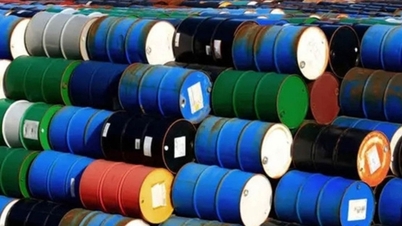
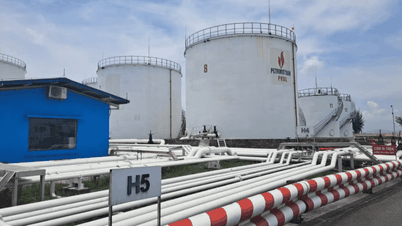
An oil refinery in Russia. Photo credit: TASS/VNA
Compared to the November 2025 price of $44.87 per barrel, Russia's key oil price has fallen by a further 13% and is down 41% from the beginning of the year ($67.66 in January).

 Báo Tin Tức•14/01/2026
An oil refinery in Russia. Photo credit: TASS/VNA
Compared to the November 2025 price of $44.87 per barrel, Russia's key oil price has fallen by a further 13% and is down 41% from the beginning of the year ($67.66 in January).
Due to US sanctions against Rosneft and Lukoil, discounts on Urals crude oil reached record lows of $28 per barrel for Brent crude at Baltic Sea ports and $26 per barrel at Black Sea ports, according to Argus statistics. As a result, the average price of Russian oil fell to its lowest level since May 2020 ($31.03 per barrel), when the COVID-19 pandemic raged worldwide and the global oil market experienced an unprecedented collapse in demand.
In fact, oil prices have returned to the levels of President Vladimir Putin's first term ($41.73/barrel in 2004) and remain nearly $20 below the 2026 budget price ($59/barrel).
According to estimates, from January to November 2025, the federal budget lost 20% of its oil and gas revenue, and in December, the decline increased to 49% compared to the same period last year.
The Treasury had projected 8.9 trillion rubles (approximately $113 billion) in oil and gas revenue for this year's budget. However, with current prices and discounts, oil and gas revenue will be 1.1 trillion to 1.4 trillion rubles lower than planned (i.e., 7.5 trillion to 7.8 trillion rubles). As a result, the budget deficit, projected at 1.6% of GDP, could reach 2.5-2.7% of GDP, and experts warn that the government will have to use remaining funds in the National Welfare Fund to compensate for the lost revenue. The National Welfare Fund currently has 4.1 trillion rubles, equivalent to covering 1.5-2 years of unfavorable oil prices.
The price of oil in Russia is estimated at around $47 per barrel, but this figure also depends on the type and age of the oil field. With oil prices around $40 per barrel, some fields and projects have become unprofitable. According to Bloomberg, despite quotas from the Organization of Petroleum Exporting Countries (OPEC) and its allied oil-producing nations, known as OPEC+, Russia experienced a significant drop in oil production in December 2025 – a decrease of 100,000 barrels per day, to 9.326 million barrels.
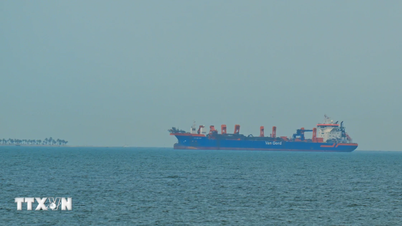
Sanctions against Rosneft and Lukoil are creating problems for Russian exports. And there is now no more room to store unsold oil. According to Bloomberg, since the end of November, when US sanctions took effect, the volume of Russian oil "at sea" – that is, in tankers awaiting buyers – has increased by 35 million barrels.
Source: https://baotintuc.vn/kinh-te/gia-dau-nga-pha-day-20260114114723392.htm


![[Photo] General Secretary and President To Lam presides over a working session with the Central Policy and Strategy Committee on the development of the materials industry.](https://vphoto.vietnam.vn/thumb/1200x675/vietnam/resource/IMAGE/2026/05/21/1779359935432_a3-bnd-3129-1412-jpg.webp)


































































































Comment (0)