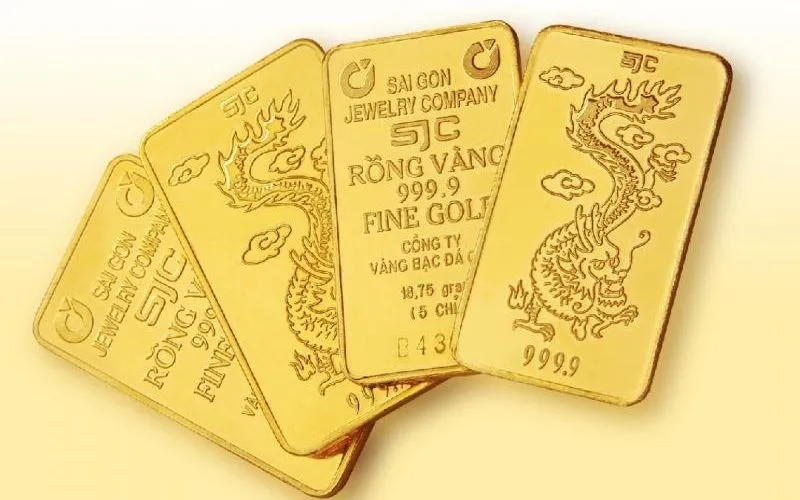
Domestic gold prices reverse course and rise - Illustration image
Gold prices rose slightly.
At 12:34 PM, Saigon Jewelry Company (SJC) listed the buying price of gold at 144.2 million VND/ounce; the selling price was 147.2 million VND/ounce, an increase of 500,000 VND/ounce in both buying and selling prices compared to the previous session. The difference between the buying and selling price of SJC gold was 3 million VND/ounce.
At the same time, the buying and selling prices of gold at DOJI Group are listed at 144.2 - 147.2 million VND/ounce, an increase of 1.7 million VND/ounce in the buying price and an increase of 700,000 VND/ounce in the selling price compared to the previous session. The difference between the buying and selling price of gold at DOJI is currently 3 million VND/ounce.
SJC listed gold ring prices at 144.1 – 147.1 million VND/ounce (buy – sell), an increase of 500,000 VND/ounce in both buying and selling prices compared to the previous session. At the same time, DOJI listed gold ring prices at 144.2 – 147.2 million VND/ounce, an increase of 1.7 million VND/ounce in the buying price and 700,000 VND/ounce in the selling price compared to the previous session.
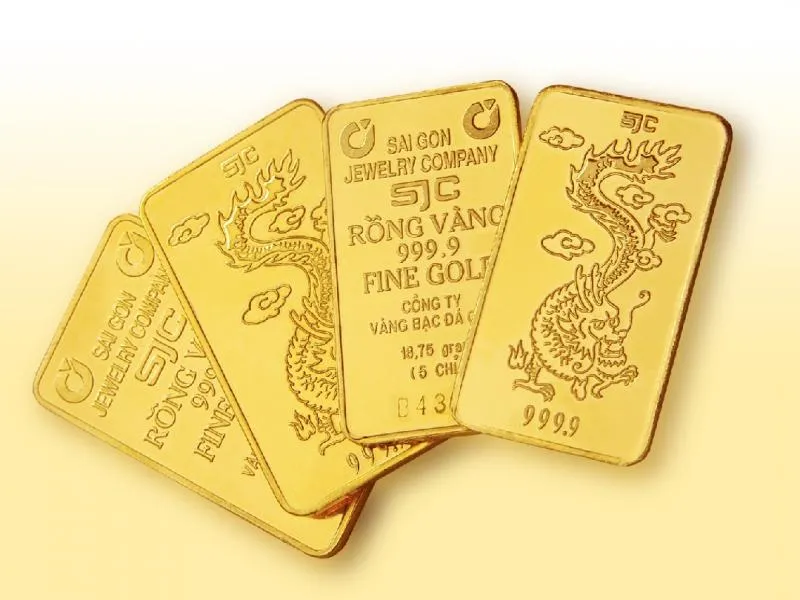
Domestic gold prices continue to rise.
World gold prices closed lower for the third consecutive week.
The global gold market experienced a volatile trading week, with investor sentiment constantly shifting between signals of easing tensions in the Middle East and the increasingly hawkish stance of the US Federal Reserve (Fed). After a sharp rise in the early sessions of the week driven by expectations that peace between the US and Iran would help reduce inflationary pressure, gold prices reversed sharply downwards from the middle of the week, ending the week with a third consecutive decline.


The market's focus during the weekend trading session (June 19th) was the impact of a strengthening US dollar and expectations that the Fed may continue to raise interest rates in the coming months. At the close of trading, spot gold fell 0.9% to $4,169.44 per ounce, after briefly dropping to $4,119.78 per ounce, its lowest level since June 11th. US gold futures fell 1.4% to $4,186.50 per ounce.
This also marks the third consecutive week of declines for the precious metal. The strengthening US dollar this week made gold more expensive for investors holding other currencies, thereby diminishing the appeal of this traditional safe-haven asset.
The biggest pressure on the gold market continues to come from US monetary policy. Following its policy meeting on June 17th, the Fed kept interest rates unchanged at 3.5%-3.75%, but new forecasts show that 9 out of 19 central bank officials believe a rate hike is necessary this year. According to CME Group's FedWatch tool, the market currently assesses the probability of a Fed rate hike in September 2026 at around 70%.
Expectations of persistently high interest rates are generally detrimental to gold, as it is a non-yielding asset. At the same time, the prospect of high interest rates also supports a stronger US dollar, thereby adding further pressure on the precious metals market.
However, weekend trading wasn't solely influenced by the Fed. Investors were also closely monitoring developments related to the peace process between the US and Iran.
One notable factor is that the US-Iran talks in Switzerland, scheduled for June 19, did not proceed as planned. On June 19, Iran announced it had suspended all 60-day talks with the US after accusing Washington of violating the first clause of the recently signed memorandum of understanding (MoU).
According to Fars and Al-Mayadeen news agencies, Iranian officials argued that Israeli military operations targeting southern Lebanon, which took place less than 24 hours after the agreement was electronically signed, constituted a direct violation of the US obligations under the agreement.
The Iranian delegation was reportedly preparing to depart for Switzerland for the first round of negotiations when Tehran abruptly canceled the trip. Iranian officials stated that they would not fulfill their commitments until they were fully certain that Israeli military operations against Lebanon had ceased and the United States had complied with the requirements of the first clause of the Memorandum of Understanding (MoU).
Earlier, US President Donald Trump and his Iranian counterpart Masoud Pezeshkian signed a Memorandum of Understanding (MoU) aimed at ending the Middle East conflict. According to US officials, President Trump signed the document during a dinner with French President Emmanuel Macron at the Palace of Versailles following the G7 summit in France. Meanwhile, Iran's state news agency IRNA reported on June 18th, quoting Iranian Foreign Ministry spokesman Esmaeil Baqaei, that "the text of the Islamabad Memorandum has been finalized with the signatures of the Presidents."
On June 18, Iran's Supreme Leader Ayatollah Mojtaba Khamenei announced his acceptance of the MoU to end the conflict between the two sides, although he did not fully agree with the new document. He also affirmed that direct contacts with the US could be conducted in the future, but this did not mean Tehran would change its position. Meanwhile, the Speaker of the Iranian Parliament and currently Tehran's key negotiator in high-level diplomatic efforts with the US, Mohammad Bagher Ghalibaf, emphasized that Iran would respond appropriately if the commitments in the agreement were not fulfilled.



Meanwhile, Israel and Hezbollah began implementing a ceasefire on June 19th. These conflicting signals led the market to continue reassessing the level of geopolitical risk in the region. However, the supportive impact from safe-haven demand was not strong enough to offset the pressure from the US dollar and the Fed's monetary policy.
The developments at the end of the week were essentially a continuation of the trend that had formed since the middle of the week. In the first two sessions of the week, gold prices rose sharply on expectations that a peace agreement between the US and Iran would help reduce inflationary pressure and limit the possibility of the Fed continuing to tighten monetary policy. However, market sentiment quickly changed after the Fed's first policy meeting under the new Chairman Kevin Warsh. The market's assessment of the likelihood of the Fed raising interest rates in December 2026 increased from 61% to 78% in just one day. The decline continued even more sharply on June 18th as the US dollar rose to its highest level in a year following the hawkish message from the Fed, putting strong selling pressure on gold.
Besides interest rates, the easing of US-Iran tensions has also reduced the demand for gold as a safe-haven asset. Although President Trump continues to warn that the US could resume military operations if Iran does not comply with its commitments, the market generally believes that the risk of a wider conflict has significantly decreased compared to the previous period.
Source: https://vtv.vn/gia-vang-trong-nuoc-dao-chieu-tang-100260620124303187.htm