


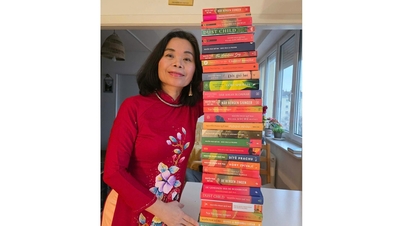
Writer Nguyen Phan Que Mai and her two English-language novels have been translated into 14 languages and published in nearly 20 countries.
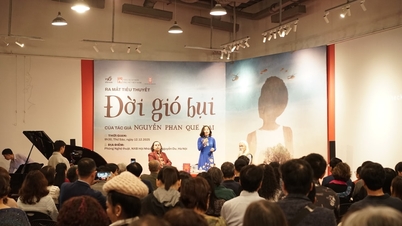
Dust Child by Nguyen Phan Que Mai was launched in San Francisco, USA, on the afternoon of March 16, 2023, at a familiar bookstore venue in the city, with a packed auditorium of hundreds of people. Perhaps even in Vietnam, it would not be easy to have such a large readership at a book launch event.
Dust Child overcame the challenges.
At that time, Nguyen Phan Que Mai's book was considered an international bestseller. Not everyone who writes in English or has their work translated into English immediately receives such enthusiastic support, especially in the context of declining reading culture and decreasing book print runs. Dust Child overcame those challenges.
Dust Child is a story about a mixed-race child searching for his father that touches upon a profound human emotion: fatherhood.
What makes Dust Child so special is its interconnected nature in building characters from both perspectives.
The author empathizes with the traumas of Dan, a helicopter pilot, as well as the alienated status of Phong, a mixed-race individual. Both, along with many others around them, are victims of war.
Through the connection between the two sets of characters and their two sets of sensibilities, American readers can cross Dust Child's bridge to gain a deeper understanding of the world of Vietnam, where events have been extensively documented in the press, but this may be the first time they see them through the profound and emotional lens of literature.
The novel, with its vivid details of Vietnamese life during and after the war, perfectly catered to the growing interest of Western readers in diverse national characteristics.
Nguyen Phan Que Mai grasped the shift in readers' aspirations; today's readers are less interested in topics such as human identity, loneliness, the meaning of existence, the existence of God...

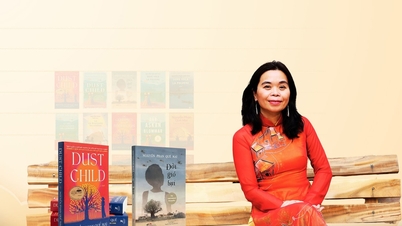
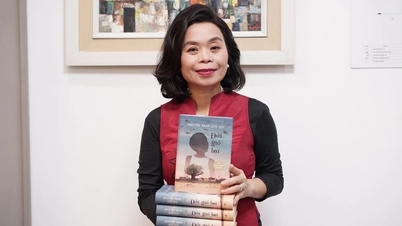
The English and Vietnamese versions of "Life in the Wind and Dust" (published by Vietnam Women's Publishing House and Nha Nam Publishing House, translated into Vietnamese by Thien Nga and the author)
It reflects the author's love for Vietnam.
In recent years, many international literary awards have consistently given prizes to works written on social issues.
Like the Booker Prize in 2022 for Shehan Karunatilaka's novel about the Sri Lankan genocide; in 2023 for Paul Lynch's novel as a prophecy of the dangers threatening democracy; and in 2024 for Georgi Gospodinov's work as a warning about the rise of the far right in Europe.
With the shift in subject matter, literary techniques have also changed. Contemporary writers still combine patterns from modernism and postmodernism, but prioritize maintaining a connection with reality, a clear and truthful tone, and adherence to authentic historical events and their own vivid experiences.
Dust Child met all those new criteria, which is one of the reasons why the work quickly caught the attention of publishers and translators around the world. And to achieve that success, it certainly wasn't a coincidence.
That success stems from the author's education, keen literary sensibility, and above all, his love for the people and for his homeland, Vietnam.
Dust Child, with its Vietnamese release in the version titled "Life in the Wind and Dust," can be considered a triumphant homecoming for the author and her work. Que Mai's long-standing international reputation has created anticipation and high expectations from readers. And, as a natural consequence, these expectations place immense pressure on the author.
How will Vietnamese readers perceive this work? Of course, it will still depend on each reader's perspective and literary sensibility. The pressure is immense, but I'm sure the author will overcome it, just as he has overcome many obstacles on his journey to bring his creation to the public in numerous cities across three continents, and perhaps even more in the future.
Over the past five years, Quế Mai's novels have, inadvertently, transformed her into an ambassador for Vietnam. Wherever she goes, Quế Mai speaks of her country, of the suffering and spiritual values of the Vietnamese people, with all sincerity and respect.
Que Mai, a petite woman, dares to think big and has a big dream: to bring Vietnamese literature to the world. Her writing ability and networking skills are still at their peak, promising many successes to come. And Que Mai's success is an achievement for Vietnam, for Vietnamese literature.
Source: https://tuoitre.vn/giac-mo-lon-cua-nguyen-phan-que-mai-2025121709440005.htm





















































































Comment (0)