

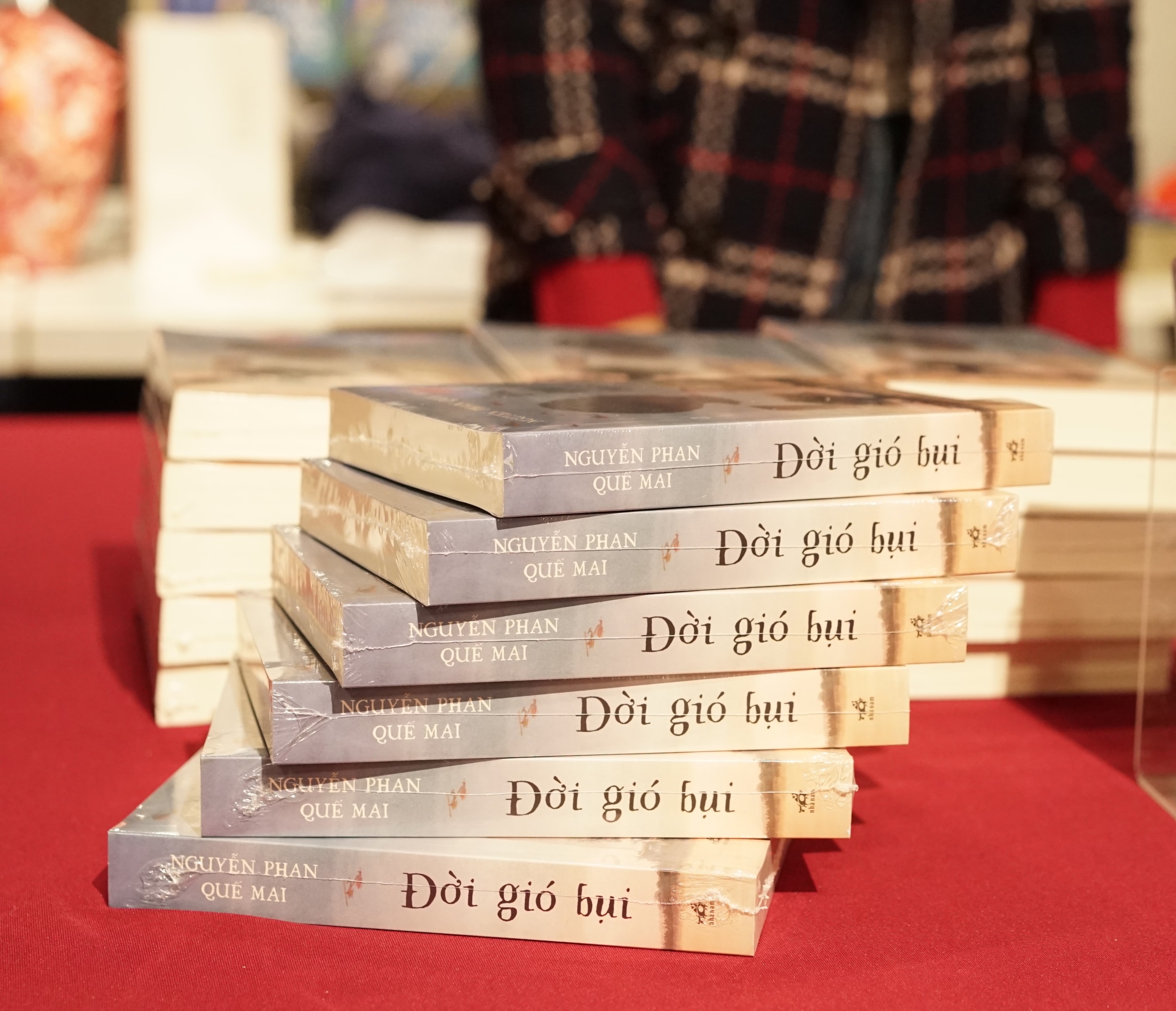
"Life in the Wind and Dust," a novel by writer Nguyen Phan Que Mai, was released in Vietnam in mid-December and is considered one of the most successful novels for boldly exploring this particular subject matter.
"Nguyen Phan Que Mai" and "Life of Wind and Dust" are undoubtedly two keywords that have attracted considerable attention from readers near and far in recent days. Nguyen Phan Que Mai (born in 1973) is a renowned author not only in Vietnam but also has made a significant mark on international literature. Que Mai's life, rich in experiences from her early childhood, has nurtured in her a wealth of stories, thoughts, resilience, and the determination to rise above adversity and assert herself.
As a daughter of many different regions: Ninh Binh, Nghe An , Bac Lieu… and for many years, Que Mai and her family have lived and worked in various countries: Bangladesh, the Philippines, Belgium, Indonesia, Kyrgyzstan… This multinational and multicultural environment has helped her accumulate life experience, broaden her horizons, and gain a deep understanding of her identity, her sense of belonging, and the delicate lines between her homeland and a foreign land.
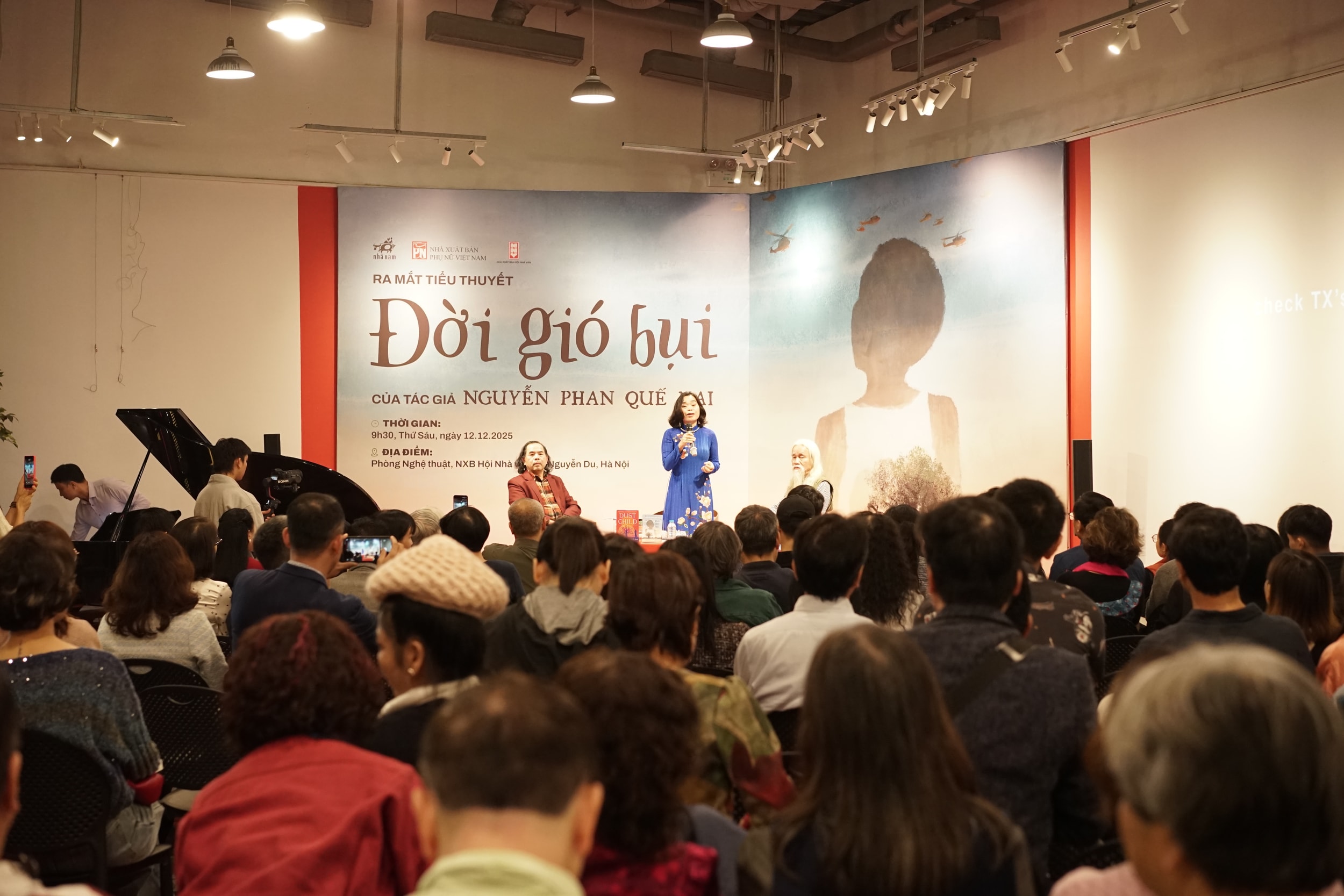
It is within this geographical and cultural shift that Nguyen Phan Que Mai has developed a multifaceted, insightful, and dialogue-rich perspective: viewing Vietnam from within through memory, and from the outside through the necessary distance of someone who has traveled far. In Que Mai's creative work, war and its aftermath are not merely themes, but a haunting historical and cultural obsession. "Life in the Wind and Dust" is the clearest embodiment of this approach.
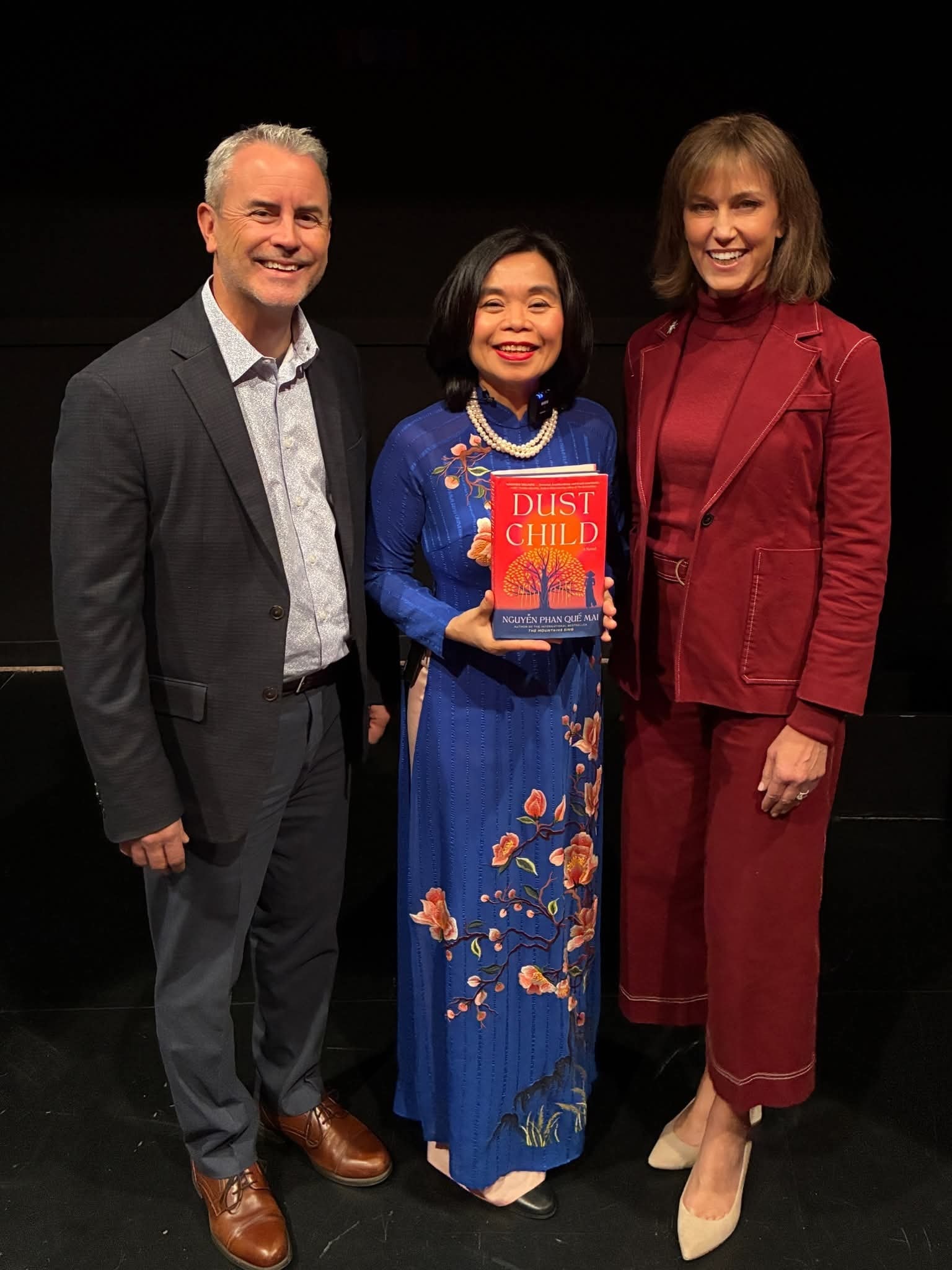
"Dusty Life" was first published in English in 2023 under the title "Dust Child". She chose to write in English to bring a work with Vietnamese settings and characters closer to international readers; and now, translating the work into Vietnamese and publishing it in Vietnam, she hopes to bring her "spiritual child" back to its roots.
Writer Nguyen Phan Que Mai shared: “To prepare for this return, I invested a great deal of time and effort into the Vietnamese translation of ‘Life in the Wind and Dust.’ I wanted the book to have my own writing style and spirit, not simply be a translation. Throughout the seven years I spent writing this novel, I dreamed of this day – the day my brainchild was born on Vietnamese soil.”
"Life in the Wind and Dust," nearly 500 pages long and divided into 21 chapters, largely revolves around two settings: "Saigon, 1969" and " Ho Chi Minh City, 2016." Many readers are captivated by the novel's dual timeline structure. In 1969, two sisters leave their village to work as bar girls in Saigon, entertaining American soldiers. In 2016, Dan, a former American helicopter pilot, returns to Ho Chi Minh City, trying to ease his regrets about his wartime actions and find his former girlfriend, Kim. Meanwhile, Phong is one of thousands of mixed-race children abandoned by their Vietnamese mothers and American fathers. Despite enduring a difficult childhood filled with poverty and shame, he remains determined to find his parents. As their lives intertwine, secrets are gradually revealed.
The perspective of "Life in the Wind and Dust" focuses on the lives of marginalized individuals: mixed-race children, women forced into harsh survival choices, and veterans carrying the burden of psychological trauma for the rest of their lives.
One of the most striking aspects of "Life in the Wind and Dust" is its elevation of the Vietnamese-American mixed-race child from a mere "minor detail" in history to the central focus of the story. For many years, mixed-race children have appeared in literature and film as victims of war or objects of pity. Nguyen Phan Que Mai goes beyond that perspective. She not only depicts the pain of discrimination but also places the mixed-race characters in specific, sometimes controversial, choices, forcing the reader to see them as moral subjects – albeit wounded and imperfect.
“Life in the Wind and Dust” doesn’t evoke feelings of pessimism or despair; on the contrary, it inspires a spirit of tolerance, forgiveness for past sins, and love and responsibility towards present life. Therefore, Life in the Wind and Dust is truly a very Vietnamese story, even though it’s written in English, and it’s also a kind of national narrative, highlighting the cultural character and the Vietnamese people who, despite hardship, have retained their unique beauty. I believe that domestic readers will enthusiastically embrace this style of storytelling, because to a greater or lesser extent, we all share a common past that needs to be shared and understood.”
Critic Mai Anh Tuan
On a deeper level, "Life in the Wind and Dust" raises the issue of identity. Identity in this work is not about searching for biological or legal facts, but rather a process of constant questioning. The characters are constantly confronted with the question, "Who am I?" in a social context not yet ready to accept hybridity and difference. Through this, Nguyen Phan Que Mai shows that war not only destroys living spaces but also shatters the fundamental frames of reference that help people define themselves.
The female characters in "Life in the Wind and Dust" also open up a noteworthy approach. Instead of idealizing or moralizing them, the author chooses an existential perspective, showing that these women exist in a situation where every choice is a loss. The character development in the novel does not aim to justify or condemn, but rather raises poignant questions about social responsibility and the moral standards formed in the unusual context of war.
It is noteworthy that Nguyen Phan Que Mai does not turn these women into "symbols of suffering." They are presented with full internal contradictions, both weak and strong, burdened with guilt yet needing to live for themselves. This approach helps "Life in the Wind and Dust" avoid a one-sided narrative while expanding the humanistic scope of the work.
In its portrayal of American veterans, "Life in the Dust" raises a sensitive but necessary issue in post-war literature: the psychological trauma of those who have committed violence. The psychological trauma in the work is not seen as "atonement," but as a psychological reality that needs to be acknowledged. This approach allows the work to open a more complex dialogue about personal responsibility, the consequences of war, and the limits of moral judgment.
Structurally, the intertwining of two timelines in the novel accurately reflects the operational logic of post-war memory. The past in "Life in the Wind and Dust" doesn't close, doesn't lie dormant in history, but continuously infiltrates the present, influencing the characters' choices and actions. This non-linear structure helps the reader better understand the "unsleepless" nature of the post-war period – a state that society must continue to confront directly. The novel keeps the reader in suspense, following and speculating with each step of the characters and the way the author intertwines and connects the storylines. Ultimately, the author allows human compassion, forgiveness, and sharing to prevail, connecting them all together.
Of course, "Life in the Wind and Dust" is not a perfect novel in every respect. Discerning readers may notice passages with a slow pace and details that serve as clear leads to the narrative. However, overall, it is a serious work with consistent artistic thinking and a clear awareness of its subject matter.
A commendable act, as shared by Nguyen Phan Que Mai, is that to show gratitude to the land that nurtured her childhood dreams, she donated all the royalties received from the first printing of "Life in the Wind and Dust" in Vietnam to the non-governmental organization Room to Read Vietnam to build and operate a library at Tran Quoc Toan Primary School in Bac Lieu.
In the context of contemporary Vietnamese literature, where post-war issues increasingly need to be re-examined with a sober and multifaceted attitude, Nguyen Phan Que Mai's "Life in the Wind and Dust" is a noteworthy presence, enough to open up necessary dialogues about how we are and will be living with the past.
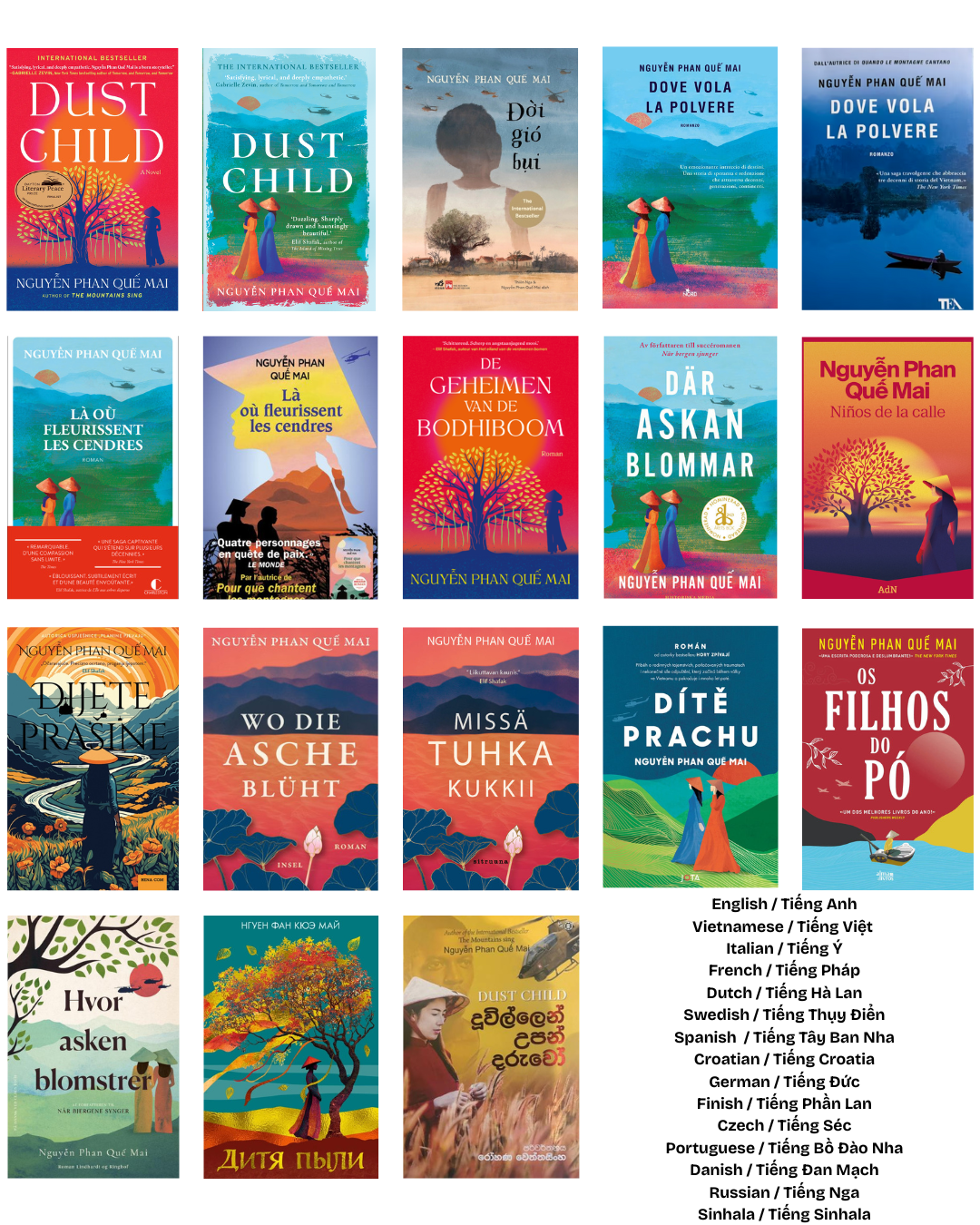
"Dust Child," first published in English in 2023, has since been published in 25 languages. It won the She Reads Award for Best Historical Novel in 2023. Prior to that, the book achieved other accolades, including: being shortlisted for the Edward Stanford Award for Place-Based Fiction; being named Best International Novel of the Year by Apple Books Canada; being named Best Book of the Year by Reader's Digest, Cosmopolitan, Buzz Magazines, and Book Riot; and being named Best Book of the Month/Season by the Los Angeles Times, Amazon, Library Journal, Chicago Review of Books, Ms. Magazine, BookPage, The Times, The Australian Women's Weekly, Sydney Morning Herald, and Apple Books.
Source: https://baonghean.vn/doi-gio-bui-and-hanh-trinh-kiem-tim-can-tinh-10316721.html
![[Photo] Standing Committee member of the Party Central Committee Tran Cam Tu working with the Central Inspection Committee](https://vphoto.vietnam.vn/thumb/1200x675/vietnam/resource/IMAGE/2026/05/28/1779969579668_ndo_br_bnd-2495-jpg.webp)







































































Comment (0)