In the memories of many generations, the sea has been both a source of livelihood and a place to entrust their hopes, worries, and the precarious lives of those who have drifted aimlessly.
But on another level, the seaside village is now bustling with tourists, as young people choose to return and share stories of the village.
Village storyteller
One morning at Tam Tien beach (Tam Xuan commune), after the fish market had closed, Vo Hong Ron busied himself tidying up the yard in front of his homestay. The sea was in front, and the village was behind. Everything here retained its original rustic charm, with low coconut trees, a basket lying upside down on the sand, and fishing nets still smelling of the open sea.
Few would have imagined that this young man, born in 1992, once lived the life of a true fisherman. After years of sailing the seas, Ron decided to sell his fishing boat and move ashore to work in tourism. It was a choice that many in the village doubted. But Ron himself saw something different in his homeland.
He realized that Tam Tien fish market has special value. It's a vibrant cultural space of the coastal residents. The early morning market sessions, the bustling bargaining, the way fishermen untangle their nets, sort their fish, and share stories about each fishing trip are all experiences that city dwellers can't easily find elsewhere.
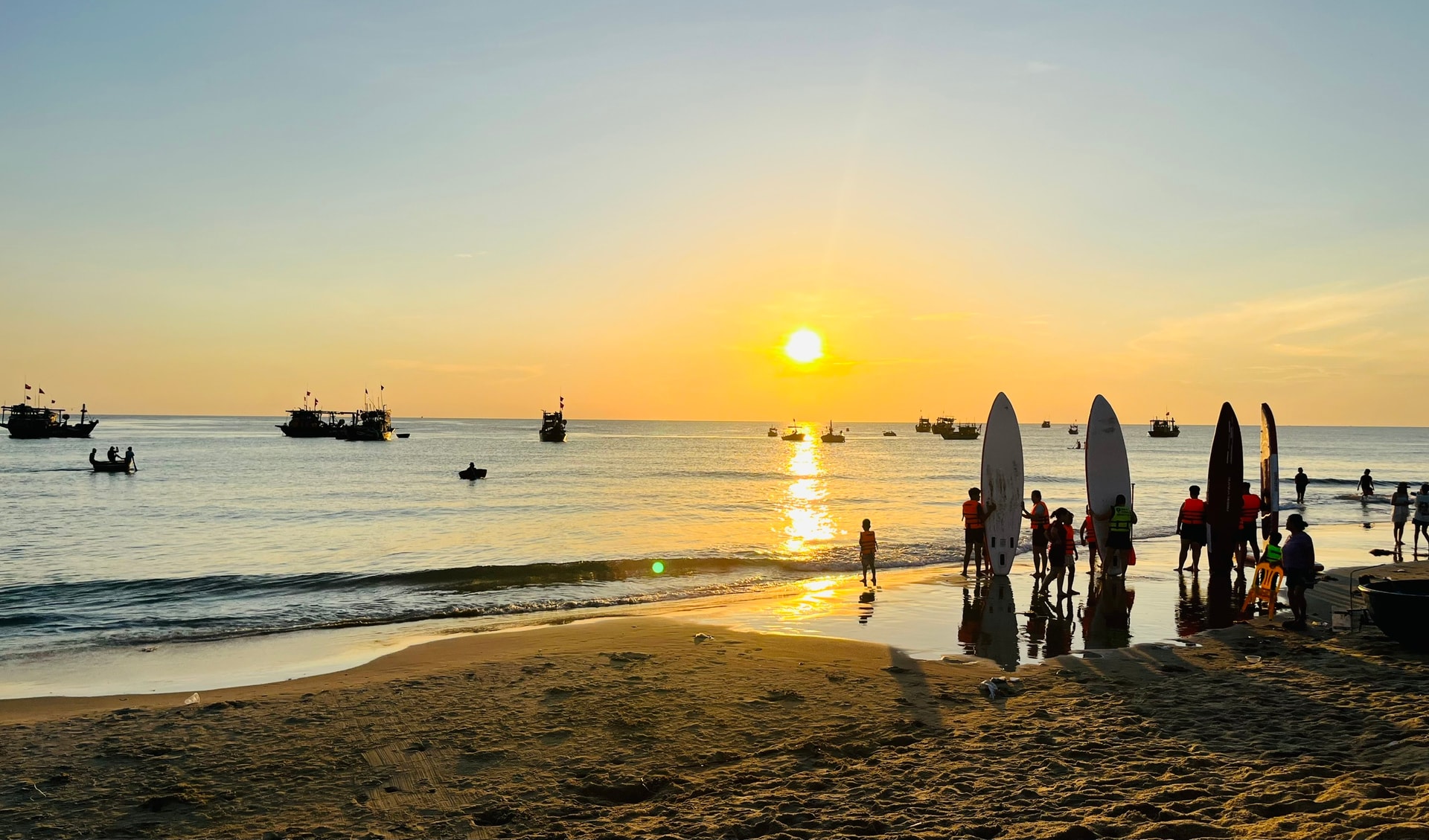
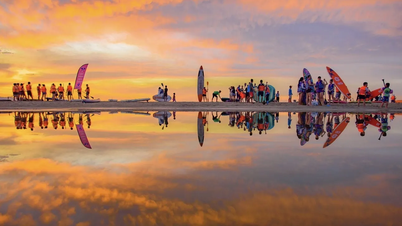
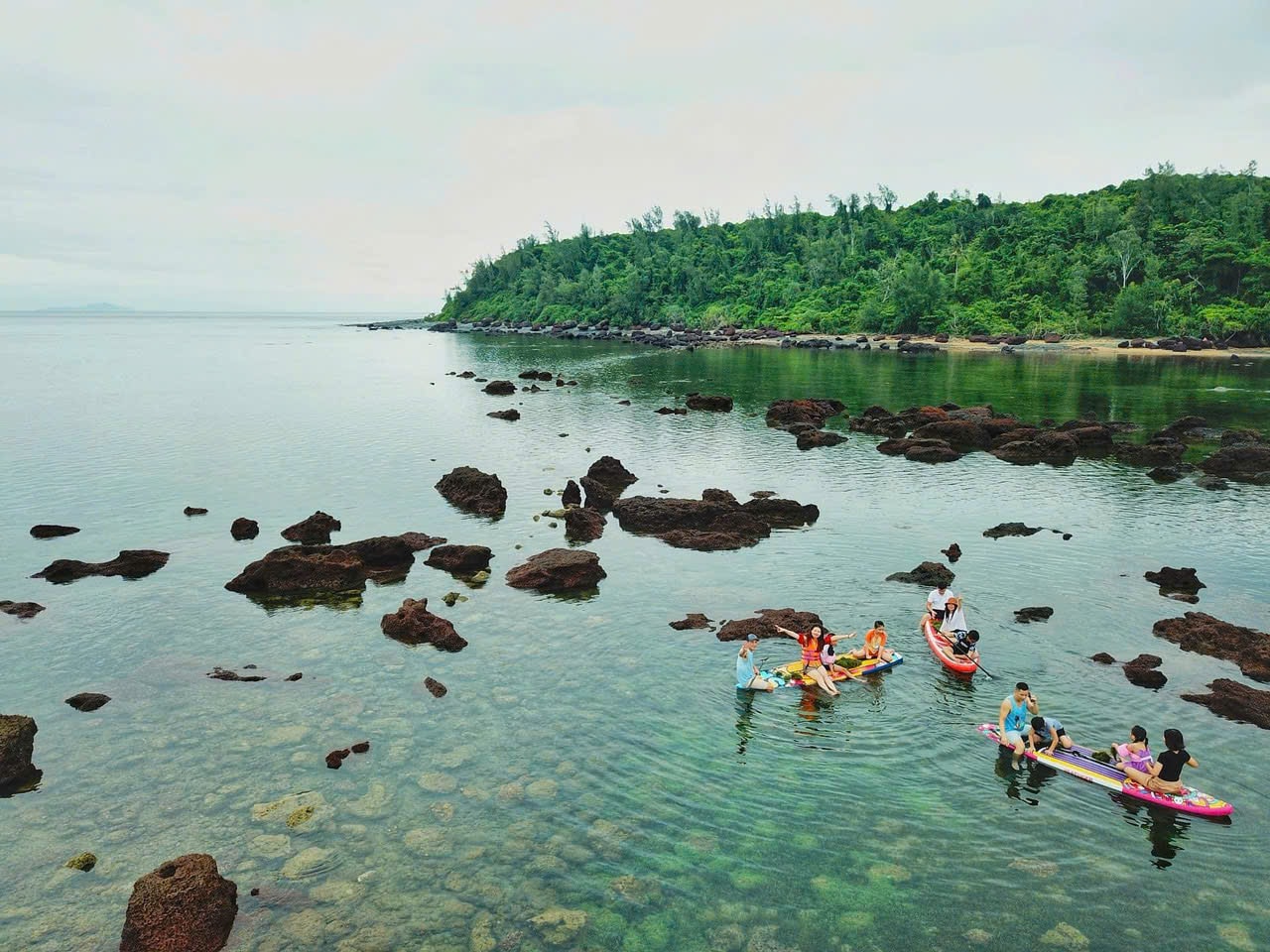
With that idea in mind, Ron began building a homestay with the rustic aesthetic of a coastal village. He cleaned up the beach, planted more trees, and opened experiential tours so that tourists could experience the fishing profession alongside the villagers, paddle SUPs on the sea in the early morning, and guide guests through the daily life of the fishing village.
What's remarkable is that the products Ron creates aren't based on elaborate staging. What keeps tourists coming back is the pristine beauty of the seaside village.



Visitors to Tam Tien need to wake up at four in the morning if they want to go to the fish market, listen to the sound of the waves, enjoy breakfast with local seafood specialties, and witness a rhythm of life that is gradually disappearing from many modern coastal cities.
In another corner of Quang Nam province, Vo Nguyen Tung, Director of the Cua Khe Handicraft Village Cooperative (Thang An commune), begins "telling the village story" through the famous Cua Khe fish sauce making tradition. He and his young colleagues choose to revive the memories of the coastal village by restoring its old values, from the traditional fish sauce making craft, the fishing village atmosphere, community festivals, and coastal culinary culture.

Tung and his colleagues set about renovating the village roads, creating space for households still practicing traditional fish sauce making to welcome tourists, organizing community cultural activities, and transforming daily life into experiential products. Through these quiet efforts, Cua Khe gradually appeared on the community tourism map as a destination evoking memories of the sea.
Indigenous capital
The coastal region of Quang Nam has long been a unique cultural melting pot, where each fishing village along the coast, from Dien Ban and Hoi An to Tam Hai and Tam Quang, preserves layers of maritime memories through customs such as worshipping the Whale God, the Fishing Festival, traditional folk singing, and crafts like net weaving and boat building.
Meanwhile, the coastal areas of Da Nang today, from Hoi An and Cu Lao Cham to Son Tra Peninsula, continue to maintain a rich marine cultural ecosystem with its own unique characteristics and heritage. This is a "living cultural resource" that needs to be awakened by the people of the community.
The journey of young people returning to coastal villages signifies a new impetus, not only for tourism development but also for reviving local memories, preserving the cultural depth of coastal residents, and opening up new livelihoods from indigenous heritage.
They "awaken" local memories through creative thinking, recounting the story of the fishing village through films about the lives of fishermen, experiences of pulling nets, making fish sauce, preparing seafood dishes, or traditional festivals, showing that the local community itself is the "soul" of the maritime cultural space.
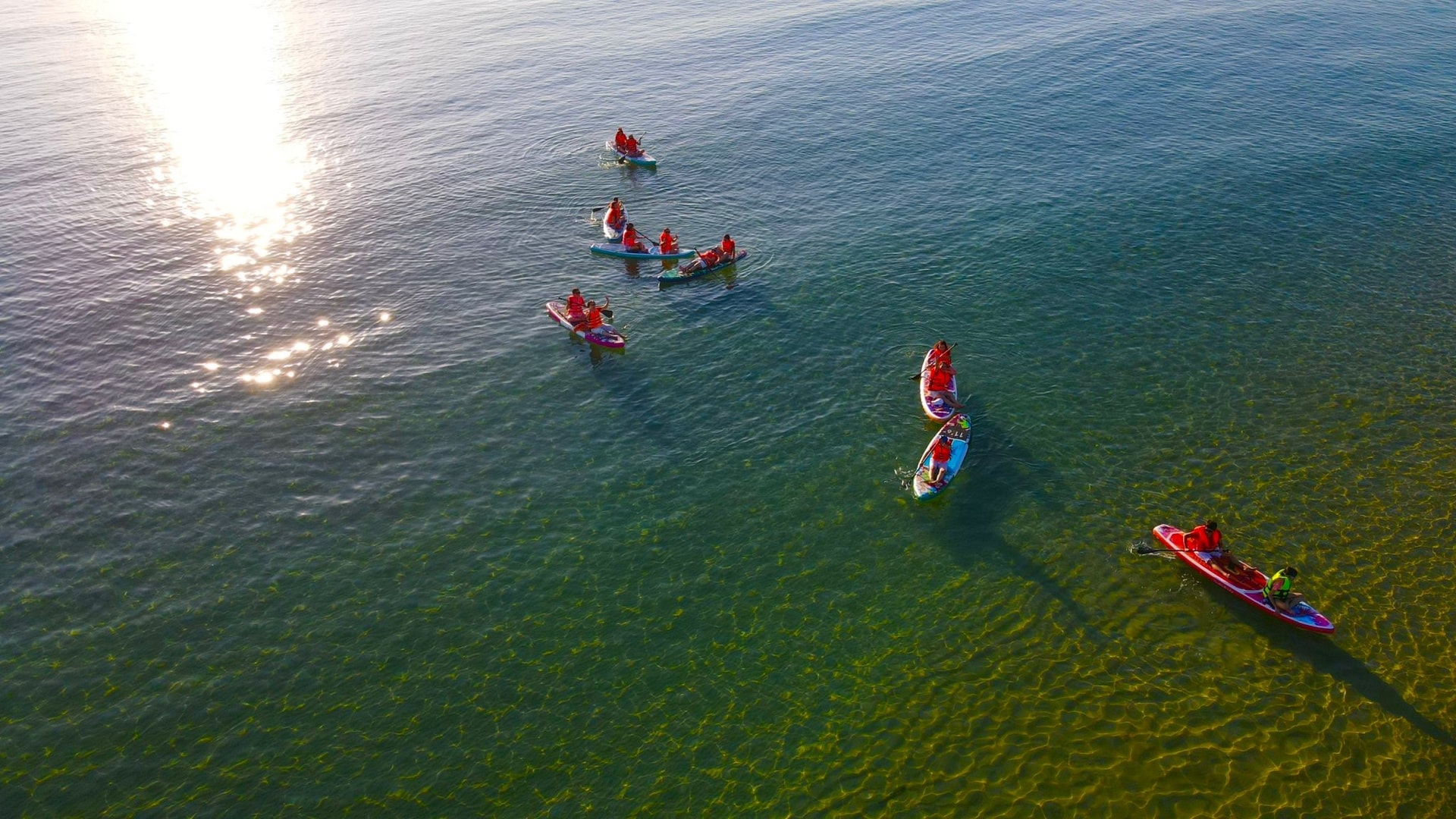
These innovative approaches demonstrate that developing coastal tourism cannot simply stop at exploiting the landscape or building seaside resorts. Without cultural depth, the sea can easily become a short-term, repetitive product that struggles to create a unique identity.



Maritime culture, therefore, needs to be viewed as a sustainable development resource, not only for community tourism but also for cultural industries and heritage education. Stories of fishing villages, memories of trading ports, the lives of fishermen, or traditional seafaring practices can all become material for films, performing arts, experiential spaces, or educational activities about the sea and islands for the younger generation.
More importantly, a long-term strategy is needed, in which culture is considered the foundation of development. From supporting young entrepreneurs with local resources, reviving sea festivals, digitizing heritage, to connecting tourism, culture, and education, these are the ways for coastal villages to preserve their identity and create sustainable long-term value.
It is part of the soul of the sea.
And from those waves, new dreams are beginning – dreams of a maritime and island cultural space that both preserves traditional memories and opens up a path to sustainable development.
Source: https://baodanang.vn/giac-mo-tu-chan-song-3339841.html
![[Photo] General Secretary and President To Lam receives Palestinian Ambassador Saadi Salama](https://vphoto.vietnam.vn/thumb/1200x675/vietnam/resource/IMAGE/2026/06/25/1782365384740_a1-bnd-9423-8322-jpg.webp)


![[Image] Ho Chi Minh City: Ma Lang area, Chicken-Rice Market about to change its appearance](https://vphoto.vietnam.vn/thumb/1200x675/vietnam/resource/IMAGE/2026/06/25/1782377698627_ndo_br_m1-jpg.webp)

![[Image] Schools organize meetings and introduce teaching models to students admitted to grade 10.](https://vphoto.vietnam.vn/thumb/1200x675/vietnam/resource/IMAGE/2026/06/25/1782368077271_ndo_br_z7970052192242-1ec8daeb77a6eed1a4e9f58c564ddd3e-jpg.webp)