

Over the past 12 years since the implementation of Directive No. 124-CT/QUTW of the Standing Committee of the Central Military Commission on “Strengthening leadership and guidance of political education work at units in the new period” (Directive 124) and 10 years since the implementation of the Ministry of National Defense 's Project “Innovating political education work at units in the new period” (Project), political education work throughout the army has achieved many positive results; however, there are still difficulties and limitations. The People's Army Newspaper records some opinions reflecting the results, methods, and lessons learned to further improve political education work in the future.
Major General HUYNH VAN NGON, Head of Political Department of Military Region 9:
Stay close to the unit's reality.
The implementation of Directive 124 and the Project has helped political officers correctly understand the important position and role of political education work, thereby dedicating time to investing in appropriate lesson plans and lectures; many units have promoted initiatives and improved the system of boards and signs; created models combining political learning with entertainment such as: "Magical Turret"; "Intellectual Wheel"; "Soldier's Playground"; "Military Club"... making learners enthusiastic, easy to understand, and easy to remember the learning content. Furthermore, by determining the content, curriculum, time, and teaching methods to closely match each teaching target group, lesson plans are prepared appropriately, avoiding the absolute emphasis on any specific content or form. Instead, they closely combine traditional and modern teaching methods, knowledge transmission with the exchange of practical experience, and education with self-education. Many units have implemented the "three essentials" model in political education (teaching effectively; learning effectively; and assessing results effectively); while also emphasizing the promotion of the learners' active participation, initiative, and creativity. Methods such as oral explanation combined with dialogue, visual education, and supplementary activities are applied flexibly and appropriately. A highlight in the implementation of Directive 124 and the Project is the widespread application and use of electronic lectures, which has yielded high effectiveness (conveying a lot of content in a short time; increasing visual appeal, practicality, richness, and vibrancy; stimulating the active, proactive, and creative participation of learners). To date, most political education officers in the unit have become proficient in using electronic lectures and projection equipment.
To further enhance the effectiveness of political education, in the coming period, Party committees, commanders, political commissars, political officers, political agencies, and cadres at all levels need to consistently uphold their responsibilities, thoroughly understand and grasp the objectives, requirements, content, and implementation solutions of the Project. At the same time, they must closely follow the guidance of higher levels, the specific situation, and the task requirements of their units to develop thorough, scientific, and decisive leadership and guidance measures; and maximize the initiative and creativity of political agencies and political cadres at all levels in advising, proposing, guiding, and directing implementation. They should regularly focus on building model units, promptly drawing lessons and replicating new and effective approaches. Investment in equipment should be prioritized, focusing on units on combat readiness, units with special tasks, and those stationed in difficult areas.
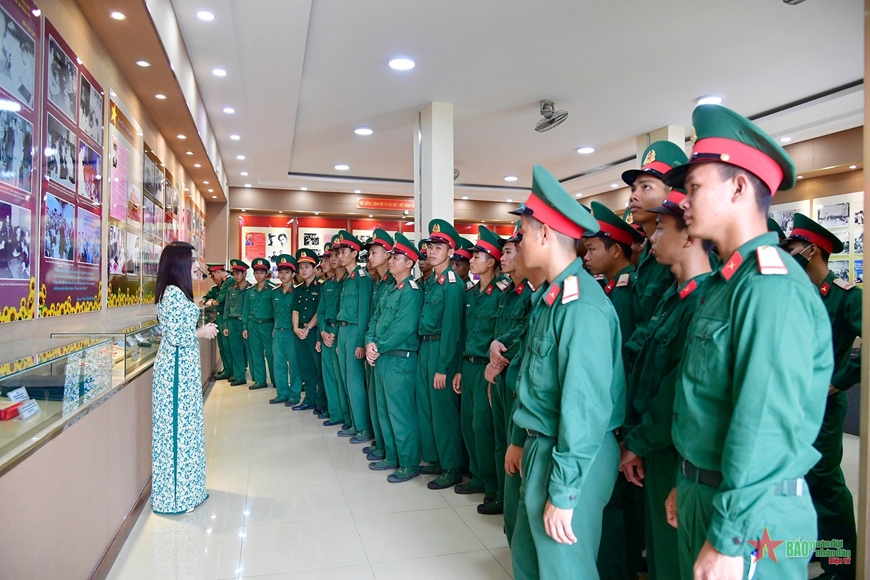 |
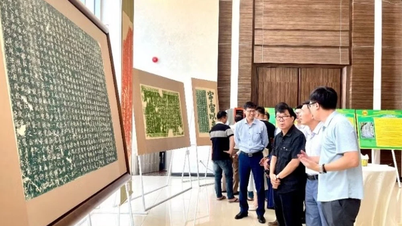
| Officers and soldiers of the 29th Signal Brigade and the 226th Anti-Aircraft Artillery Brigade (Military Region 9) visit the Military Region 9 Museum. Photo: THANH HUY |
Colonel DUONG NGOC TUYEN, Head of Political Affairs Department of the Petroleum Department, General Department of Logistics:
Innovation must be substantive.
Implementing Directive 124 and the Project, units under the Petroleum Department have actively innovated and applied various forms and methods of education suitable for each target group and the practical realities of each unit, following the motto of combining traditional and modern educational methods, and emphasizing the application of information technology to make learning easier for students. Units have effectively utilized cultural institutions, thereby contributing to enhancing the political fortitude and determination of the troops. As a result, political education work has become increasingly systematic, high-quality, and effective. In the coming period, the Petroleum Department will continue to thoroughly understand the position, importance, and requirements of reforming political education work in the new phase. This reform must be substantive, promoting the role and responsibility, and innovating thinking, approaches, and methods in leadership and guidance; focusing on strong, comprehensive, and synchronized reform of the content, programs, forms, and methods of political education. This also includes improving the quality of staff working in political education; increasing investment and ensuring the provision of equipment and facilities to support political education work...
Colonel PHAN DANG THANH, Head of Political Affairs, Air Force Officer School, Air Defense-Air Force Command:
Perform regularly and synchronously.
In addition to training military pilots, airborne search and rescue officers, and aviation technicians, the Air Force Officer School also has flight training regiments, so the lecture halls are not just traditional classrooms but also represent the airfield, the sky, and the cockpit. The school does not stop at prescribed forms of political education but constantly innovates and improves the quality of education in social sciences and humanities subjects so that all students who meet the political criteria can become cadres and Party members serving long-term in the Army. After Directive 124 and the Project were issued, the school focused on innovating the content, programs, forms, and methods of political education to suit the actual situation and each target group, as well as the mission requirements of the units; improving the quality of the teaching staff; innovating the management, inspection, review, and evaluation of political education results; and strengthening the assurance, management, and effective use of equipment serving political education. Through this, various forms of political education have been implemented seriously. In addition to political studies, units have also applied and closely combined basic education with continuing education; general education with specific education; and political education with the dissemination and education of law... As a result, the political fortitude, revolutionary ethics, and practical operational capacity of cadres, trainees, and soldiers have been gradually enhanced. I believe that political education must be consistently emphasized and implemented synchronously at all levels and in all sectors.
Lieutenant Colonel Nguyen Xuan Giang, Political Officer of Battalion 1, Brigade 382, Military Region 1:
Focus on leadership to thoroughly address the shortcomings.
Over the past period, the unit has consistently innovated and diversified its political education methods. The preparation of lectures by officers has received due attention; emphasis has been placed on developing model lectures for various target groups. The unit has implemented a systematic training and refresher course, focusing on: the process of preparing and conducting political lectures; the content, form, and methods of a political lecture session at the team level; skills in preparing and conducting lectures using presentations; and methods for maintaining discussion among platoon leaders. We also prioritize vivid visual education combined with organized open education, general education with specific education; and regularly coordinate closely with local Party committees, authorities, the people, and military families to educate soldiers, especially new recruits.
Besides the positive results, we also frankly acknowledge some limitations that need to be addressed, such as: At times, some Party committees and unit commanders have not truly paid attention to leading, directing, and inspecting political education work, resulting in sometimes ineffective implementation. Although the forms and methods of education have been innovated, the application process has not been flexible and creative, especially in organizing and maintaining discussions in groups, which is still rigid, inflexible, and ineffective; the combination of political education with military training, ideological management, and discipline has not been truly effective, thus failing to contribute to overcoming disciplinary violations within the unit. The level of comprehensive knowledge, capabilities, and practical experience of some officers in charge of political education, especially the political commissars, deputy political commissars of companies (those directly involved in teaching), and platoon leaders (group leaders in discussions), still have some limitations... In the coming time, the Battalion Party Committee and command will focus on leading the thorough khắc phục of these shortcomings; and maintain strict implementation of the regime and discipline of political study.
Major NGO THANH LUAN, Political Officer of Battalion 15, Division 395, Military Region 3:
To innovate teaching, one must innovate oneself.
As the instructors directly teaching the troops, the teaching staff plays a crucial role in determining the quality of political education at the unit. Therefore, in recent times, we have regularly strengthened the teaching staff, strictly maintained discipline through lesson plans, resolutely refused to approve lectures that were presented incorrectly or had poorly prepared content, and required 100% of teachers to use electronic lesson plans. We assign experienced and highly qualified instructors to provide model lectures, mentor, and train newly graduated officers. Every year, the unit organizes a political education competition to allow the staff to exchange and learn from each other's experiences.
Political education is often considered dry and rigid, but if instructors know how to innovate, the lessons can become lively, engaging, and captivating for the learners. To achieve this, based on the fundamental content outlined in the curriculum, instructors should closely adhere to the target audience when preparing lesson plans, using examples and illustrations relevant to the daily lives of soldiers. They should also regularly update and supplement their knowledge to provide timely and useful information relevant to the Army's and unit's mission requirements; combining education to raise awareness with ideological orientation and practical guidance for learners. For a lecture to be effective, instructors must master the content, deviate from the lesson plan, maintain a mature demeanor, use engaging teaching methods, deliver expressive speeches, and use clear, easy-to-understand, easy-to-remember, and easy-to-note-taking language.
Major NGUYEN THANH THAI, Deputy Political Officer of Hong Van Border Gate Border Guard Station, Thua Thien Hue Provincial Border Guard Command:
The method of political education is very important.
Implementing Directive 124 and the Project, with the motto "wherever there are soldiers, there is political education," we have focused on innovating the planning and development of political education programs tailored to each target group and task; ensuring comprehensive educational content, concise and easy-to-understand lecture structure, and memorability. As a result, political education has undergone a significant transformation; the political fortitude and awareness of officers and soldiers have been enhanced... To continue effectively implementing Directive 124 and the Project, it is necessary to continue innovating the forms and methods of political education at the unit. I believe this is a very important issue, because after correctly identifying the goals, programs, and content, the use of appropriate forms and methods of political education is crucial to its quality. In reality, the innovation and diversification of forms and methods make political education more attractive, engaging, persuasive, and deeply ingrained in the thoughts and feelings of officers and soldiers. In addition, attention should be paid to organizing activities such as: sightseeing, watching movies, researching and studying on the internal network; political and current affairs briefings, reading newspapers, listening to the radio, watching television; competitions, sports events, cultural and artistic activities... to create richness and attractiveness for the soldiers.
Source

![[Image] Shipbuilders exposed to steel and record-breaking heat.](https://vphoto.vietnam.vn/thumb/1200x675/vietnam/resource/IMAGE/2026/06/04/1780545781745_ndo_br_img-5402-4683-jpg.webp)


























![[Video] Sunset at Lap An Lagoon – Where the sun sets over the fishing nets](https://vphoto.vietnam.vn/thumb/1200x675/vietnam/resource/IMAGE/2026/05/31/1780192137701_beach-landscape-sea-water-nature-grass-745871-pxhere-com.jpeg)























Comment (0)