

Vietnamese traditional paper-making crafts, such as dó paper and dướng paper, once faced the risk of extinction due to the dominance of cheap industrial paper. But now, dó paper is making a comeback thanks to the creativity of young people. They have given traditional Vietnamese paper a new face…
Rediscovering fragments of tradition
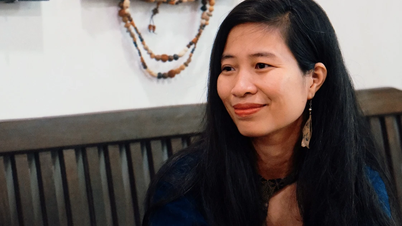
In the final days of the year, Doan Thai Cuc Huong is extremely busy. Besides her English teaching job at school, she works almost every night until well past midnight to fulfill orders from all over the country and abroad. Her small house in a narrow alley on Dong Tac Street, usually cluttered with lights, fans, and paperwork, is even more crowded these days with calendars, greeting cards, and pretty red envelopes made of traditional Vietnamese paper. The house is so cramped that whenever she receives guests, she has to "move the location" to a café.
Huong shared that her encounter with dó paper began during a class on making dried flowers, where the instructor gave her a piece of dó paper. Holding the rough, warm-toned paper with its unique patterns, Huong exclaimed, "Wow, how can there be such beautiful paper?"
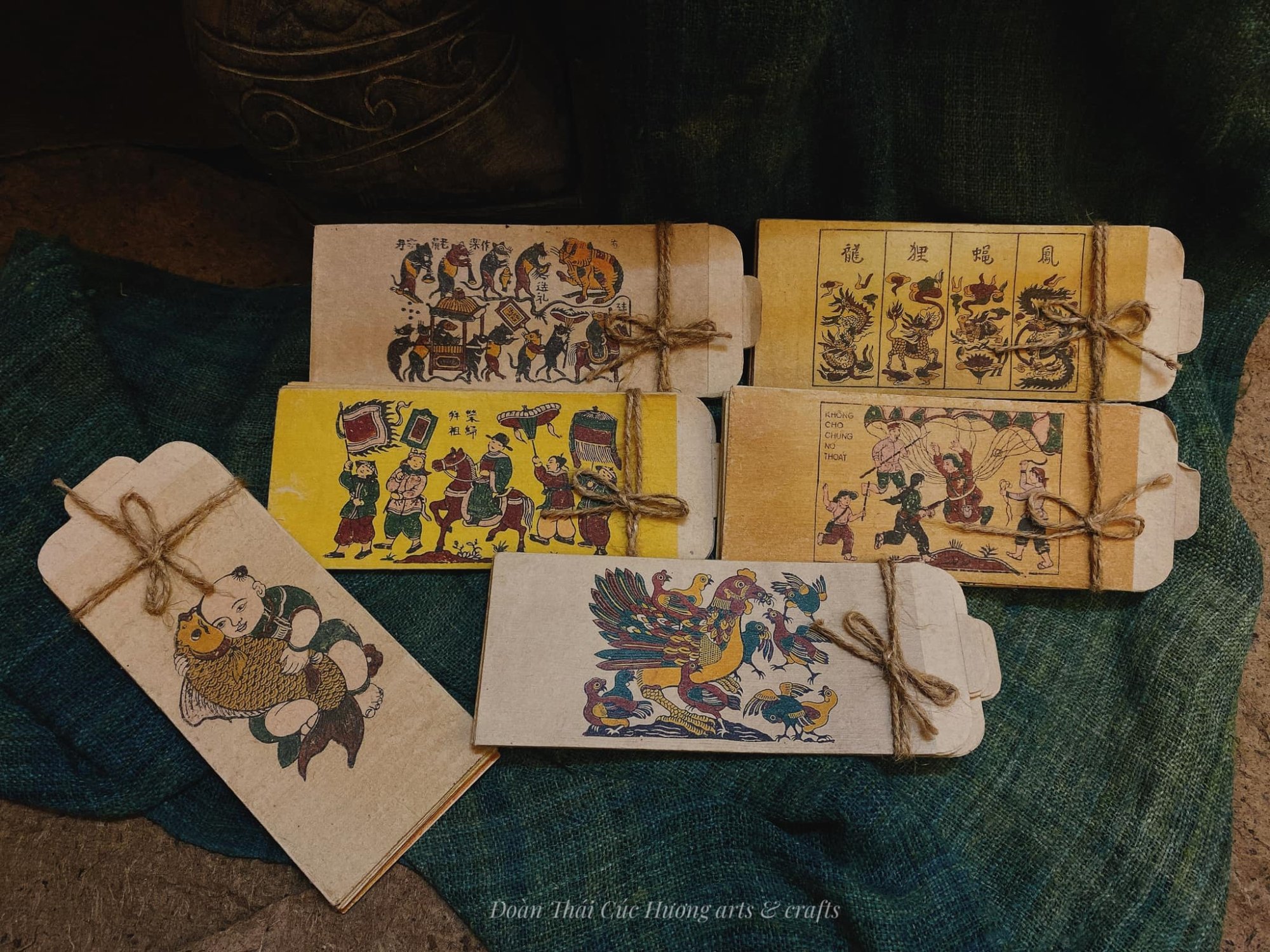
The red envelopes, made from traditional Vietnamese dó paper, are decorated by Đoàn Thái Cúc Hương with folk paintings, reflecting the rich culture of Vietnam.
That day was also the first time Huong learned about a traditional Vietnamese paper, hearing names like "do paper" and "duong paper." These types of paper, so deeply rooted in Vietnamese culture, were a new discovery for Huong, and she was immediately captivated.
“At that time, I had no idea what dó paper was, I had only heard somewhere about diep paper used for Dong Ho paintings. I didn't even know that diep paper was actually dó paper coated with diep paper, ” Huong said.
After doing some research, Huong found that the exploitation of traditional paper products is still limited and not fully realized. Besides a few artists using it as a painting material, some young people in their 20s, like herself, use dó paper as a raw material for handicrafts. However, this approach is limited to the most basic consumer uses, such as making notebooks, calendars, or folding paper in the Japanese origami style. Meanwhile, in Japan, Korea, Thailand, and Indonesia, they also have traditional paper and utilize it very well. Why is it that Vietnam has such a beautiful piece of paper but hasn't exploited it, or rather, hasn't exploited it to its full potential?
Haunted by this thought, in 2021 Huong spent five months thinking and experimenting about "what to do, how to do it" with Do paper. The more she researched, the more unexpected things she discovered and the more new ideas she gained. To this day, Huong has tried her hand at Do paper with products that reflect traditional Vietnamese culture, such as paper fans, decorative lamps, rotating lanterns, notebooks inlaid with Bodhi leaf skeletons, etc.
Huong revealed that she loves history and had intended to study it since high school. However, for various reasons, she switched to working as an English teacher. Now, thanks to Do paper, she has been able to reconnect with history, bringing back folk art forms that are gradually fading away. For example, in her lantern, Huong chose themes from Dong Ho folk paintings such as "Vinh Quy Bai To" (Returning Home in Glory), "Dam Cuoi Mua Mua Chuot" (Mouse Wedding), stories from traditional opera, or motifs on bronze drums… Some of the paper lampshades she made feature prominent lotus flowers and leaves decorated with paper carving techniques. Another lampshade in the collection is adorned with dried flowers, painted indigo leaves, and a light yellow background made from gardenia plant material. Or, in the "Luc Mieu Duoc Do" calendar for the Year of the Cat, the cats are depicted very vividly and adorably playing among Do flowers, Duong leaves, or bundles of banana fibers.
“ I don’t think it’s anything too important or a big message. It’s just small pieces of tradition brought into an item, and those little things linger, so that at times, people reflect and realize, ‘Ah, I think I’ve seen that somewhere before,’” Huong confided.
Selling the story, "promoting" the product.
Unlike most people, for each product she creates, Huong follows a common "formula": she comes up with an idea, mentally shaping everything from the form and size to the combination of materials, and then starts working on it. She never sketches beforehand, so the process of contemplating the idea is the most important. Huong says that there are times when she sits idly for half an hour; people might think she's not doing anything, but in reality, she's resetting her mind and generating new ideas. " That's when I expend the most energy; I'm sitting there doing nothing but feeling very stressed and tired, " Huong shared.
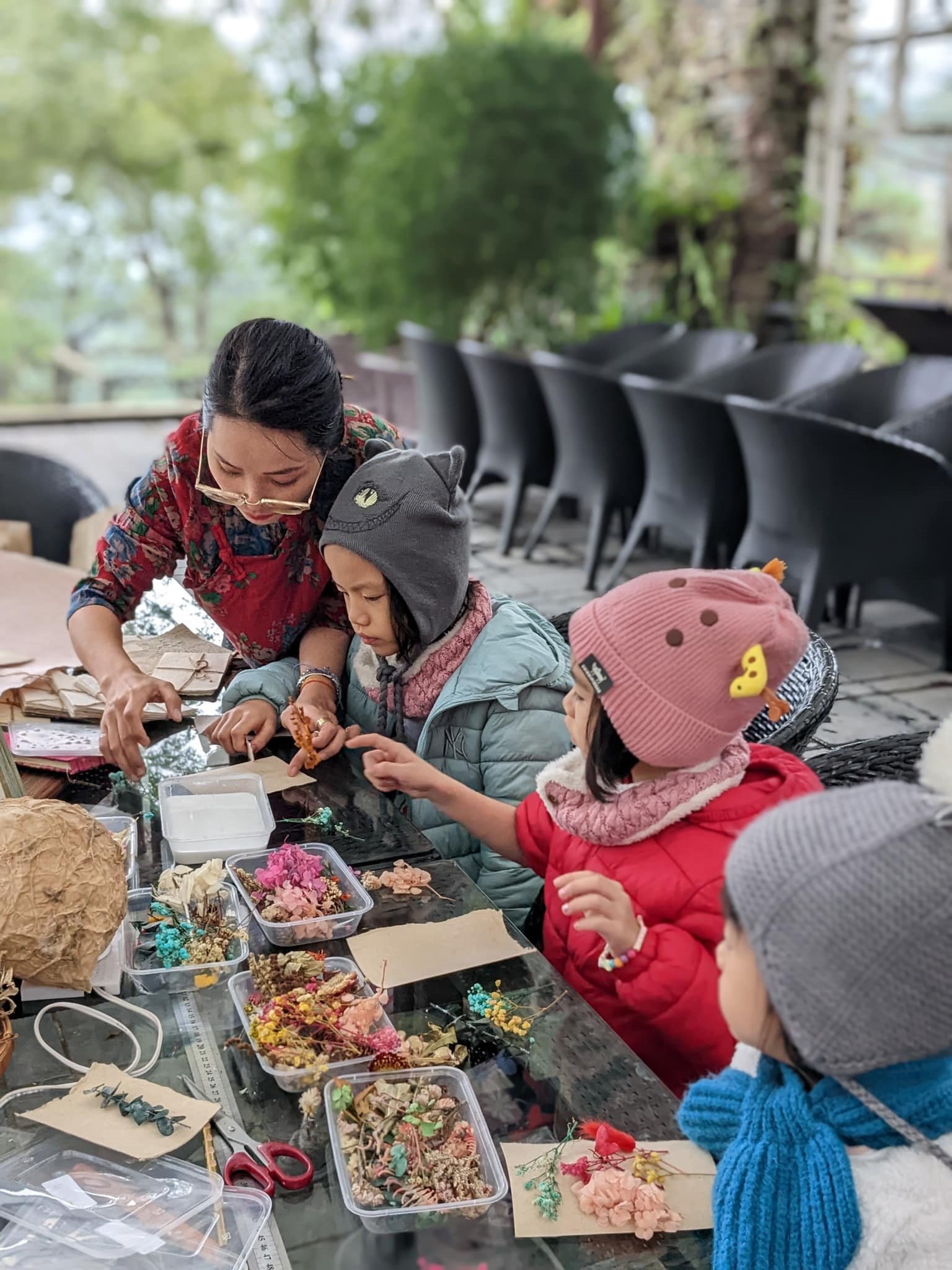
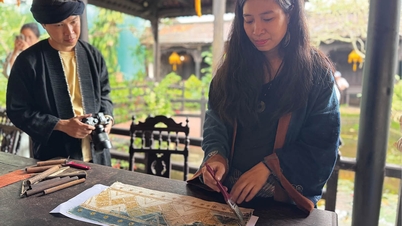
Doan Thai Cuc Huong guides children in "playing" with paper in a workshop. Photo: Dinh Trung
Because of this significant "investment," the products the young woman creates are meticulously crafted, exquisitely detailed, and often unique, truly deserving of the title of works of art. Huong recounts that one customer, upon holding a notebook made of traditional Vietnamese dó paper, exclaimed that it was so beautiful they didn't dare write in it. Huong had to reassure the customer that they deserved to use the notebook, to keep a diary, and after use, to keep it as a keepsake.
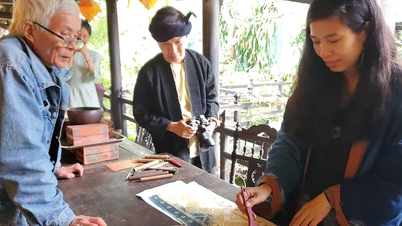
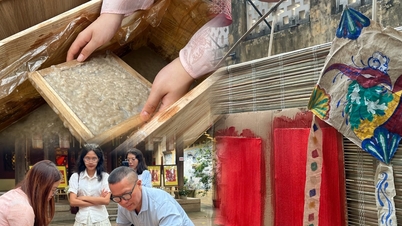
Recently, Huong has not only been making handicrafts but also experimenting with "reinventing" traditional Vietnamese dó and dướng papers. Describing herself as meticulous and detail-oriented, Huong goes directly to the paper production sites and works alongside the artisans to create papers that meet her specific requirements. The young woman has experimented with adding dó bark, rice husks, or banana fibers to the paper to create very special sheets, unique variations that she calls "dó patterned" paper. She has also boldly experimented with coloring the paper by using clay sourced from a rural area in Hoa Binh province as a coloring material. The lampshades coated with this "earth paint" are very distinctive; as the color fades, they become more subdued and antique, making them very appealing.
Huong frankly stated that money is very important to her because she went through the arduous process of starting her own business entirely on her own. However, when creating her artwork, she seems to forget all her worries. At that time, she works as if it were self-torture, sometimes going all day without eating, all just to satisfy her passion. Only when she finishes and sees her creations and feels satisfied, does she allow herself to rest and relax.
Sharing further, she admitted that her products are "not cheap," but the young woman is still confident that many people are waiting, as she receives messages every few days asking, "When will the new product be available?". This strong-willed young woman also rejected all suggestions to expand production. She wants to control every step herself, from brainstorming ideas and making the product by hand to personally delivering it to customers.
“ I’ve received quite a few offers to sell my products in the Old Quarter completely free of charge. I know there would be many customers there, many foreigners who would be very interested in my products. But there are only a few salespeople there; they simply deliver products to customers and collect money. For me, selling the product is secondary; selling the story is primary. Each product I create has a story behind it, something only I understand and can tell. I’m not just selling the product, but the stories that accompany it, ” Hương concluded.
The Vu
Source
![[Photo] Capturing the moment the tide recedes at Yen Binh Son rapids - a million-year-old scenic spot in Quang Ngai.](https://vphoto.vietnam.vn/thumb/1200x675/vietnam/resource/IMAGE/2026/05/19/1779175463885_yen9-1199-jpg.webp)
![[Photo] National Assembly Chairman Tran Thanh Man attends the groundbreaking ceremony for the National Highway 1A spatial axis project.](https://vphoto.vietnam.vn/thumb/1200x675/vietnam/resource/IMAGE/2026/05/19/1779161360398_ndo_br_bnd-1412-jpg.webp)

































![[Photo] General Secretary and President To Lam receives Indian Defense Minister Rajnath Singh](https://vphoto.vietnam.vn/thumb/402x226/vietnam/resource/IMAGE/2026/05/19/1779184046302_anh-man-hinh-2026-05-19-luc-16-46-58.png)












Comment (0)