

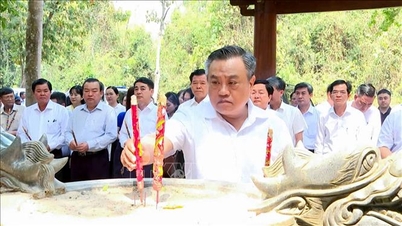
On the occasion of the 80th anniversary of the establishment of the Zone D War Zone and the 65th anniversary of the establishment of the Central Committee of the Southern Region, the immense historical and political values of these "red addresses" continue to be affirmed and disseminated, becoming a spiritual resource for development today and in the future.
A “dual conservation” effort
Nestled amidst the vast green forests of the Southeastern region of Vietnam, the Zone D War Zone and the Central Committee of the Southern Region are not only historical landmarks but also symbols of the indomitable will and revolutionary spirit of the nation. In the journey of preserving and promoting these values, the Conservation Area plays a particularly important role.
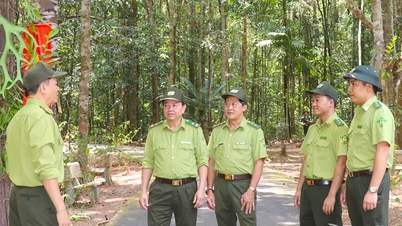
Ms. Dinh Thi Lan Huong, Deputy Director of the Conservation Area, said: Within the area under its management, there are currently three historical sites: the Eastern Southern Region Party Committee (1961-1967), the Central Bureau of the Southern Region (1961-1962), and the Suoi Linh Tunnel (1962-1967). These are all national-level historical sites with profound historical significance. The D War Zone was a long-standing revolutionary base, a place that fostered the spirit of "the arduous yet heroic Eastern region," marking many important events in the two protracted resistance wars of the nation. Meanwhile, the Central Bureau of the Southern Region was the nerve center directing the revolutionary movement in the South, demonstrating the strategic stature and leadership art of the Party at that time.
"These two relics not only have historical value, but they are also vivid evidence of the correct revolutionary path and the strength of national unity, having profound significance in educating today's young generation about traditions," emphasized Ms. Dinh Thi Lan Huong.
For Dong Nai province, owning and preserving these relics is both a source of pride and a great responsibility in conserving and promoting heritage values, contributing to the development of tourism, education, and scientific research. As the unit directly managing relics located deep within the special-use forest, the Conservation Area faces many unique challenges such as: vast and complex terrain, difficult access within the forest, harsh climate, and the pressure of forest protection, fire prevention, and firefighting...
According to Mr. Nguyen Van Ha, Director of the Center for Ecology, Culture, and History of the D War Zone, the biggest challenge is the requirement for "dual preservation," which involves maintaining the forest ecosystem while preserving historical values without disrupting the original space of the relic site.
To solve this "problem," the Conservation Area has made concerted efforts to implement a comprehensive set of solutions. These include perfecting an integrated master plan that combines conservation and development; restoring historical sites based on the principle of minimizing intervention and preserving original elements; applying technology in management and digitizing data; strengthening inter-sectoral coordination; and raising community awareness. "We consider the community a key factor in sustainable conservation, through educational programs and green clubs, gradually fostering a shared awareness in protecting heritage and forest resources," shared Mr. Nguyen Van Ha.
Over the years, many structures at the Zone D War Zone and the Central Committee of the Southern Region have been restored and renovated, becoming prominent landmarks. The system of offices and residences of the leaders and various departments has been restored to their original form from the resistance war era. In addition, structures such as tunnels, trenches, shelters, and the Hoang Cam kitchen have also been restored, adapting to the natural terrain and vividly recreating unique military art.
Promoting the role of disseminating historical values.
Beyond mere preservation, historical sites are playing a powerful role in traditional education. Programs focusing on origins, historical journeys, and ceremonies for joining the Youth Union and the Party at these sites have attracted a large number of students, young people, and youth union members. In particular, experiential learning models such as exploring underground tunnels, living in a forest environment, and recreating life during the resistance war have made history more accessible and vibrant.
"We aim to transform history lessons into practical experiences, so that the younger generation not only understands but also deeply feels the sacrifices of their ancestors," shared Ms. Dinh Thi Lan Huong.
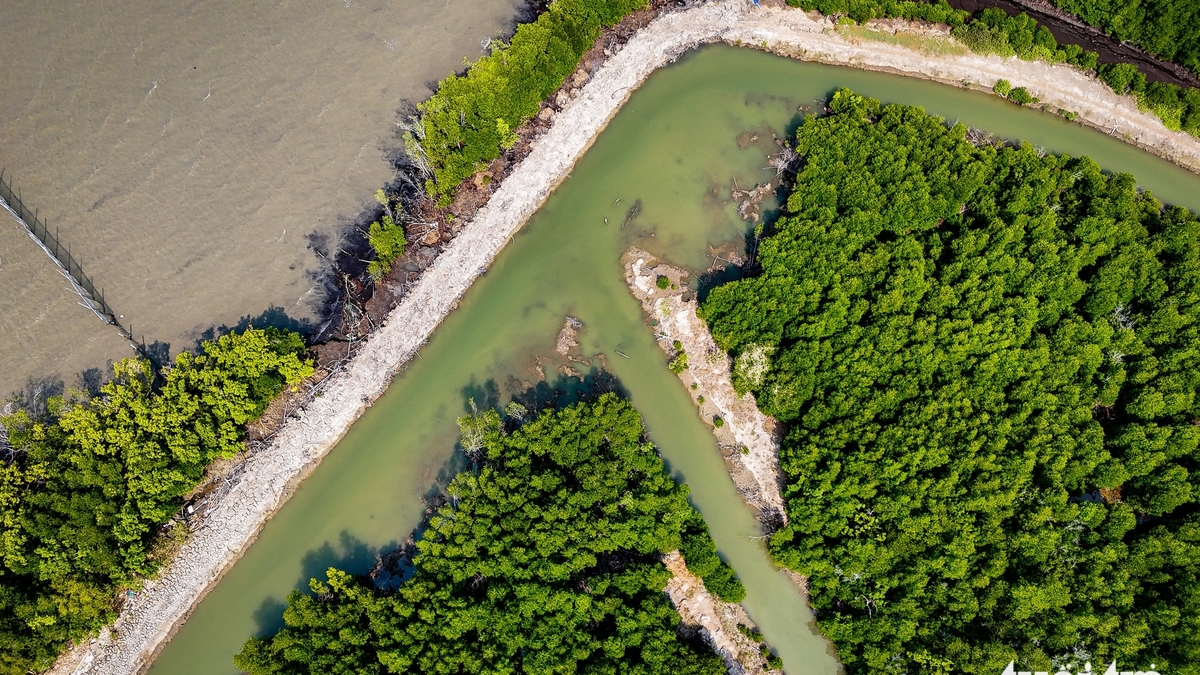
The conservation area, managed by the Provincial People's Committee, covers over 100,000 hectares of forest and Tri An Lake, boasting a rich and valuable ecosystem. This gives the area of the Dien Khu D War Zone great potential for developing eco-historical tourism.
“The D War Zone is not only a glorious memory but also a source of spiritual strength, fostering patriotism, self-reliance, solidarity, and creativity. On the occasion of the 80th anniversary of the founding of the D War Zone and the 65th anniversary of the founding of the Central Committee of the Southern Region, we want to convey a message to the younger generation: cherish history and transform revolutionary values into practical actions.”
Deputy Director of the Conservation Area
DINH THI LAN HUONG
According to Mr. Nguyen Van Ha, the Conservation Area has been approved by the Provincial People's Committee for the Ecotourism Development Project for the period 2021-2030; and is gradually forming tour routes combining forests and historical sites, attracting investment from businesses. The province's future orientation is to develop historical sites into typical destinations of the Southeast region based on the following pillars: preserving the original state of the sites; developing tourism and educational experiences; applying digital technology; regional linkages; and improving service quality.
Amidst the vast forests of Dong Nai, the journey of preserving historical sites is not only about conserving the past but also about building the future. When history is "awakened" through new approaches, these "red addresses" will continue to spread their value, becoming a powerful spiritual driving force, accompanying the sustainable development of Dong Nai and the entire country.
An Nhon
Source: https://baodongnai.com.vn/xa-hoi/202604/gin-giu-dia-chi-do-giua-dai-ngan-7e0312a/
![[Photo] General Secretary and President To Lam meets with National Assembly delegates from ethnic minorities.](https://vphoto.vietnam.vn/thumb/1200x675/vietnam/resource/IMAGE/2026/04/20/1776696701056_a1-bnd-8331-3342-jpg.webp)



![[Image] National Assembly discusses the implementation of the socio-economic development plan.](https://vphoto.vietnam.vn/thumb/1200x675/vietnam/resource/IMAGE/2026/04/20/1776696707422_ndo_br_img-20260420-185419-jpg.webp)







































































Comment (0)