As a specialized state management agency, the Department of Culture, Sports and Tourism of Lao Cai province has proactively advised, directed, guided, and effectively implemented many solutions, contributing to the preservation and promotion of the value of a unique folk art form deeply rooted in community identity.
The Cao Lan ethnic group currently resides in several localities within Lao Cai province, with Thac Ba commune being one of the places that still preserves a relatively complete collection of traditional cultural elements. Throughout their historical formation and development, the Cao Lan community has built a rich cultural life, closely intertwined with the natural environment, labor and production, and a system of folk customs and rituals.

The Shrimp Catching Dance of the Cao Lan people
In that overall context, folk songs and folk dances play a crucial role, serving both as a means of cultural and spiritual life and as a form of preserving and transmitting folk knowledge and traditional moral values.
Typical of the Cao Lan folk song repertoire is Sinh ca – a representative form of folk singing with a rich system of melodies such as songs inviting guests, love songs, call-and-response songs, ceremonial songs, and congratulatory songs.
The content of Sinh Ca vividly reflects the spiritual life, worldview, and behavior within the family and community of the Cao Lan people.
Through their simple yet expressive performance style, Sinh Ca melodies have contributed to nurturing cultural identity and community spirit across generations.
Along with folk songs, Cao Lan folk dance is also an important part of the intangible cultural heritage, possessing profound artistic and social value.
Dances such as "Shrimp Catching," "Watering the Stream," "Clearing the Fields and Planting Seeds," "Reclaiming Land," "Lighting the Lamp," "Three Pure Ones," "Pounding Rice," "Dove," etc., were formed from the very processes of labor, production, and daily life of the community.
You may also like
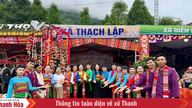
These "nucleus" of folk art enrich spiritual life.Amidst the modern pace of life and its many new forms of entertainment, artisans and those dedicated to folk culture quietly preserve and pass on traditional values. With love and responsibility towards their community, they contribute to enriching spiritual life, ensuring that the beautiful cultural aspects of their homeland continue to be present in contemporary life. 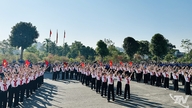
Folk dance unites students.In recent years, the folk dance movement has flourished among young people in Thai Nguyen, from schools to the community, becoming a platform for physical exercise, spreading a spirit of solidarity and love for their homeland. Cao Lan folk dance expresses the harmonious relationship between humans and nature, reflecting the diligent and creative rhythm of labor, while also possessing a rustic, vigorous beauty and rich symbolism.
The harmonious combination of dance movements and traditional props such as earthenware drums, fans, scarves, etc., has created a unique identity for this art form.
In community life, Cao Lan folk songs and dances are present in many cultural activities such as weddings, housewarming ceremonies, spring festivals, welcoming rituals, courtship singing, and village art performances.
This is an important environment for practicing heritage, contributing to strengthening community cohesion, creating opportunities for generations to interact, learn, and continue traditional cultural values.
However, due to the impact of socio -economic development and cultural exchange, Cao Lan folk songs and dances are facing the risk of extinction. The number of artisans with a deep understanding of ancient melodies is decreasing, mainly among the elderly; meanwhile, access to and practice of this heritage by the younger generation is limited.
Many songs and dances now only exist in the memories of a few artisans, traditional performance spaces have shrunk, and community cultural activities no longer take place as frequently as before. While efforts to collect and document these works have been given attention, further improvements are still needed to meet the requirements of long-term preservation.
In response to this situation, the Department of Culture, Sports and Tourism of Lao Cai province has coordinated with local authorities, including Thac Ba commune, to implement many practical solutions to preserve and promote the value of Cao Lan folk songs and dances.
Numerous classes teaching Sinh Ca singing and traditional dance have been organized, creating opportunities for the younger generation to access, learn, and practice this heritage. Simultaneously, recording and filming activities, as well as the creation of documentary films, have been implemented to collect and preserve the lyrics and dance movements, gradually forming a database to serve research, preservation, and teaching purposes.
The establishment and maintenance of Cao Lan ethnic arts clubs in villages and hamlets have created a regular cultural environment, contributing to bringing the heritage back into community life.
Cao Lan folk songs and dances are also integrated and introduced in cultural exchange programs and festivals of the province, and participate in activities organized by the Ministry of Culture, Sports and Tourism, thereby expanding the space for practice and spreading the value of the heritage.
In particular, heritage conservation efforts are linked to the development of community-based tourism in the Thac Ba Lake area, contributing to promoting the Cao Lan cultural identity and creating sustainable livelihoods for local people.

Vietnam encourages US businesses to expand investment in high technology.On the morning of June 26th, at the Government Headquarters, Deputy Prime Minister Ho Quoc Dung received Mr. Jeff Place, Supply Chain Director of Coherent Group (USA). During the meeting, the Deputy Prime Minister affirmed that Vietnam encourages US businesses to expand investment, especially in high-tech, innovation, and semiconductor industries. Looking ahead, the Department of Culture, Sports and Tourism of Lao Cai province has identified the need to continue implementing comprehensive conservation solutions in a sustainable manner. The focus will be on strengthening the documentation and digitization of heritage, and building a Cao Lan cultural data repository to serve management, research, and the promotion of its value.
In addition, advising on policies to support and honor artisans; encouraging artisans to participate in teaching and passing on their skills; and expanding heritage education activities in schools to cultivate a successor generation are also identified as important tasks.
Furthermore, developing unique cultural and tourism products associated with the Cao Lan cultural space, and researching and preparing a dossier to propose the recognition of Cao Lan folk songs and dances as intangible cultural heritage at the provincial level, and eventually at the national level, will create a legal basis and important impetus for the preservation and promotion of heritage values in the current context.
Cao Lan folk songs and dances are not only creative products of folk art but also contain the cultural depth and enduring human values of the community.
Preserving and promoting these values not only contributes to safeguarding the cultural identity of the Cao Lan ethnic group, but also enriches cultural resources and makes a positive contribution to the sustainable development of Lao Cai province in the new era.
Source: https://baovanhoa.vn/van-hoa/gin-giu-va-lan-toa-di-san-dan-ca-dan-vu-cao-lan-203671.html