


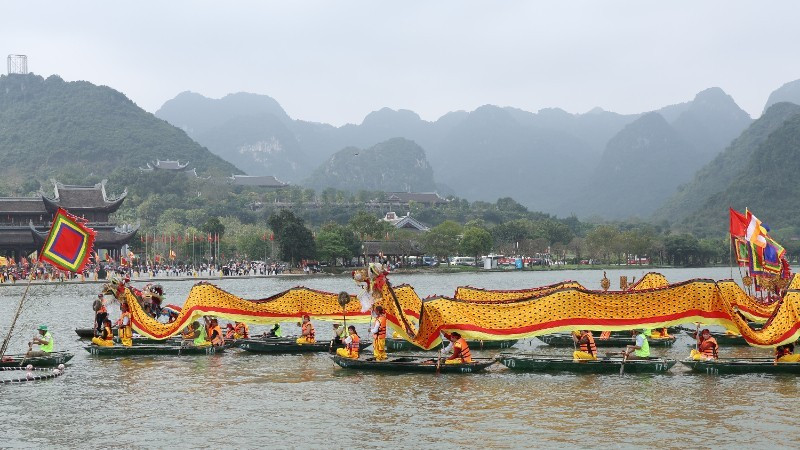
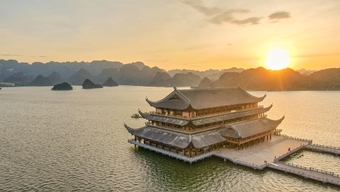
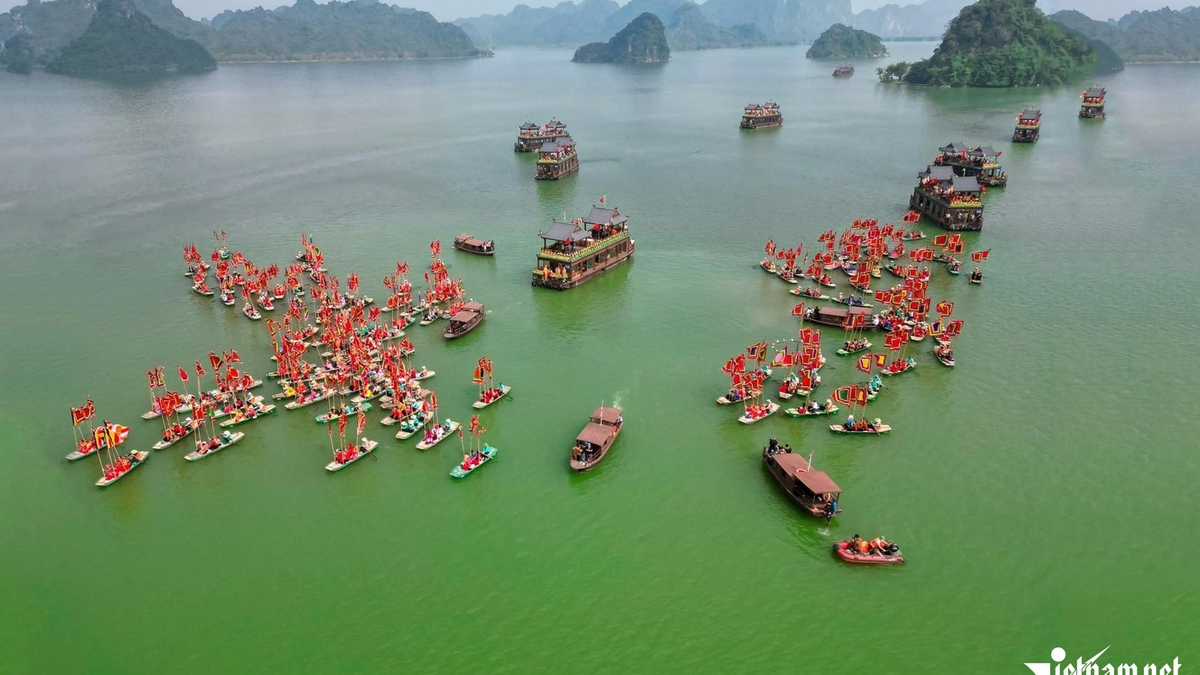
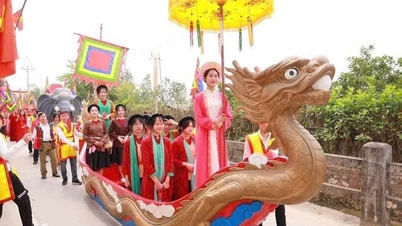
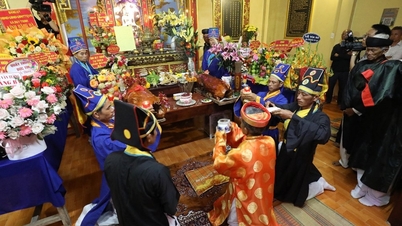
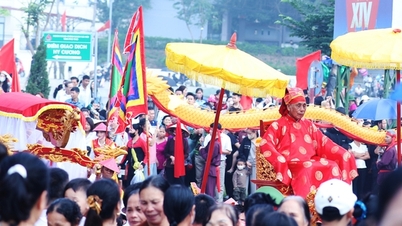
Dragon boats carry water from Tam Chuc Lake up to Ngoc Mountain. (Photo: DAO PHUONG)
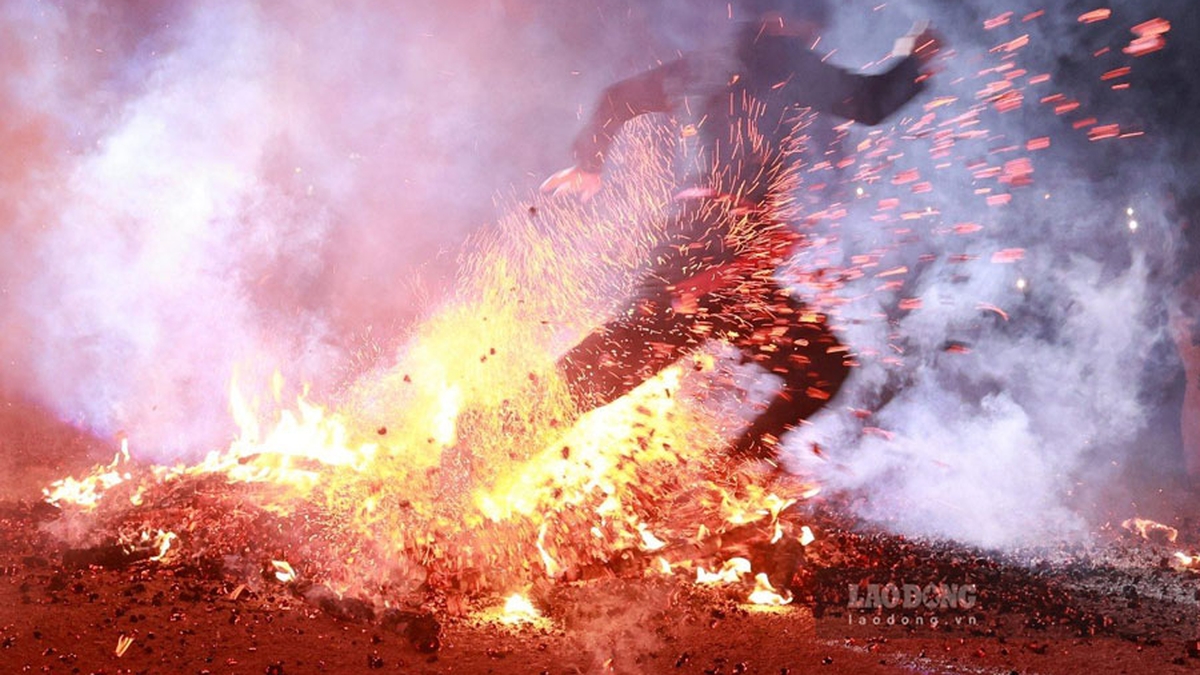
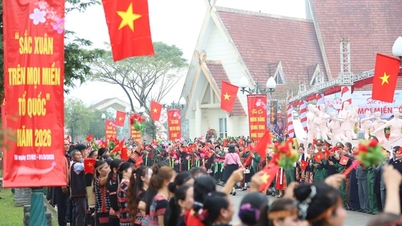
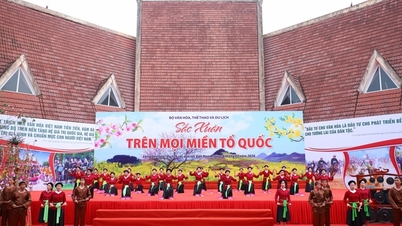
Continuing the tradition, this year, the trend of returning to folk elements is quite evident, with many localities focusing on restoring ancient rituals, reviving folk games, honoring artisans, and expanding cultural experience spaces for locals and tourists.
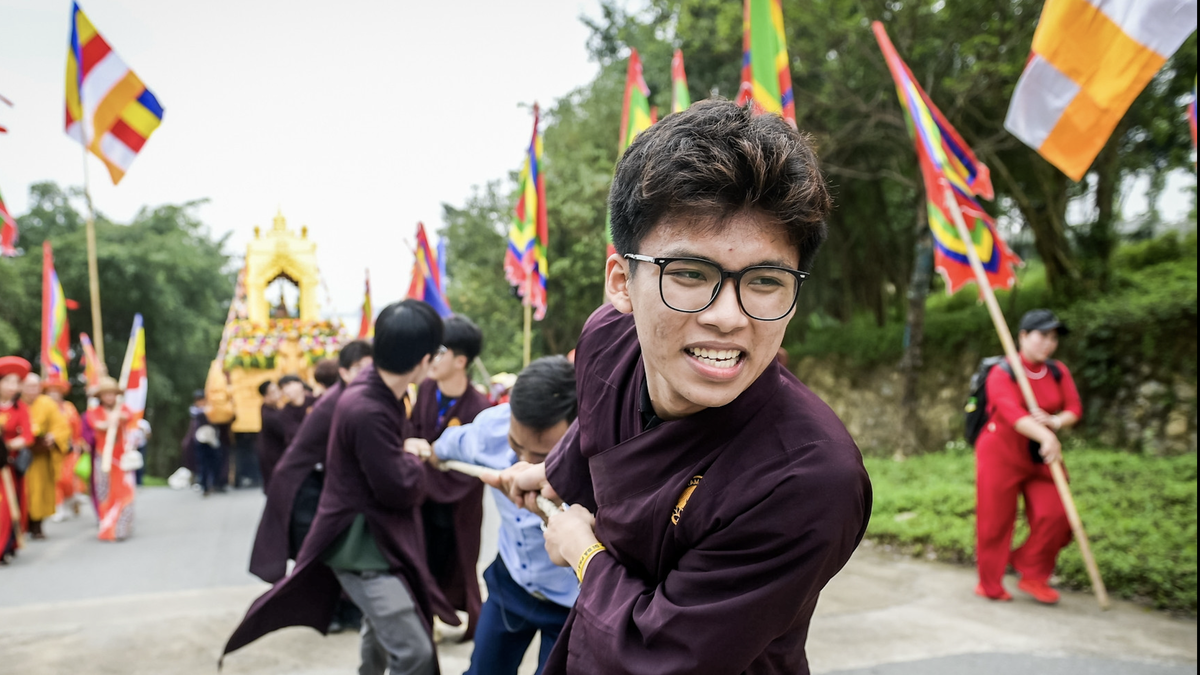
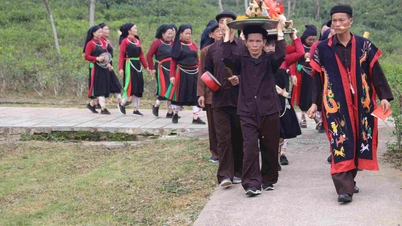
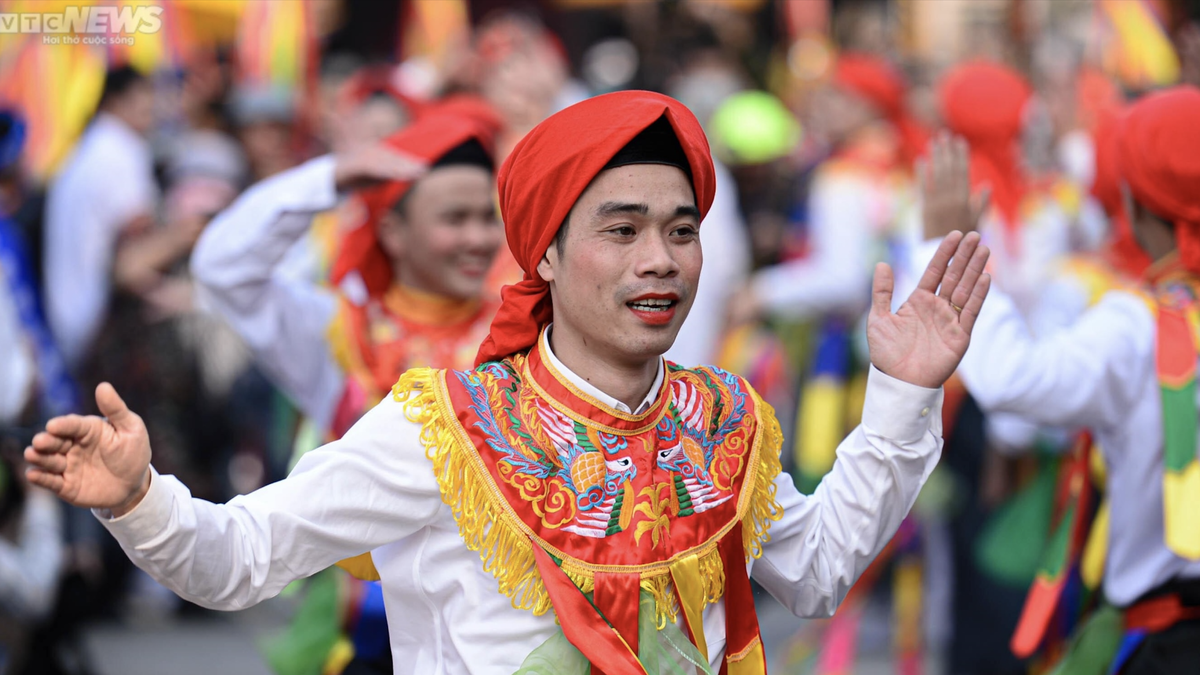
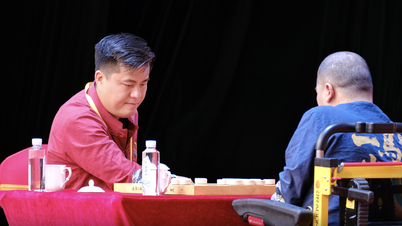
At many post-Tet festivals, games like tug-of-war, swinging, blindfolded goat catching, pot smashing, human chess, wrestling, etc., attract large numbers of locals and tourists. Many places have revived processions, rituals, folk singing, and folk dance performances; some localities even creatively introduce the historical value of relics and the meaning of rituals, applying digital technology. These are efforts to bring folk traditions back to the center of community cultural life, instead of just illustrative performances. Innovating organizational methods and increasing experiential value have contributed to creating appeal and boosting tourism and the local economy .
However, alongside the positive signs, public opinion has also raised many concerns. In some localities, the folk element seems to be overemphasizing the "festival" aspect while neglecting the "ritual" aspect; rituals are simplified or overly theatricalized; traditional games are being distorted into performances for visitors rather than activities that foster community bonding. When festivals are designed heavily focused on "event products," the risk of losing cultural depth cannot be underestimated.
More notably, the trend of commercialization is creeping into some festivals. Sacred spaces are sometimes surrounded by densely packed stalls; services like exchanging small denominations of money, offering prayers on a commission, and selling "lucky charms" at inflated prices are openly available; arbitrary fee collection, harassment of tourists, and even gambling games involving money have yet to be thoroughly addressed.
In some places, rituals are arbitrarily altered, inappropriate performances are added, and excessive sound is used, distorting the solemnity of the ceremony. These manifestations not only distort cultural values but also show signs of violating regulations on festival management and organization, causing public outrage.
According to folklore researchers, promoting heritage is essential, but if festivals are considered merely tools to attract tourists and increase revenue, they will sooner or later lose the trust of the community. Festivals should first and foremost be spaces for shared cultural activities, contributing to positive cohesion and interaction. The ceremonial part, with its meaning of commemorating ancestors, reinforcing moral principles, and fostering a spirit of unity, is the core value. If this important value is disregarded, the festive part, no matter how vibrant, will be difficult to sustain.
Conversely, some argue that culture is always evolving; if festivals remain rigid and fail to adapt to contemporary life, they will gradually become detached from the public, especially young people. Therefore, the crucial issue is not whether or not there is innovation, but rather on what basis, within what limits, and how it is controlled.
To preserve the essence of folk traditions during festivals, a comprehensive set of solutions is needed. First, management must be strengthened, and regulations on festival organization must be strictly enforced; any distortions, commercialization, or exploitation of religious beliefs for profit must be promptly addressed. The restoration of rituals and performances should be based on scientific research, with the participation of experts and artisans – those who possess traditional knowledge. Service activities also need to be rationally planned, ensuring civility and not encroaching on sacred spaces.
Furthermore, the role of the community needs to be enhanced, as they are the key players in creating and preserving festivals. When people are truly involved in organizing, monitoring, and legitimately benefiting from heritage, they will become the most effective force in protecting against deviations from established norms. Tourism development must be linked to conservation, using cultural values as a foundation, rather than pursuing short-term gains. Preserving the essence of folk traditions in modern life means preserving the spiritual foundation of the community, so that each festival season is both lively and deeply meaningful, imbued with profound humanistic values.
LU MAI
Source: https://nhandan.vn/giu-hon-cot-dan-gian-trong-le-hoi-post945439.html























































Comment (0)