1. One day in Nam Giang, Mr. Tran Ngoc Hung - Head of the Culture and Information Department of the district - seemed annoyed: "Do you think the Co Tu people here are mistakenly attributed to Dak Lak?" I then began analyzing the characteristics of the population, customs, and geography, in short, it was impossible to pinpoint their cultural identity.
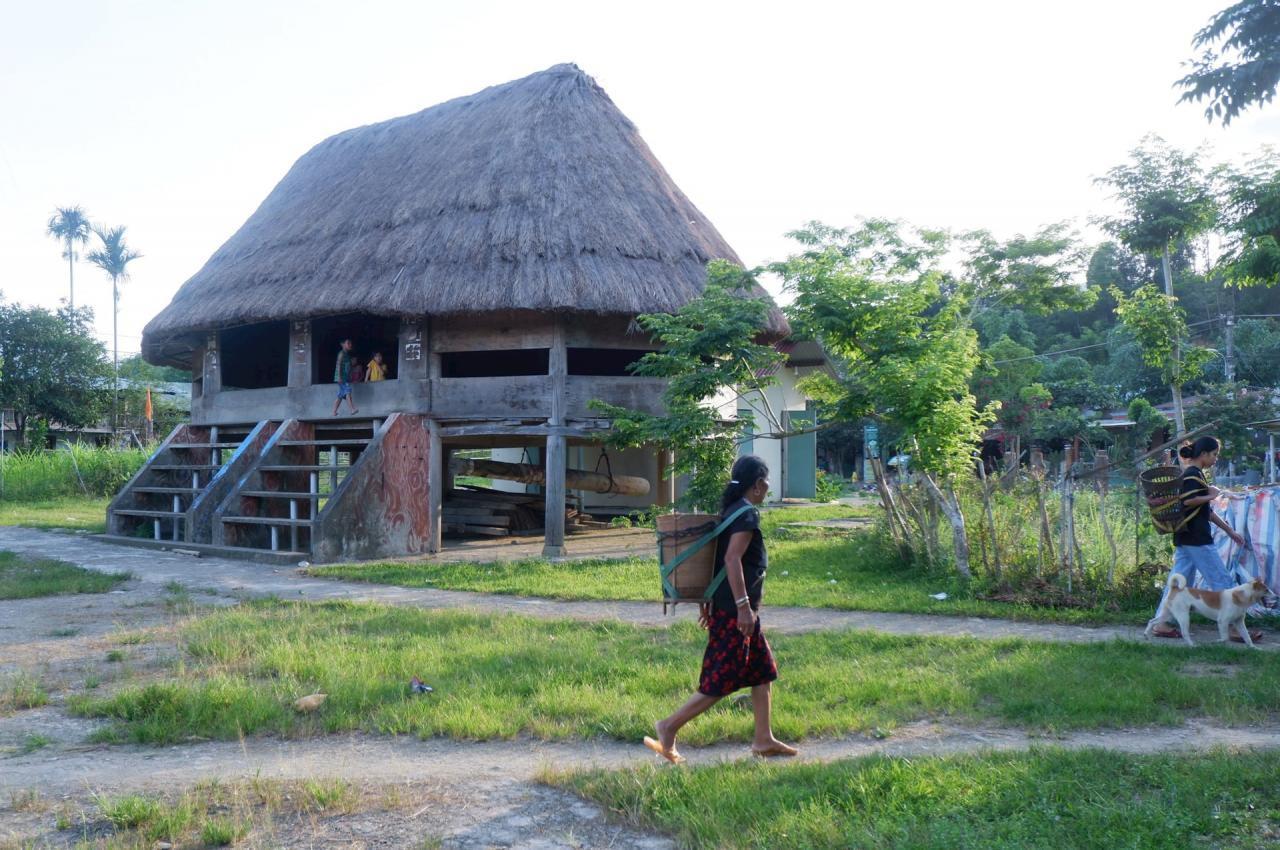
And he opened his phone to show me the photos he had taken. Several communal houses had been renovated in La De, Dak Pring, and Dak Toi, with symbols made from traditional brocade patterns attached to the roofs. Hung said these were the products of "the guys from the project."
I wonder what the people in that area with the gươl (traditional Vietnamese communal house) are thinking.
Building gươl (traditional communal houses) fulfills the spiritual and cultural needs of the people, allowing them to live peacefully in the spiritual space established since in their mother's womb – protecting their heritage from the terrible erosion of modern times. These gươl, though seemingly nonexistent, are alive but actually dead; their bodies are correct, but their faces are distorted, not to mention otherwise.
A negligent and utterly disrespectful way of working.
About three months later, I called Hung again. The department head said that he had sent the pictures to them, and now they had taken them all down.
2. Another issue, which has been simmering for a long time, is the construction of community centers with unsightly corrugated iron roofs; most are now made of concrete, and are no longer called community centers but rather community activity houses.
The Gươl is a birth certificate, a personal record that identifies the Cơ Tu people; without it, one is indispensable. But if logging is prohibited, people will counterfeit wood. And thatched roofs made of palm leaves—a key to identifying the forest, like a mother's sleeve sheltering her children—are also being ignored.
At first glance, it looks exactly like a house in a flood-prone area, only the roof is different due to its steep slope. The debate between preserving the old and respecting memory versus complying with the law and effectively dealing with climate change is both simmering and intense.
The winner is already known. But anyone familiar with and deeply connected to the mountain culture, possessing the knowledge to identify and reflect upon it, is saddened.
We are not advocating for deforestation or disregarding the law, but cultural and spiritual life is a great and enduring value, of which the gươl (traditional Vietnamese communal house) is a symbol. To do otherwise is to force things, which researchers sarcastically call "modernizing heritage."
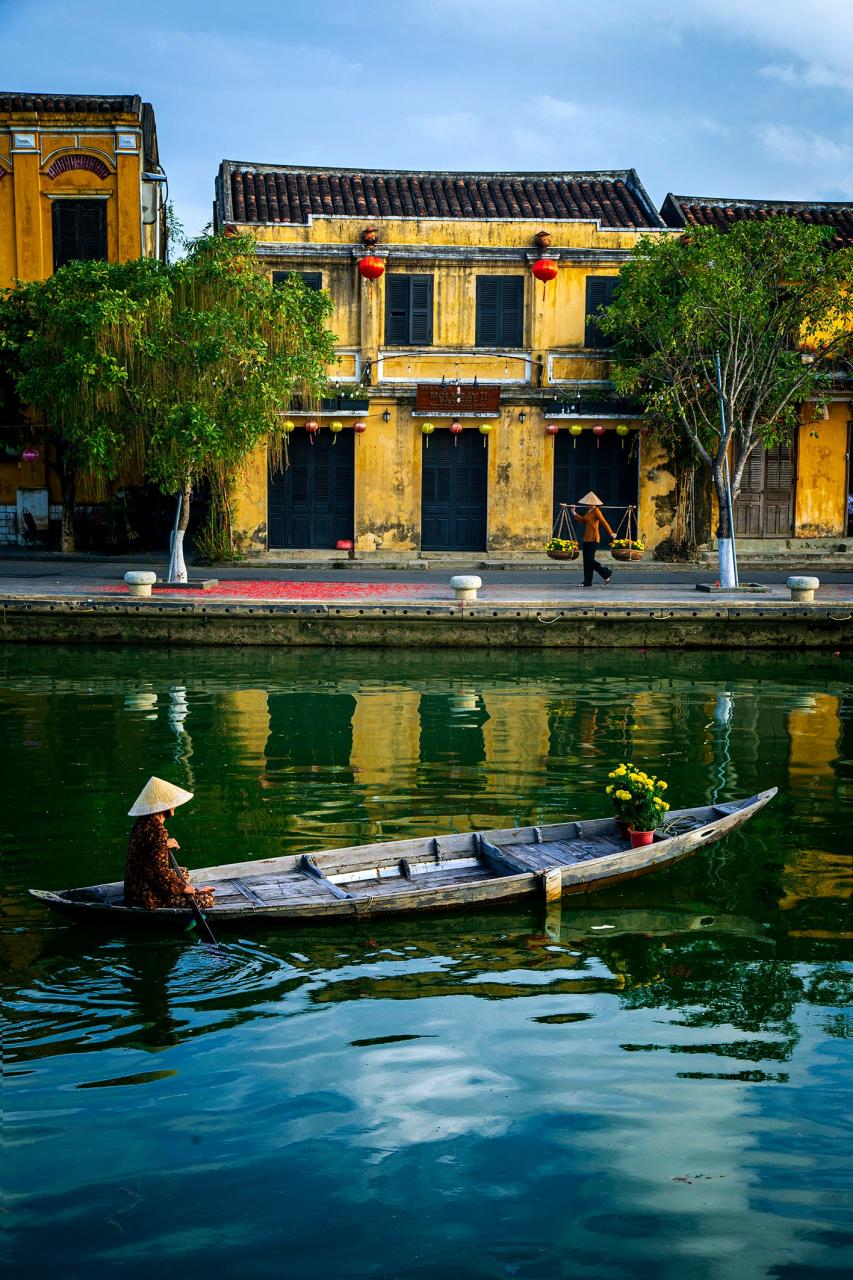



Even something as meticulously constructed as the Bridge Pagoda sparked a public outcry, demonstrating just how sensitive this issue is. Don't think that just because it's located within a World Heritage site, a kind of identity card for Hoi An, it's something to worry about or be concerned about. Heritage sites are not judged by size; they all have equal value because groups, ethnic groups, or nations are all equal in terms of the values that have shaped their souls, character, lives, and beliefs.
I wish someone would boldly declare: let the traditional Vietnamese ceremonial halls be made of wood and palm leaves; the government is willing to spend money to buy them, because that is true cultural creation!
Clearly, in a way, through the practice of gươl (a traditional Vietnamese game), we have caused the death of heritage, replacing it with new methods to keep it alive, allowing it to flow along with what is called globalization: everything becoming the same, killing creativity, forgetting memory, and forcing compromise. But we contradict ourselves when we always say that what we need to protect is historical and cultural value, because it will increase the value of the heritage.
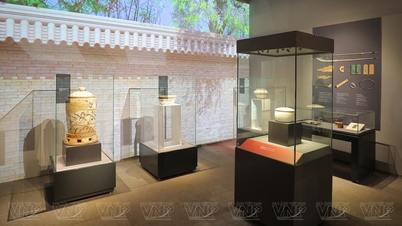
I reject the idea of constructing a fake ancient structure and claiming it has the same value as an original ancient structure. How could a thousand-year-old tree be worth the same as a one-year-old tree? If that were the case, what would be the point of establishing museums with ancient prehistoric pottery fragments?
3. The trend towards environmentalism, circular economy , and green living has become inevitable in the world. Protecting heritage, ultimately, is also a form of green living. Because respecting and protecting heritage means not using the power of civilization to "stab" the heart or forget the past, forcing people to return to cherishing the remaining good things, but acting more humanely.
One time, while drinking alcohol in the village, the elders reminisced about how their village (Thi Thai hamlet, Duy Thanh commune, Duy Xuyen district) used to have a shrine near Leo Bridge. When they lived in the village, they often passed by, and even in the scorching sun, it looked dark and gloomy due to the dense vegetation. The elders warned them not to look inside. Now it's gone.
The changes in life have buried all the remaining values, however vague, from the folk consciousness. But they are etched in the memories of a generation that archaeological excavations, if needed, would not find. However, the question is, since 1975, what valuable things have we created for the 21st-century heritage, in architecture for example?
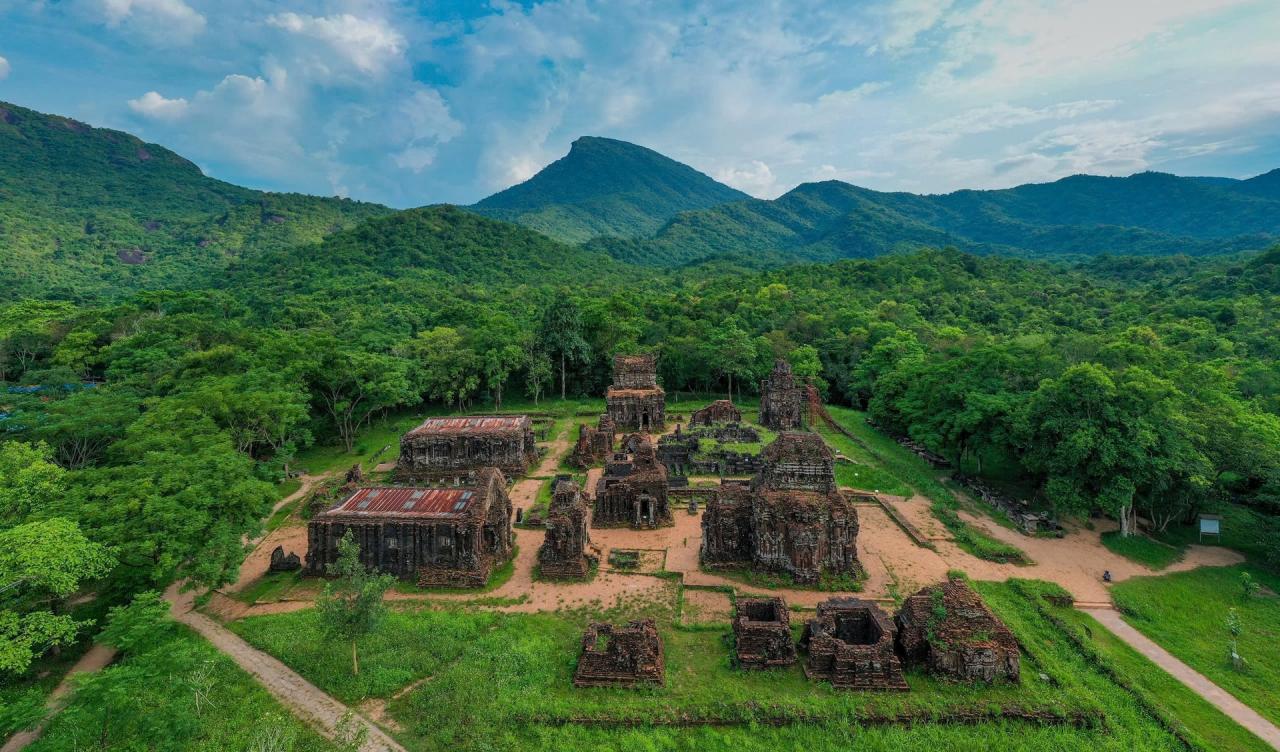
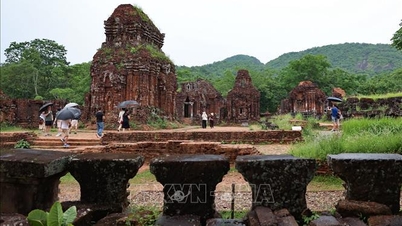
That question suddenly popped into my head when I returned to Duy Trinh to inquire about the land and its people, and then made my way to the martyrs' cemetery in Chiêm Sơn village. Opposite the cemetery gate was a riverbank with a high gorge, and right at the water's edge was a rocky outcrop. That's where countless Cham inscriptions are found, visible when the water recedes.
According to local cultural experts, Indian specialists who previously surveyed the area concluded that the characters are ancient Sanskrit, which is different from the modern Cham script.
Even earlier, a research group from the French School of Far Eastern Studies measured, photographed, and drew the inscription, which, when translated, reads: "We worship Lord Shiva, all must submit," "We praise the supreme being, we bow our heads"... They asserted that this was an edict from King Bhadrarman I in the 4th century, ordering the commencement of construction of Champa temples in the area south of the Thu Bon River and the My Son sanctuary. Over time, submerged in water, everything gradually eroded.
So why doesn't the cultural sector put up a sign here indicating that such a historical site exists, so that passersby know it's located on the route to My Son, not some remote cave?



4. History is always measured by memory and recreation to satisfy emotions. This is why there are issues of truth and falsehood, and cultural conflicts, when any kind of reconstruction occurs. The idea of reconstruction originates from reviving, preserving, and promoting values.
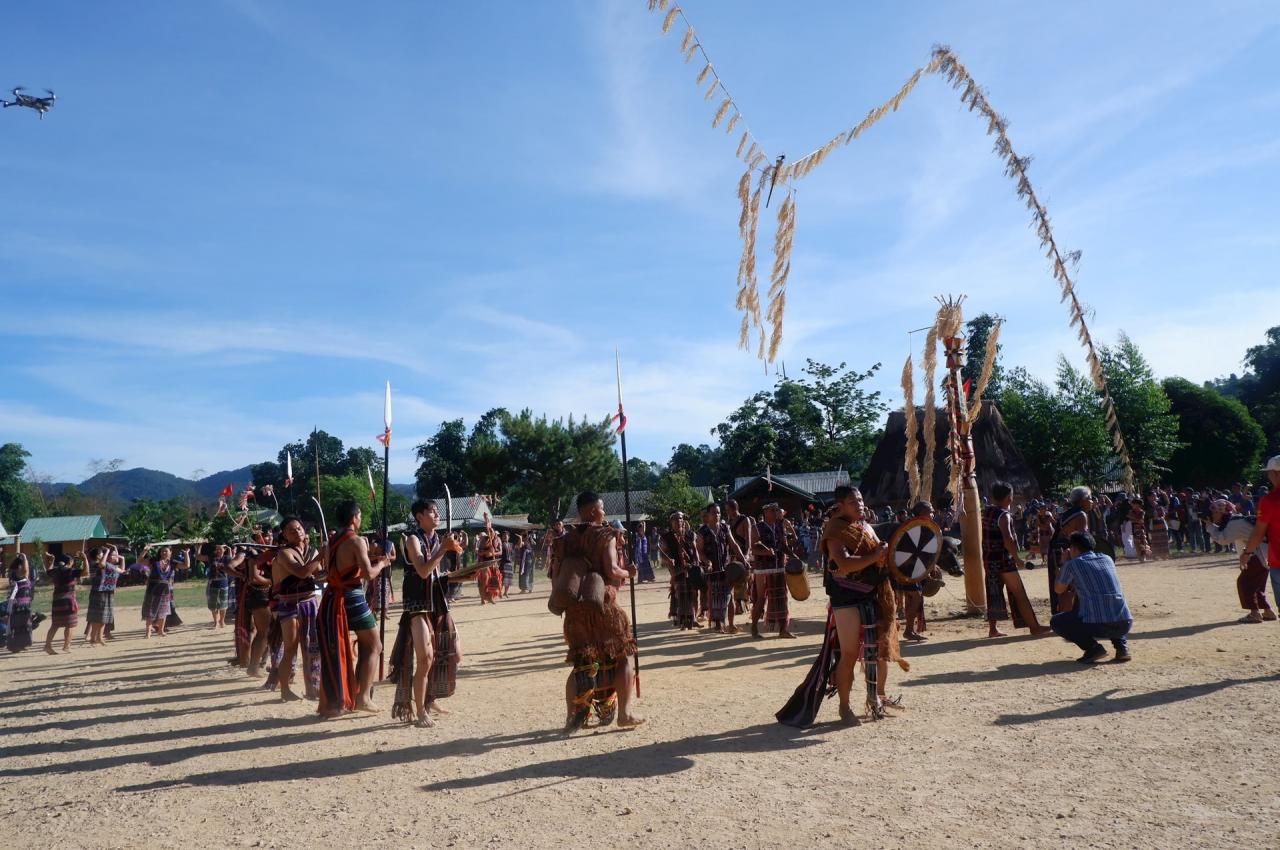
Consider cultural festivals; these are intangible cultural values reshaped within a confined space, manifested through a modern lens with the support of creativity and technology. The question arises: in these recreated traditional festivals, the performers, the elderly, those knowledgeable about them surely understand their value, but how many others simply watch, skim through, and let it pass by?
The community is the best protector of heritage. To protect it, we must show them that its value goes hand in hand with their material and spiritual well-being. Recently, I visited Tri Ton (An Giang province) – a land rich in Khmer culture, with 37 temples bearing the imprint of Buddhism. This sacred land, located in the Thất Sơn mountain range, is full of mysteries, carrying with it many historical sites, traditional crafts, and world-renowned cuisine. My guide, a local official from the district, took me on a two-day tour to explore and learn. At the farewell, he honestly said, "The trip opened my eyes to so many things I hadn't noticed before; there were so many amazing things!"
He said it reminded me of the recent renovation of the Japanese Bridge, which caused quite a stir. I asked Mr. Phung Tan Dong in Hoi An, and he said it was strange, besides some other things, it was also about aesthetics. In the past, temples were built entirely by hand, in a rustic, simple style, so the patterns and motifs were faded, the wood wasn't polished, and it was as unassuming as the soul of the countryside. But now, the technology is so advanced that everything is so sharp that you could cut your hand touching it, the wood is so shiny it reflects your face, like a shimmering rainbow, so people find it strange.
So, does this mean that observing and examining requires both knowledge and a certain distance to see how value is revealed, and only then can one form an opinion?
Source: https://baoquangnam.vn/giu-hon-di-san-nhung-chuyen-roi-3144689.html