

For generations, the Red River has been not only a geographical waterway but also the "mother river" that nourishes the land, the people, and the crops. Therefore, the water procession ceremony was born as a sacred ritual, embodying faith and aspirations for favorable weather, peaceful lives, and prosperity.
In the days leading up to the festival, the villages seem to take on a different rhythm. People call out to each other, and the sounds of cleaning and preparation fill the air in every house. The palanquins are carefully prepared and cleaned; offerings are meticulously selected; and traditional costumes are thoughtfully arranged. Every small task is carried out with utmost care, as if the villagers are touching the very heritage of their ancestors.
 |
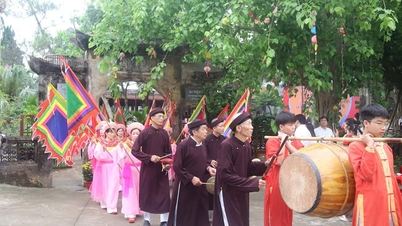
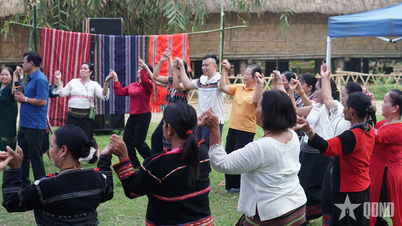
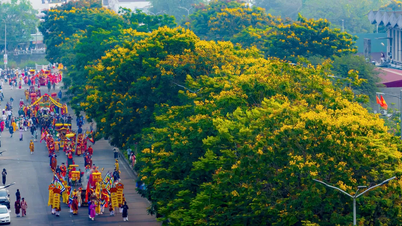
| A scene from the water procession ceremony of the people of Vinh Hung ward. |
On the morning of the 14th day of the second lunar month, the procession officially set off. Under the fluttering festive flags in the spring breeze, the lion dance troupe and the traditional music ensemble led the way with lively melodies. Following behind were the elders in traditional costumes, the majestic palanquin, and the processional sedan chair. The long line of people, their steps slow and respectful, created an atmosphere that was both bustling and solemn.
The water procession is a series of highly symbolic rituals. The procession passes by Thuy Linh communal house, stopping for a ceremonial visit before proceeding to the banks of the Red River. This ritual is not only a tribute to the deities but also a sign of the bond between the villages in the region, communities sharing a common river and a common origin. When the procession reaches the banks, boats are waiting. Amidst the vast expanse of the river, the solemn group steps onto the boats, carrying offerings, and proceeds into the middle of the river. The calm surface of the river, its water sparkling in the spring sunshine, seems to support each respectful gesture of the people.
In the middle of the river, the water-fetching ritual is performed. An elder, carefully chosen for their virtue and prestige, represents the entire community and gently scoops water from the Red River into a large earthenware jar. This is not just water, but the essence of the earth and sky, of the silt, of countless seasons of rain and sunshine. The jar is then covered with red cloth, cherished like a treasure, before being carried back to the communal house.
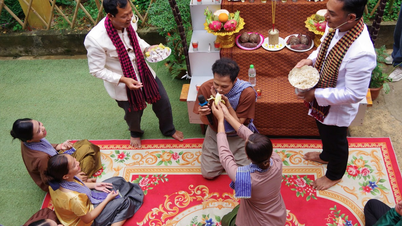
In the afternoon of the same day, the water-entering ceremony took place in a solemn atmosphere. Sacred water was offered to the tutelary deities, mingling with the lingering incense smoke and the melodious sounds of ceremonial music. In that moment, people seemed to pause, feeling more clearly the invisible thread connecting them to their roots, their community, and nature. Sharing her experience of participating in the procession for the first time, Ms. Nguyen Thu Huong (22 years old, Vinh Hung ward) emotionally stated that these sacred moments helped her to deeply appreciate the value of traditional culture and to cherish the heritage left by her ancestors even more.
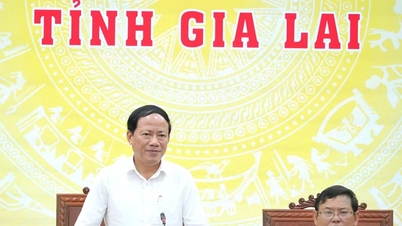
Speaking with us, Mr. Pham Hai Binh, Chairman of the People's Committee of Vinh Hung Ward, said: "Traditional festivals are not only a cultural and spiritual activity in the spring but also an opportunity for generations to remember the merits of their ancestors, educate about the tradition of 'drinking water, remembering the source,' foster pride in the homeland, preserve identity, and strengthen community bonds."
The Red River continues to flow tirelessly, enriching the fields along its banks. And every spring, the sacred waters are carefully carried to the communal house, as a simple yet profound reminder: no matter how life changes, people always need to return to their roots—the place that preserves the values that define who they are.
Source: https://www.qdnd.vn/van-hoa/doi-song/giu-hon-lang-trong-dong-nuoc-thieng-1035496














































Comment (0)