

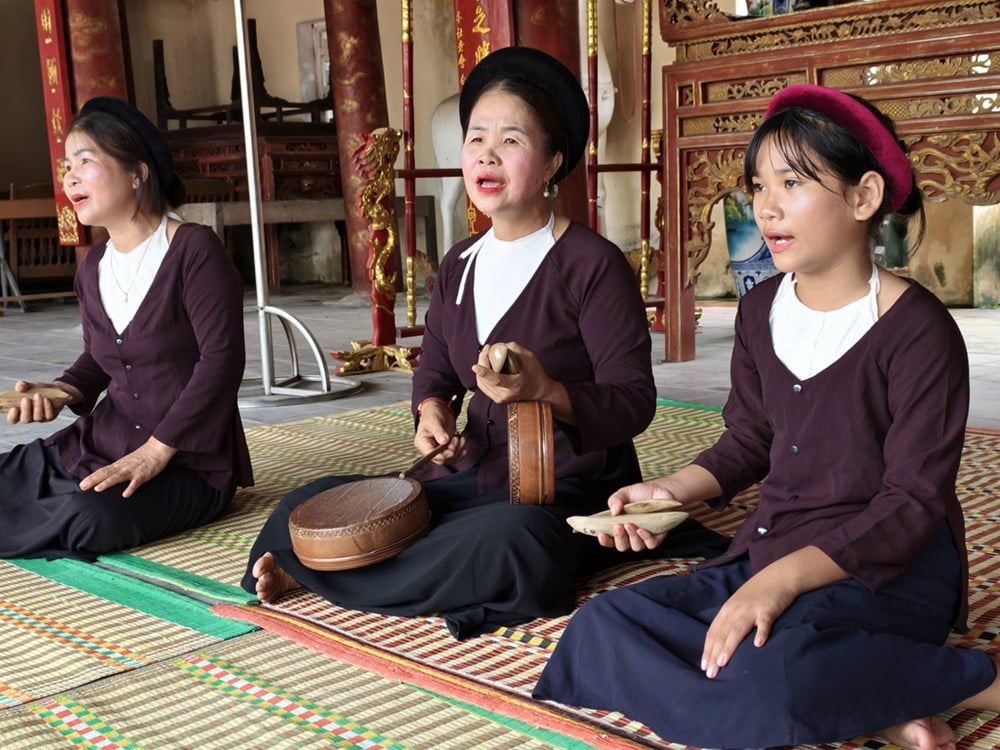
In the midst of modern life, Xẩm music remains a cherished expression, affirming the cultural identity of a land rich in tradition and community spirit.
A bridge connecting the past and the present.
In the rural area of Yen Tu (Yen Mo, Ninh Binh), the sounds of Xam singing resonate regularly during community cultural events, like the breath of the old countryside echoing in today's life. The person who lights and keeps this heritage alive is Ms. Pham Thi Kim Ngan, 64 years old – the head of the Yen Tu Xam Singing Club. Having dedicated more than half her life to traditional art, Ms. Kim Ngan is both a teacher and a bridge connecting the past and present generations in the journey of preserving the cultural identity of the Northern Delta region.
She recounted how fortunate she was to have studied with artisan Ha Thi Cau – “a living human treasure,” “the last Xam singer of the 20th century.” It was Cau’s passion and example that instilled in her a deep love for Xam – a popular art form found in rural markets and riverside areas, reflecting the livelihoods and souls of the people in the lowland rice-growing regions.
Over twenty years ago, seeing the traditional arts movement in her locality gradually fading away, Ms. Kim Ngan took the initiative to establish a Cheo singing club, creating a space for people to interact. Later, worried about the Xam singing being forgotten, she continued to establish the Yen Tu Xam singing club, which has been active for the past 15 years with nearly 20 members of various ages, including children aged 12-16. Despite many difficulties and the fact that operating costs are mainly contributed by the members themselves, passion and national pride remain the greatest motivation. "More and more young people are falling in love with Xam, seeking to reconnect with the soul of the nation amidst modern life," Ms. Ngan happily shared.
From this "folk music training center," many young talents have shone, including 14-year-old Vuong Mai Thuy Trang, who won a national gold medal in Xam singing. Trang confided: "I was born into a family that loves the arts, so I've loved traditional melodies since I was little. When I started learning Xam singing, my whole family supported me, which helped me to be more confident in my passion."
These persistent efforts have contributed to preserving a traditional art form, showcasing the vitality of Ninh Binh culture – where people still quietly nurture their love for their homeland through songs and drum beats, holding firm to their roots amidst the changes of the times.
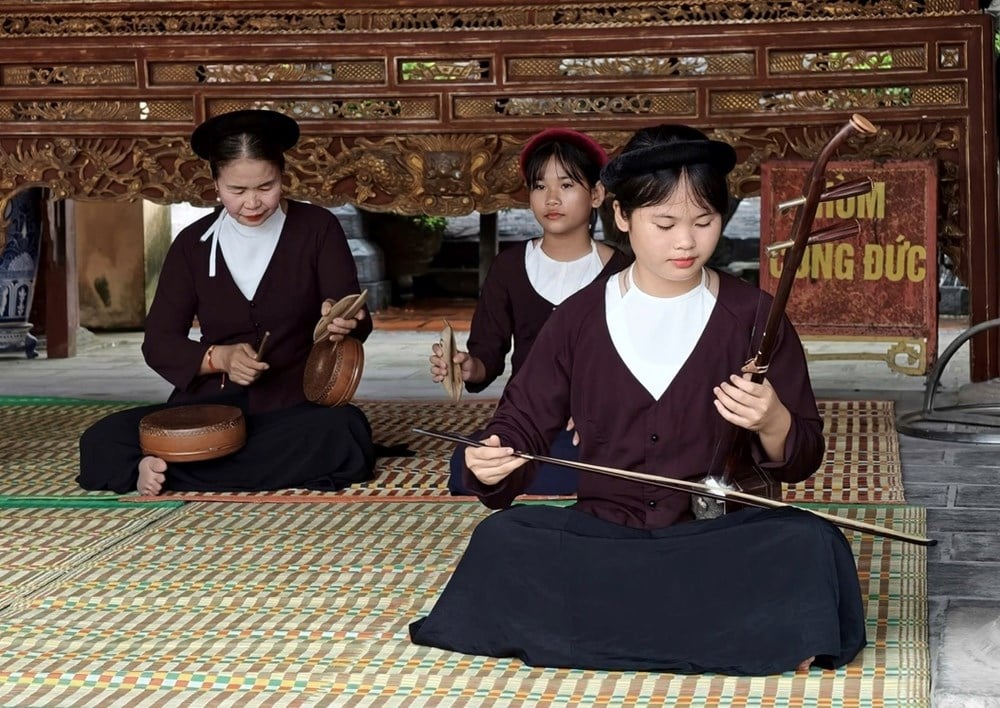
Efforts to promote the value of heritage
Beyond the individual efforts of dedicated artisans, the movement to preserve Xam singing in Yen Tu has become a vibrant community cultural activity, contributing to shaping local identity amidst the flow of modernity.
According to Mr. An Viet Tho, Head of the Culture and Social Affairs Department of Yen Tu commune, in recent years, the local government has always identified the preservation, safeguarding, and promotion of intangible cultural heritage as a pillar in the strategy for developing grassroots culture. Classes teaching Xam singing, Cheo singing, and folk rituals are regularly organized, attracting a large number of artisans and people of all ages, aiming to awaken a love for traditional culture and foster pride in their homeland.
Alongside teaching and preserving cultural heritage, Yen Tu also focuses on building a model of preservation linked to the development of community culture. Well-organized arts and cultural clubs, with regular activities, serve as both venues for artistic exchange and centers for spreading a spirit of solidarity and compassion. Through each singing practice session and performance, the people gain a deeper understanding of the value of their homeland's heritage – the simple melodies that embody the soul of Ninh Binh, a land rich in tradition.
Mr. Tho further shared: “We always strive to bring Xam singing closer to the public, especially the younger generation. Xam art is present in traditional festivals, in extracurricular activities at school - where children can listen, feel, and be proud of their homeland's heritage. This approach has helped Xam not only exist in memory, but truly live in today's cultural life.”
Thanks to the persistent efforts of the government, artisans, and the community, Yen Tu today is considered a shining example in the preservation of folk culture in the Northern Delta region. Here, each Xam song is both a melody and a cultural stream connecting the past, present, and future, a testament to the vibrant vitality of Vietnamese regional culture. Amidst the pace of industrialization, the Xam song still resonates with heartfelt emotion, as a tribute to ancestors and a lasting harmony of love for homeland, people, and national culture.
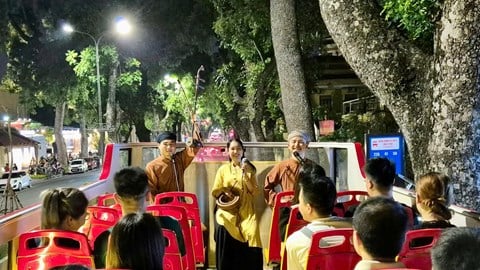
When traditional Vietnamese theater forms like Xẩm, Tuồng, and Chèo catch up with Gen Z.
Source: https://baovanhoa.vn/van-hoa/giu-hon-xam-giua-nhip-song-moi-175284.html

![[Photo] General Secretary and President To Lam meets with National Assembly delegates from ethnic minorities.](https://vphoto.vietnam.vn/thumb/1200x675/vietnam/resource/IMAGE/2026/04/20/1776696701056_a1-bnd-8331-3342-jpg.webp)


![[Image] National Assembly discusses the implementation of the socio-economic development plan.](https://vphoto.vietnam.vn/thumb/1200x675/vietnam/resource/IMAGE/2026/04/20/1776696707422_ndo_br_img-20260420-185419-jpg.webp)


































































Comment (0)