

 |
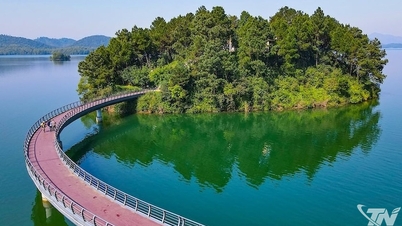
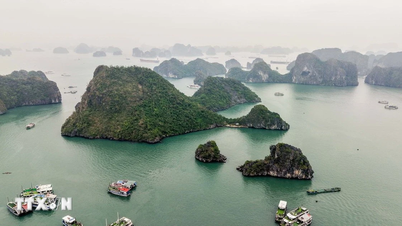
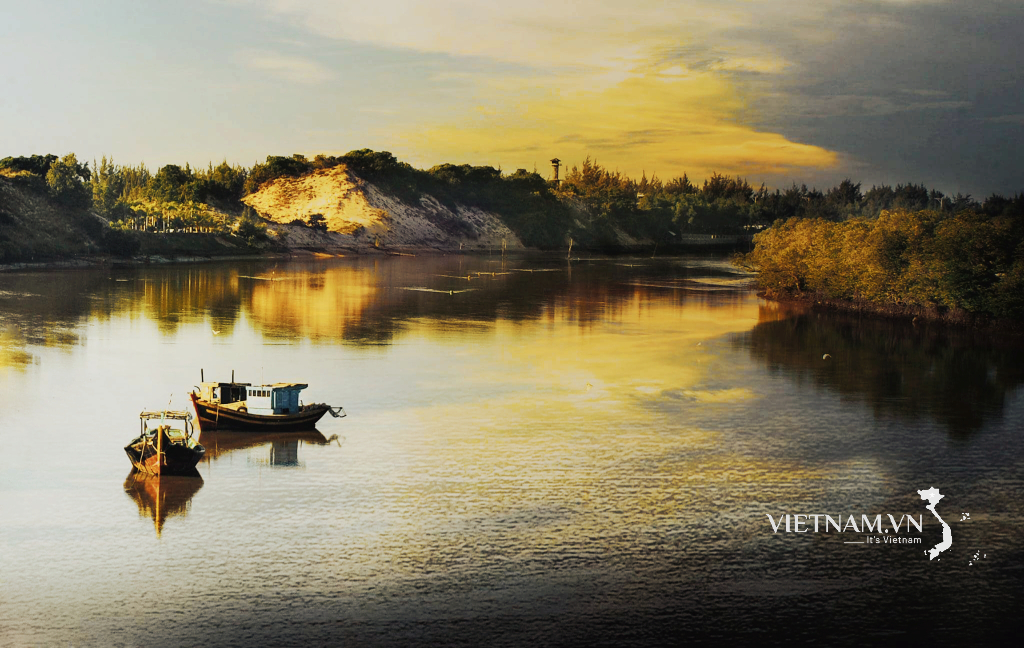
| The natural scenery of the Na Hang hydroelectric lake area. |
How it's done in Na Hang
The Tat Ke - Ban Bung Nature Reserve (now Na Hang Nature Reserve) in Tuyen Quang province was established in 1994, covering nearly 42,000 hectares of forest, divided into strictly protected, restoration, and service zones, becoming a shield protecting rare species.
According to statistics, Na Hang currently has more than 1,100 species of higher plants, 88 species of mammals, and 294 species of birds; notably, the snub-nosed monkey and the white-cheeked black langur… With such potential, Thuong Lam commune has exploited tourism , attracting tens of thousands of visitors each year, generating over 50 billion VND in revenue from tourism services, contributing to improving the income of local people.
According to Mr. Le Hong Binh, former Director of the Na Hang Conservation Area, to achieve the results it has today, there were times when this place was also a "hot spot" with stories of illegal logging and hunting of wild animals.
However, thanks to the determination of local authorities and various levels of government in disseminating information and mobilizing people to participate in forest protection and development, along with practical policies of the State on supporting livelihoods for people living in the core and buffer zones, there have been no more instances of illegal logging and deforestation for many years, and many areas of forest that were previously cut down have now recovered and turned green again.
Mr. Nguyen The Cuong, Deputy Director of the Center for Human and Nature, and a primate research expert, said: "Through many years of accompanying domestic and international projects implemented in Na Hang, from building protection posts, paying forest patrols, developing livelihood models for local people, to scientific research… we feel that the forest here is reviving and developing diversely."
Linking forest protection with ecotourism development.
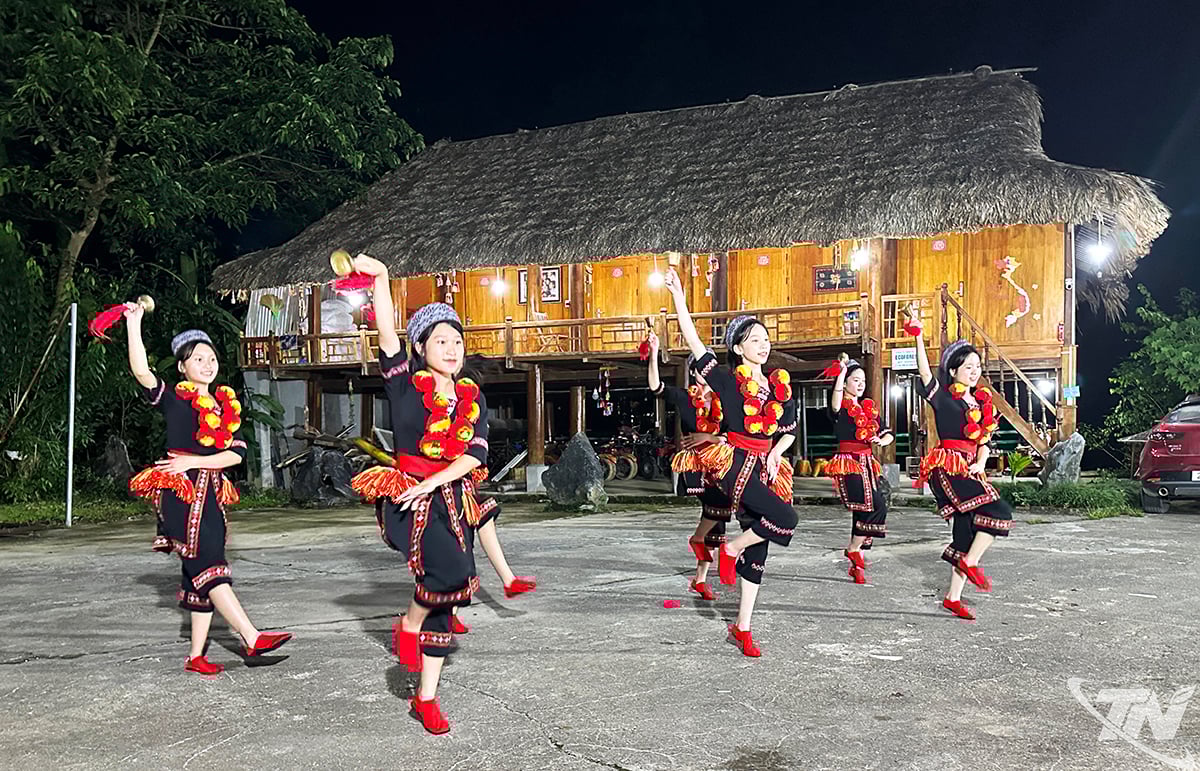 |
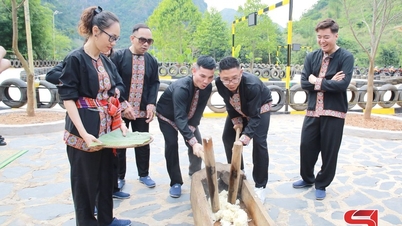
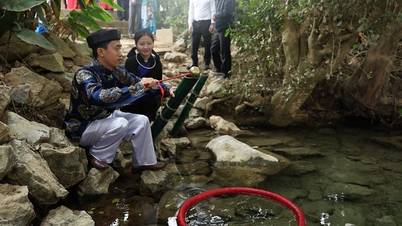
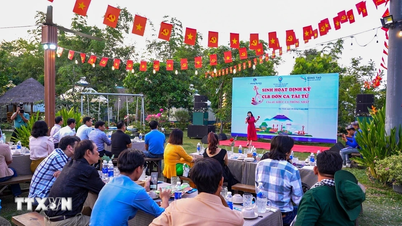
| Residents of Na Tong village, Thuong Lam commune, Tuyen Quang province, perform cultural shows for tourists at homestays in the area. |
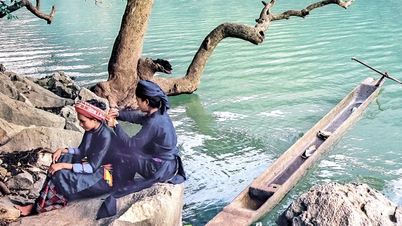
Along with Tuyen Quang, Thai Nguyen province has also chosen a path of linking biodiversity conservation with ecotourism development, most notably Ba Be National Park with an area of over 10,000 hectares of forest.
The Ba Be National Park ecotourism project for the period 2021-2030 aims to develop 17 ecotourism destinations and routes, with the desire to select conservation combined with the development of Ba Be Lake and the primeval forest as ecotourism products, preserving the pristine beauty while generating income for local people.
Mr. Hoang Van Khoa, a resident of Pac Ngoi village, Ba Be commune, shared: "Previously, we lived off farming and logging in the forest to build houses and gather firewood. Now, we run homestays and row boats to take tourists sightseeing. The more tourists there are, the more opportunities we have for income and employment. Therefore, we understand even more the value of preserving the forest and maintaining a clean environment around the lake."
Conservation is not just the responsibility of forest rangers or scientists; it has become the livelihood of the community. Every visitor to Ba Be, when enjoying grilled fish or listening to the locals tell mythical stories about the legend of Ba Be Lake, carries with them, to some extent, a message about protecting nature.
A common point between Thai Nguyen and Tuyen Quang provinces is that they both consider the community as the central element in development and conservation. In Na Hang, the local people become "unpaid forest rangers" patrolling the forest, while in Ba Be, the locals engage in tourism, linking their interests with the preservation of the landscape.
Source: https://baothainguyen.vn/kinh-te/202509/giu-kho-bau-xanh-de-phat-trien-du-lich-ff616b7/
![[Photo] General Secretary and President To Lam meets with National Assembly delegates from ethnic minorities.](https://vphoto.vietnam.vn/thumb/1200x675/vietnam/resource/IMAGE/2026/04/20/1776696701056_a1-bnd-8331-3342-jpg.webp)
![[Image] National Assembly discusses the implementation of the socio-economic development plan.](https://vphoto.vietnam.vn/thumb/1200x675/vietnam/resource/IMAGE/2026/04/20/1776696707422_ndo_br_img-20260420-185419-jpg.webp)












































































Comment (0)