A happy home is not built on flashy material possessions, but on kindness and the way each member soothes the other's emotions.
Lower the screens to touch each other.
Ms. Linh admitted that on some evenings, the four family members would sit very close together in the living room, but the space would be eerily silent because each person was engrossed in their own world behind their phone screen.
"In an increasingly fast-paced and distant society, I've come to realize that the most precious thing about a family isn't living under the same roof, but truly being present in each other's lives," Linh confided.
To bridge that invisible gap, the couple made a pact: no matter how busy they were, weekends would be entirely dedicated to their children. Sometimes, their journey was simply sitting together at a small corner café. There, the parents put their phones away, listening to their fifth-grade daughter chatter about school, and laughing at the innocent remarks of their second-grade son. Ms. Linh believes that what children carry with them throughout their childhood isn't expensive gifts, but the feeling of security knowing their parents are always there to support and listen to them. That will be the warmest cradle of memories, a place they will always want to return to, no matter where they go later in life.
In Linh's house, there are some very strict "unwritten rules" about how to communicate. The first rule is: Don't speak vaguely and don't bring negative emotions from outside and vent them on others.
Ms. Linh shared that when people become too familiar with each other, they often unintentionally forget how to cherish each other's feelings. After a long day of pressure from work, everyone is tired and easily irritable. But if just one person speaks a little more gently, the atmosphere at home will be completely different.
"I've always thought that in marriage, there's no need to win or lose, to determine who's right or wrong. Winning an argument isn't as important as keeping the person you love from getting hurt," the young mother confided.

Ms. Linh with her husband and children
Whenever disagreements arise between husband and wife, or their children misbehave, Linh usually chooses to remain silent for a few minutes to allow her anger to subside. If something unpleasant happens, she and her husband wait until they are both calm before sitting down to talk. This mutual understanding prevents everyday conflicts from escalating into deep rifts in their relationship.

The way their parents treat each other serves as a mirror for the two children as they grow up. They learn to say thank you when they receive help, to apologize when they do something wrong, and to be considerate of the feelings of those around them.
The "root system" silently withstands the storm.
Many people say that the daily grind of making ends meet is exhausting enough, leaving no time to pay attention to small details or cherish romantic gestures. But based on her own experience, Linh thinks quite the opposite. She believes that it is these small acts of care, accumulated daily, that create the strongest "resilience" for a family against major life events.
Happiness in that home is nurtured by simple acts of sharing. On days when the wife is tired, the husband will proactively clean, hang up the laundry, or help the children with their homework so she can rest. When the atmosphere suddenly becomes tense, the husband subtly cracks a joke to make them both laugh. Or sometimes, it's just a well-timed question: "You must be very tired today, aren't you?", a meal shared in anticipation, a gentle squeeze of the hand in silence.
Ms. Linh likened her family to a tree. The small acts of care each day are the silent roots that take root deep in the soil. Normally, no one sees or pays attention to those roots. But when life's storms strike, it is those deep and strong roots that keep the family tree standing firm, preventing it from being uprooted.
Cultivate gratitude through small acts.
Ms. Linh instilled a culture of gratitude in her two children through small actions in their daily lives.
In her home, the children are taught that no care is taken for granted. A good meal, a peaceful night's sleep, and a comfortable life require the sweat, effort, and hard work of their grandparents and parents. Therefore, she and her husband always set a good example and remind their children of even the smallest habits. When they come home from school, the first thing they do is run to hug and greet their grandparents. Whenever the family goes out and eats something delicious, the children always proactively remember to buy some to bring home as a gift for their grandparents. Tasks within their capabilities, such as picking vegetables, clearing dishes, and helping with household chores, are all done voluntarily by the two children.
"I didn't tell my child to put pressure on her, but to teach her to appreciate what she has and to be grateful for the love of others," Linh shared. She believes that the greatest legacy parents can leave their children is not a mansion or a luxury car, but a heart that knows how to feel, be grateful, and live kindly towards family and life.

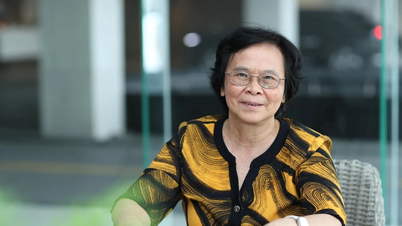
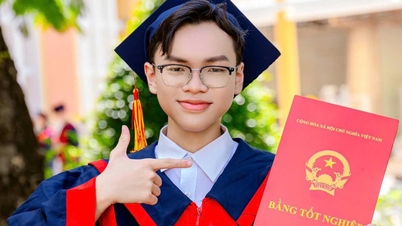
MSc Nguyen Viet Hien


According to psychologist Nguyen Viet Hien (Lecturer at the University of Education - Vietnam National University, Hanoi, Director of OED Education Company), the small habits Linh's family uses to nurture their home are a vivid manifestation of the currently spreading code of conduct for families. Actively showing consideration in speech, sharing household chores, and teaching children gratitude not only helps preserve good traditional values but also forms the core foundation of moral and lifestyle education within the family. These small but exemplary actions will be the most solid foundation for shaping a kind and virtuous character in future generations.
THE DEPARTMENT OF GRASSROOTS CULTURE, FAMILY AND LIBRARIES - MINISTRY OF CULTURE, SPORTS AND TOURISM COORDINATES IMPLEMENTATION
Source: https://phunuvietnam.vn/giu-lua-to-am-tu-nhung-dieu-nho-moi-ngay-238260622215945624.htm


![[Image] National conference summarizing one year of operation of the overall organizational model of the political system, the three-tiered government model.](https://vphoto.vietnam.vn/thumb/1200x675/vietnam/resource/IMAGE/2026/07/01/1782882811691_ndo_br_1-jpg.webp)