Through my many years working in cultural affairs, participating in parliament, and having had the opportunity to collaborate with numerous media outlets, I have come to deeply understand that a good article not only provides us with more information but also helps us to better understand our country, our people, and the subtle yet profound changes in society.
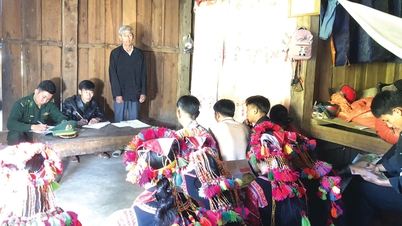
I remember once visiting a local community and meeting a cultural officer struggling with the issue of cultural institutions after administrative unit reorganization. He said very simply, "We're not afraid of having too much work, we're only afraid that the people don't fully understand why the changes are necessary." That statement has stayed with me for a long time. Because during times of significant national transformation, the press is the bridge that connects major policies to daily life, ensures that people's concerns are heard, and prevents efforts at the grassroots level from being obscured by the overwhelming amount of information.
A reporter visiting a commune, listening to the people, observing the officials at work, and discovering a small bottleneck in procedures or a good way of serving the people, can often contribute to solving a much larger problem than what is typically covered in a news article.
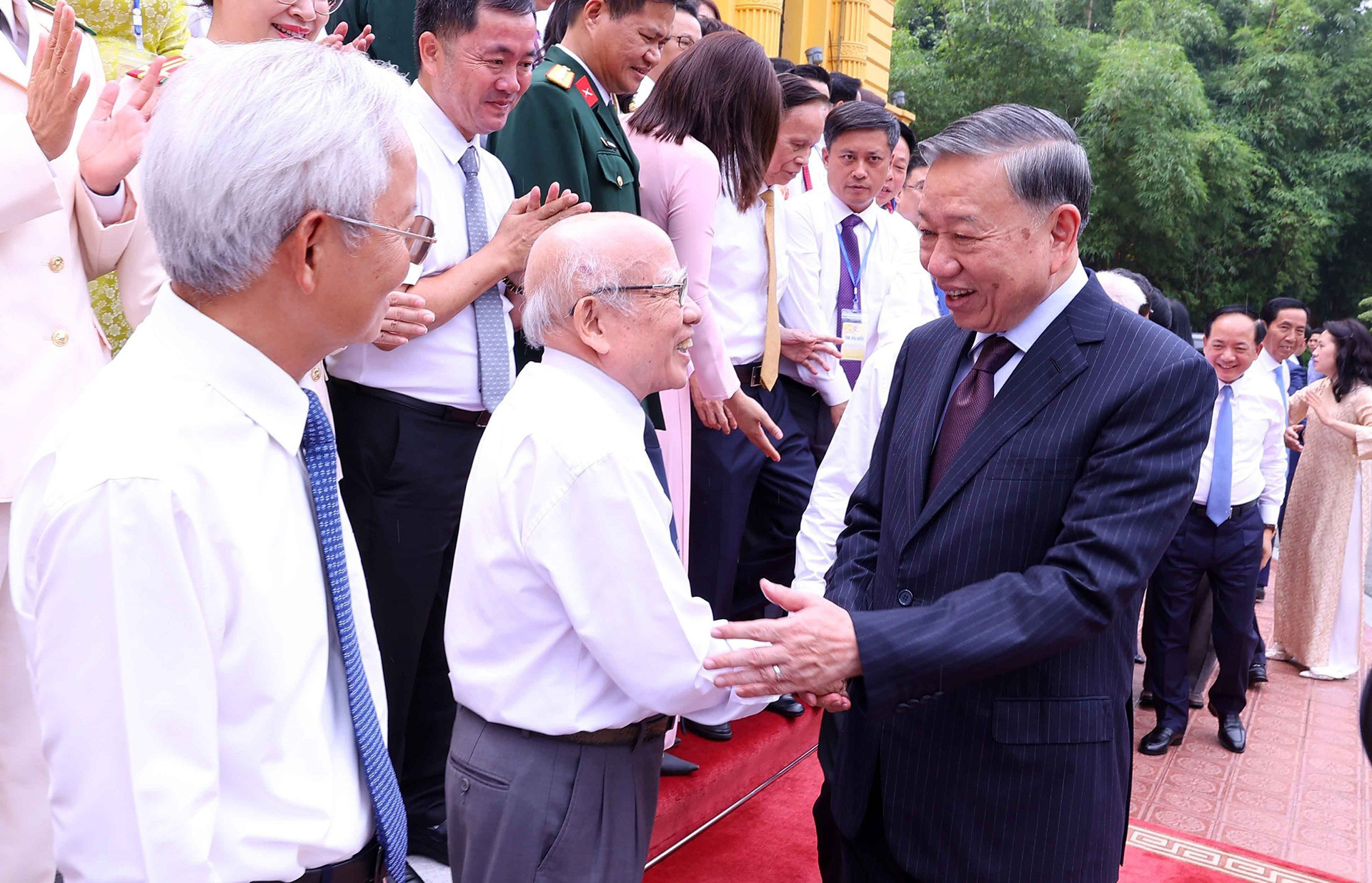
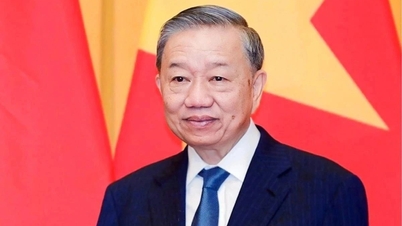
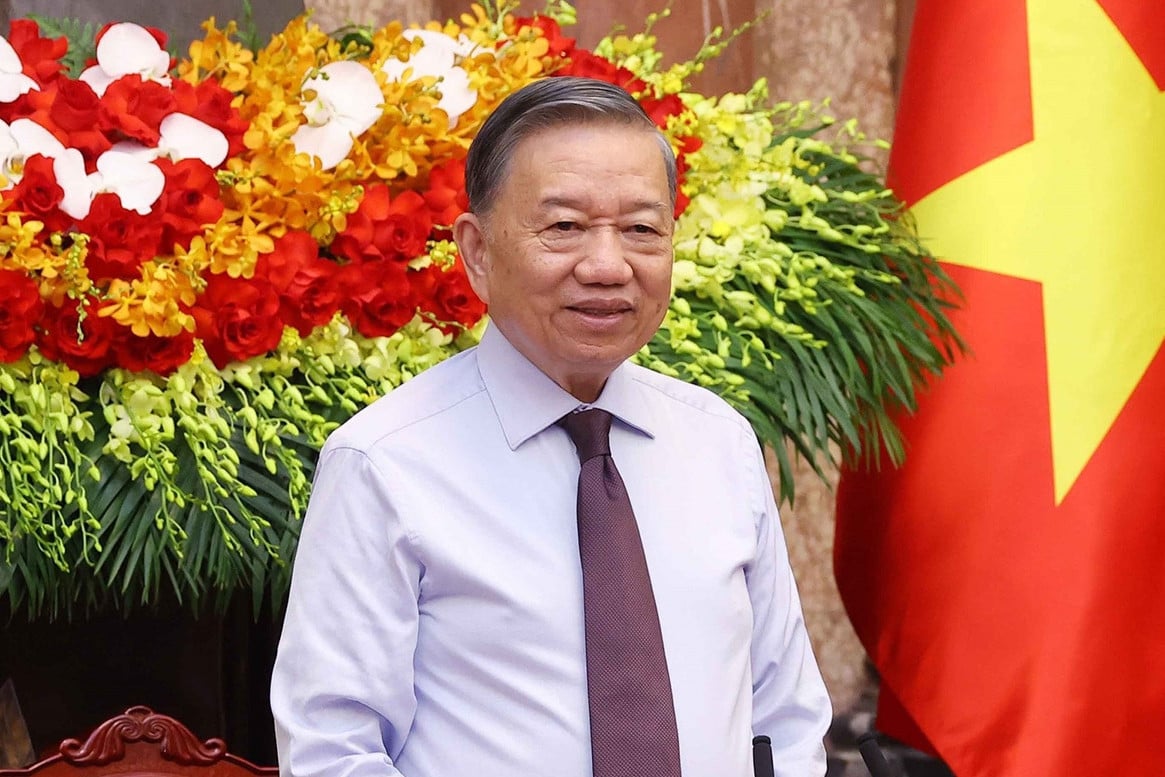
On the occasion of this year's Vietnamese Revolutionary Press Day, when I think about journalism, I first think of trust. Last year, at the 100th anniversary of Vietnamese Revolutionary Journalism Day, General Secretary To Lam emphasized: "Journalism must become a force that builds trust, encourages aspirations for development, and contributes to realizing the goal of building a strong, prosperous, and enduring Vietnam in the era of national progress." This is not just a professional requirement, but a strategic positioning for journalism in the nation's development destiny.
This year, at a meeting with 101 outstanding journalists who have won the National Journalism Award over the years, General Secretary and President To Lam continued to convey a very specific and timely message: the press must "listen to life, speak the truth, address the issues directly, and speak with responsibility to the Party, the State, and the people." These two messages are linked together as two sides of the same mission. To build trust, one must speak the truth. To encourage aspirations for development, one must address the issues directly. To accompany the nation in the new era, one must speak with responsibility, courage, culture, and professional self-respect.
Vietnamese revolutionary journalism has spanned over a century, beginning with the Thanh Nien (Youth) newspaper founded by Nguyen Ai Quoc, from those thin printed pages that nonetheless possessed the power to awaken an entire nation. For a hundred years, journalism has been present in the most arduous, critical, and sacred places of the country: in the war zones, on the front lines, amidst construction sites, in areas affected by natural disasters and epidemics, in parliaments, and in every corner of daily life. Some journalists have fallen. Others have spent their entire lives wielding the pen in quiet solitude, without glory, holding onto a simple belief: to write what is beneficial for the people and the country.
The press must be part of the national development capacity.
But commemorating Vietnam's Revolutionary Press Day today is not just about being proud of the past. The more proud we are, the more responsible we must be for the future. The country is entering a new era of development with bigger goals, greater pressure, and higher expectations. We are streamlining the organizational structure, reforming the national governance model, promoting digital transformation, developing a knowledge-based and creative economy, and building an advanced Vietnamese culture rich in national identity in the context of deep integration. In this context, the press cannot stand aside. The press must be an integral part of the nation's development capacity.


Streamlining the press, therefore, should not be seen as merely reducing the number of agencies, outlets, or names. It must be a restructuring process to make the press stronger, more professional, more modern, and more humane. Streamlining is not about impoverishing journalistic life, but about concentrating resources on newsrooms capable of leading public opinion, possessing modern technology, having a dedicated workforce, and being able to produce high-quality works across multiple platforms. Streamlining does not mean losing identity, but rather an opportunity for that identity to be elevated within a new structure, so that each media outlet not only survives by old habits, but lives on its true value to the public.
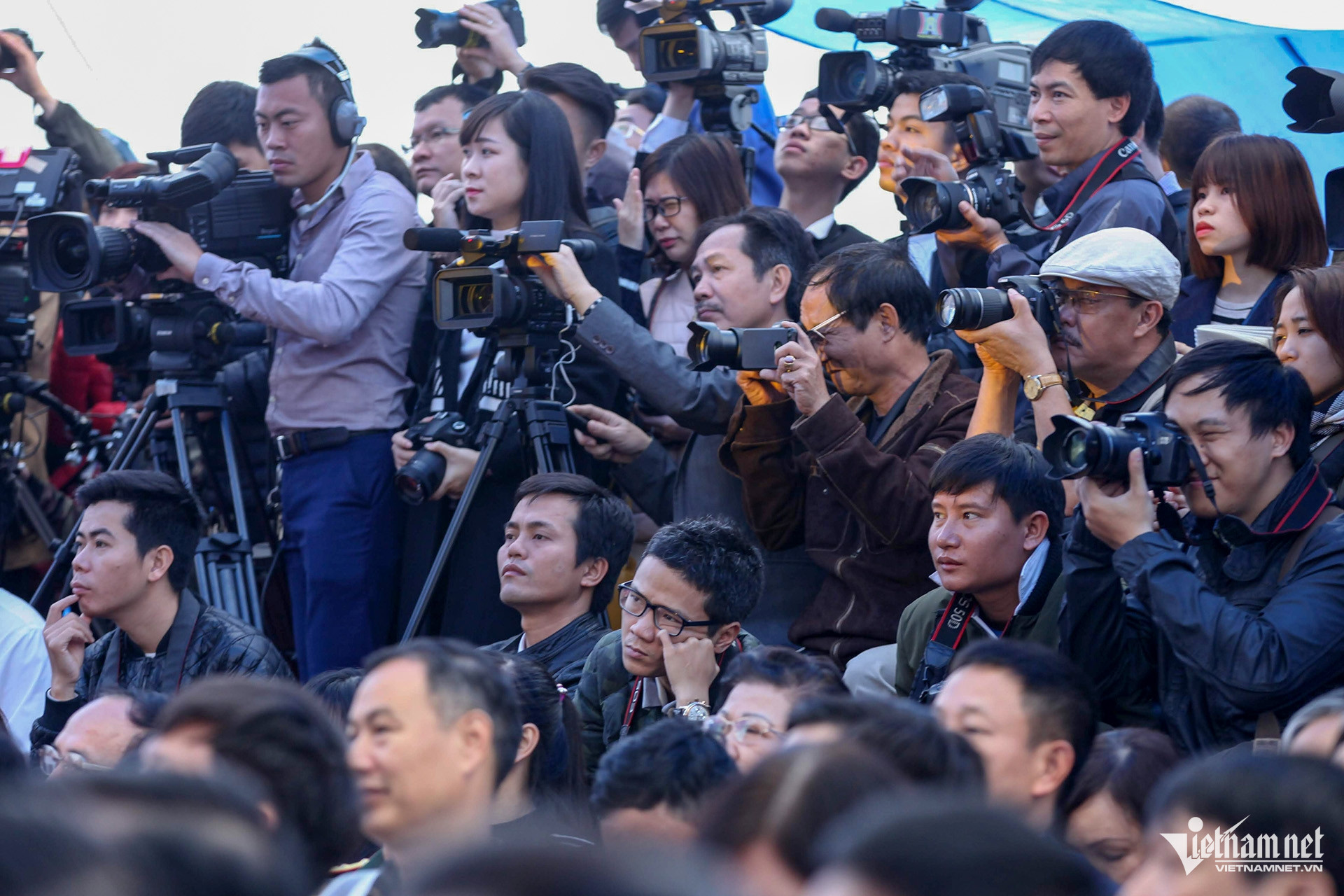
Of course, there will be regrets along the way. Some newspaper names have become ingrained in the memories of generations of readers. Some special sections, columns, headline styles, storytelling methods, even the smell of old newspaper, have become a part of the spiritual life of many people. But development always involves transition. The important thing is that while a name may change, and an organizational model may be rearranged, the professional spirit, positive memories, and responsibility to the public must not be lost. A great journalistic brand lies not only in its masthead, but in the trust readers place in the journalists. As long as that trust is maintained, the brand will continue to live on in a new form.
The biggest challenge facing journalism today is not just competing with social media in terms of speed. Machines can deliver news quickly, algorithms can distribute content widely, and artificial intelligence can assist in producing text, images, and audio. But only humans possess conscience, experience, the ability to be moved by suffering, rejoice in good deeds, feel remorse in injustice, and know when to stop at the boundary of morality. It is in this respect that mainstream journalism affirms its irreplaceable value: verifying the truth, defending justice, analyzing context, building consensus, and nurturing trust.
People learn to love one another and live more responsibly.
In today's sea of information, the public needs not only to know "what happened," but also to understand "why it matters," "how it impacts my life," and "what common interests need to be protected." A responsible news report doesn't plunge society into panic; it helps to calm it down. A cultured critique doesn't discourage those who dare to innovate; it helps to protect what is right and correct what is wrong. A decent piece of journalism doesn't exploit pain to attract readers; it makes people more compassionate and more responsible.
In the new era, journalism must return to the people. Without the people, journalism will lose its foundation. Without practical experience, journalism will easily fall into dogmatism. Without truth, journalism will lose its dignity. And without culture, journalism will no longer be able to influence society. Therefore, journalists today need more than just technological skills. They need strong political conviction, interdisciplinary knowledge, policy analysis skills, cultural sensitivity, and above all, a heart that stands on the side of the common good.
I've always believed that a nation wanting to go far needs good roads, good institutions, and good resources, but it also needs a healthy spiritual environment. The press contributes to creating that environment. When the press disseminates good models, good people, and persistent efforts at the grassroots level, society gains more positive energy. When the press identifies policy bottlenecks, reflects the voice of the people, and proposes appropriate solutions, national governance becomes closer to the people and more effective. When the press persistently defends the truth, fights against wrongdoing without extremism, and promotes what is right without sugarcoating it, social trust is strengthened.
Therefore, Vietnam's Revolutionary Press Day is not just a day for journalists. It is also a day for society to express gratitude to a special force on the ideological and cultural front; a day for each of us to ask ourselves how we have behaved with information, with truth, and with our civic responsibilities. In an era where anyone can speak, share, and comment, information ethics is not only a requirement for journalists, but also a cultural aspect of society.



I believe that, no matter how much technology changes, no matter how rapidly newsroom models evolve, the core flame of Vietnamese revolutionary journalism remains service to the Fatherland, service to the people, service to truth and justice. That flame was ignited in the first newspaper articles of Nguyen Ai Quoc, preserved through war, nurtured in peacetime, and today needs to be passed on in this era of national progress.
Streamlining to become stronger. Innovating to be closer to the people. Digital transformation to spread more widely. But after all, journalism only truly has meaning when every word, every image, every news report is directed towards a simple yet profound question: does this make the country better, build greater trust among the people, and lead to more decent lives for everyone?
If the press can answer that question, it will not only keep pace with the new era, but also contribute to paving the way for it.
Source: https://vietnamnet.vn/giu-ngon-lua-nghe-bao-trong-ky-nguyen-moi-2526559.html






![[Video] Prime Minister Le Minh Hung: Resolutely will not accept delays, extensions, or adjustments to project timelines without justifiable reasons.](https://vphoto.vietnam.vn/thumb/402x226/vietnam/resource/IMAGE/2026/06/27/1782575470286_dung01-05-06-07still008-png.webp)






















![[Photo] Thousands of people participate in a run to show their support for the campaign "Sharing a common determination to build drug-free communes, wards, and special zones".](https://vphoto.vietnam.vn/thumb/1200x675/vietnam/resource/IMAGE/2026/06/27/1782554475933_0673e2a3df7b5e25076a-8283-jpg.webp)