

Infrastructure – the foundation for long-term growth.

Conclusion No. 18-KL/TW of the 2nd Conference of the Central Committee of the 14th Party Congress on the Plan for socio -economic development, national finance and public borrowing and repayment, and medium-term public investment for the 5 years 2026-2030, linked to achieving the goal of "double-digit" growth.
Experts note that Conclusion 18-KL/TW not only sets a double-digit growth target but also designs a comprehensive system of solutions with a roadmap and specific responsibilities assigned to each level and sector. This shows a clear shift in current governance from "orientation" to "action".
This policy framework is built on four pillars: institutions, growth drivers, infrastructure, and implementation capacity. Of these, institutions are identified as the "breakthrough of breakthroughs," a prerequisite for generating high and sustainable growth.
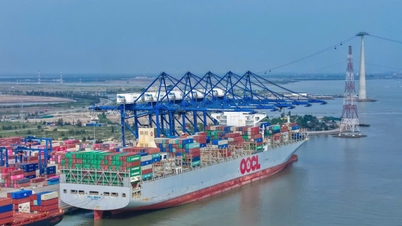
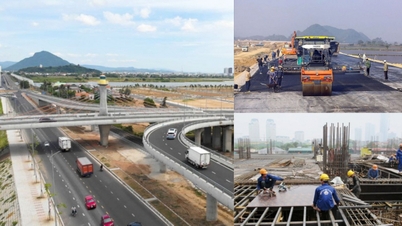
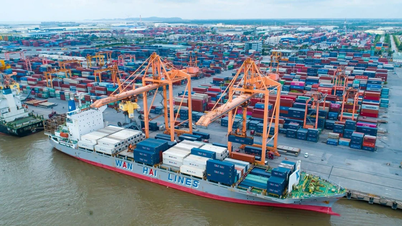
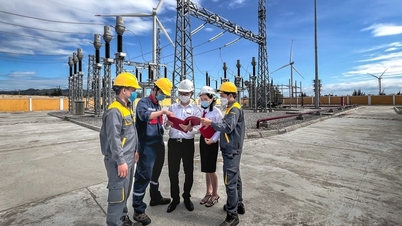
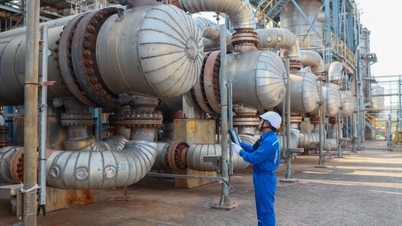
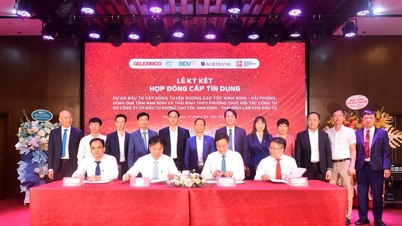
Notably, alongside institutional reforms, infrastructure development continues to be identified as a fundamental condition. Conclusion 18-KL/TW sets out a series of specific goals such as completing more than 5,000 km of expressways by 2030, deploying the North-South high-speed railway, developing the seaport system, energy infrastructure (especially renewable energy and nuclear power), as well as promoting digital infrastructure and smart cities.
In this structure, public investment acts as "seed capital," requiring focused and targeted implementation, avoiding dispersion. Improving investment efficiency and enhancing the ICOR (Incremental Capital-Output Ratio) not only optimizes budget resources but also creates a ripple effect, stimulating private investment.
Experts believe that, if implemented effectively, the new infrastructure system will not only serve immediate needs but also create new growth poles, contributing to the restructuring of the economic space. Achieving double-digit growth depends not only on policy but also on the level of coordination among ministries, sectors, and localities.
In this context, the requirement is not just determination, but concrete and consistent action across the entire system. The spirit of "saying what you mean and doing what you decide" is emphasized as a guiding principle throughout the operation.
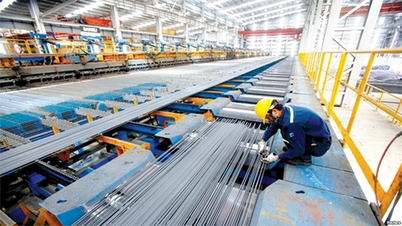
For the construction industry, this pressure is even more pronounced as it must simultaneously ensure the progress of key projects, control costs, and stabilize the market. However, if it effectively utilizes the opportunities arising from institutional reforms, infrastructure investment, and the transformation of its growth model, the industry still has many chances to maintain its leading role in the coming period.
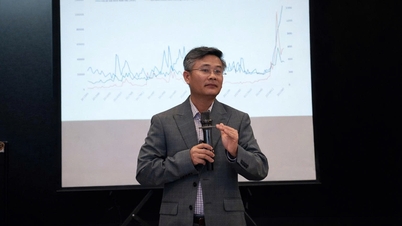
According to Mr. Nguyen The Minh, Deputy Director of the Department of Economic and Investment Management of Construction ( Ministry of Construction ), the construction industry is actually facing significant difficulties due to fluctuating fuel and material prices, which are greatly impacting contractors and the progress of key projects. To ensure the progress of key investment projects, the Ministry of Construction, in its role as the specialized management ministry, has advised the Prime Minister to issue a directive and has also directly requested localities to propose solutions for managing and stabilizing material prices, and strictly dealing with hoarding and price gouging.
Simultaneously, the Ministry of Construction is compiling practical issues to advise competent authorities on issuing more appropriate and comprehensive policies for risk sharing between the State and businesses. This also represents the proactive involvement of the Ministry of Construction in its efforts to maintain double-digit growth.
The role of a "driving force"
The construction industry is strategically positioned to both directly implement infrastructure projects and regulate the materials and real estate markets. Currently, the construction industry is also facing the common challenges of the increasingly complex global geopolitical situation, which is disrupting supply chains, driving up fuel and material prices, and transportation costs, negatively impacting the production and business operations of enterprises.
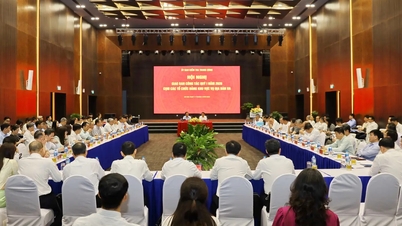
However, Nguyen Tri Duc, Chief of Staff of the Ministry of Construction, stated that the Ministry of Construction remains committed to its double-digit growth target, considering it a strategic requirement to propel the economy into a faster and more sustainable development phase.
Mr. Nguyen Tri Duc shared that, in the context of rapidly fluctuating fuel and material prices, realizing this goal requires a flexible approach while still ensuring investment discipline. Therefore, to maintain growth momentum, the Ministry of Construction has identified five key task groups.
First and foremost is optimizing investment efficiency. In the context of rising input costs, each project must be thoroughly evaluated for its socio-economic effectiveness, regional spillover effects, and infrastructure connectivity. This serves as a "filter" to avoid scattered and inefficient investments.
Furthermore, infrastructure development continues to be identified as a key driving force. The Ministry of Construction aims to maintain a public investment disbursement rate above 95%, thereby promoting growth in related sectors, building confidence among private investors, and enhancing the production capacity of the economy in the medium and long term.
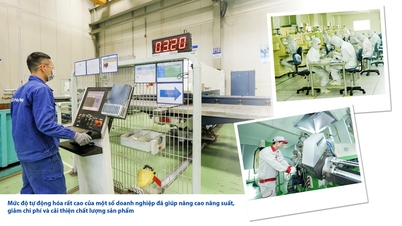
This also involves restructuring the construction industry towards a modern and sustainable direction. This includes promoting the use of new materials, saving energy, and accelerating digital transformation in design, construction, and project management.
The fourth solution is to proactively regulate the market. The Ministry of Construction will proactively coordinate with other ministries, sectors, and localities to strengthen control over the construction materials and real estate markets, ensuring a balance between supply and demand and limiting abnormal fluctuations.
Finally, it is crucial to enhance the role of institutions through stronger decentralization and delegation of power, coupled with effective oversight mechanisms. This is considered a key factor in shortening project implementation time and increasing accountability at all levels of implementation," Mr. Duc informed.
Although the goals and solutions are relatively clear, the biggest challenge remains implementation. In the long term, the story is not just about achieving growth figures, but about building a foundation for sustainable development, where infrastructure is synchronized, institutions are transparent, and the implementation capacity is strong enough to translate goals into tangible results.
Source: https://baotintuc.vn/kinh-te/giu-nhip-tang-truong-hai-con-so-20260415081927596.htm





![[Photo] “Red Journey” 2026: Vietnamese Youth Continue Building the Bridge of Friendship Between Vietnam and China](https://vphoto.vietnam.vn/thumb/1200x675/vietnam/resource/IMAGE/2026/04/20/1776629730866_4055880775670638308-9618-4200-jpg.webp)








































































Comment (0)