

Logistics costs - the biggest "bottleneck"
Seshin VN2 Co., Ltd. exported 2.1 million products in the first quarter of 2026, achieving nearly 27% of its 2026 annual plan. Mr. Park Sang Joon, Production Director of Seshin VN2 Co., Ltd., stated that the positive export results in the first quarter were due to orders signed since the end of 2025. From the second quarter onwards, the company will face more challenges due to the impact of the US Supreme Court's ruling on February 20, 2026, regarding the termination of global reciprocal tariffs, and increasingly fierce competition in the international market. The trend of restructuring supply chains and shifting to countries with lower costs and taxes is also strongly underway.
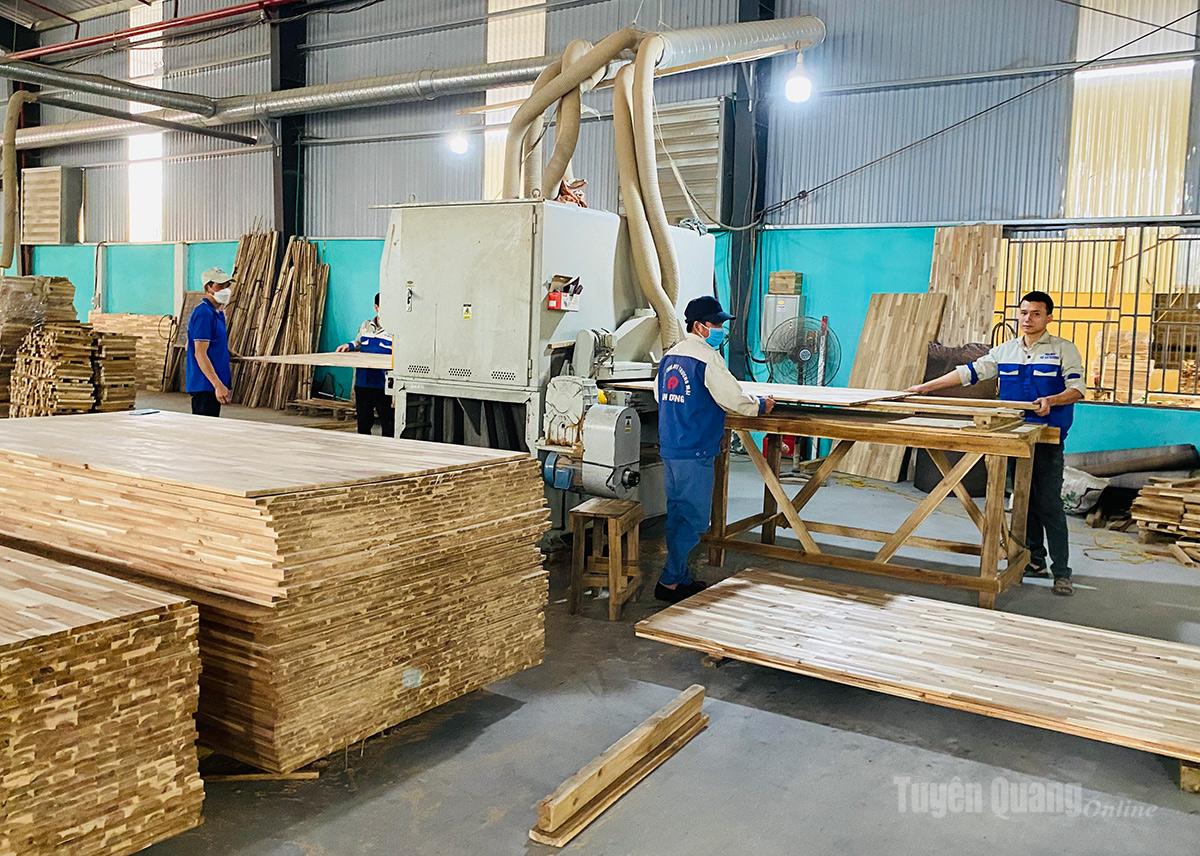 |
| Production of wood for export to the Taiwanese market at Tuyen Quang Mechanical Joint Stock Company. |
Currently, the company's products exported to the US are subject to a tariff of approximately 10%, which is temporarily stable. However, the biggest challenges are a 50% increase in shipping costs and a labor shortage, two factors directly impacting production and business efficiency. To proactively manage the situation, the company is negotiating long-term contracts with partners to share the risk if costs continue to rise or fluctuate for an extended period.
Not only Seshin VN2, but many wood processing businesses are facing similar pressure. Mr. Yan XiaoJun, Deputy Production Director of Greenhome Flooring Co., Ltd., said that from the beginning of 2026, the company mainly exports industrial flooring panels to the US, Canada, and the UK, with a production volume of 8-10 containers per month. However, political instability has caused shipping costs to increase by about 40%, while the price of wood raw materials and labor costs have also increased, creating a "double" pressure on businesses.
According to business owners exporting goods to the US, tensions in the Red Sea region have forced many shipping routes to bypass the Cape of Good Hope, extending delivery times by 14-20 days. Container freight rates to the US and EU have increased two to three times, with additional risk surcharges of $2,000-$4,000 per container. The prolonged turnaround time has led to a shortage of empty containers at major ports such as Cat Lai and Hai Phong , further complicating export operations. In this situation, businesses are forced to adjust production plans, proactively secure supply sources, and coordinate closely with partners to avoid disruptions in the supply chain.
Businesses are shifting their focus to the market.
Faced with cost and market pressures, many businesses have proactively adjusted their export strategies. Mr. Le Huy Giang, Director of My Lam Tea Joint Stock Company, stated that in 2025, the company will export over 820 tons of tea, achieving nearly $1.19 million, exceeding the plan by more than 20%. In 2026, the company aims to expand its market to Japan, China, India, and Russia; while increasing the proportion of green tea exported to Asia instead of processed black tea to Central Europe as before. Along with market expansion, the company is investing in machinery and improving product quality to meet increasingly high demands, striving to increase export value by 150% in 2026.
Meanwhile, Tuyen Quang Mechanical Joint Stock Company has chosen a more cautious approach, prioritizing nearby markets such as China and Malaysia to reduce costs. In the first quarter of 2026, the company produced and exported 1,451 m³ of wood, achieving 26.4% of its 2026 plan. Mr. Pham Xuan Huong, the company's director, said that focusing on these markets helps reduce logistics costs, shorten delivery times, and ensure stable orders. This allows the company to maintain profit margins, sustain production, proactively plan its finances, and mitigate risks when expanding into new markets.
In the first quarter of 2026, the province's export value is estimated to reach US$117.37 million, an increase of over 20% compared to the same period last year. This is a positive sign, but it also reflects the efforts of businesses to "maintain momentum" amidst many fluctuations.
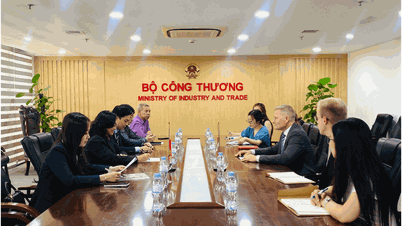
Comrade Loc Kim Lien, Deputy Director of the Department of Industry and Trade, noted that geopolitical instability forces businesses to flexibly respond to market fluctuations and adapt to pressures from logistics, exchange rates, costs, and technical barriers. In this context, the challenge is not just expanding markets, but maintaining export efficiency.
Therefore, the province is orienting itself towards diversifying markets through trade promotion, while shifting to "selective promotion," focusing on four key product groups: agricultural and forestry products; processed and manufactured goods; garments; and new products. This approach aims to exploit advantages and increase added value instead of chasing quantity. In addition, dialogue and support activities for businesses are being strengthened, focusing on removing bottlenecks related to procedures, infrastructure, and market information.
The timely support from the provincial authorities is helping to strengthen confidence, maintain production, and gradually adapt to the new context for businesses.
In the current volatile market environment, the province's exports will continue to face numerous challenges. However, this pressure is forcing businesses to change their mindset, proactively adapt, and restructure the market. As these "bottlenecks" are gradually removed, along with the support of the government and the internal efforts of businesses, exports will not only maintain their momentum but also create a foundation for sustainable growth in the coming years.
Text and photos: Trang Tam
Source: https://baotuyenquang.com.vn/kinh-te/202604/giu-nhip-xuat-khau-7262786/



















































































Comment (0)