

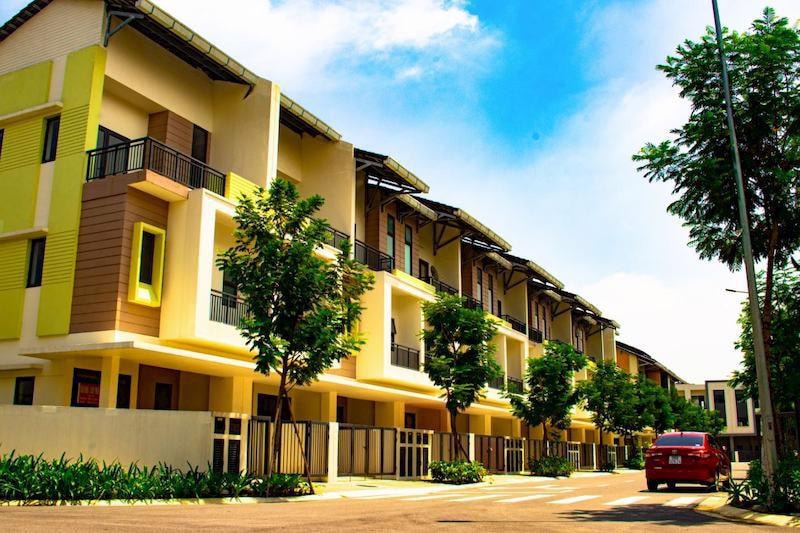
After a year of implementing administrative unit restructuring and operating the two-tiered local government model, the handling and utilization of surplus offices, buildings, and land are being accelerated by ministries, sectors, and localities to avoid loss and waste of public resources and to quickly put assets into service for socio-economic development.
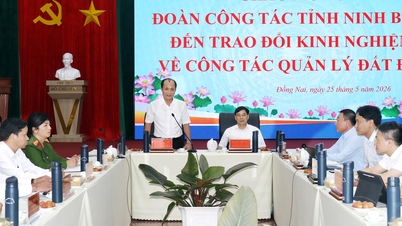
In this context, the Ministry of Finance has just issued a directive to ministries, sectors, and localities to implement Directive No. 39/CĐ-TTg dated May 14, 2026, of the Prime Minister on accelerating the handling and exploitation of surplus land and buildings arising from the reorganization of the organizational structure and administrative units at all levels. According to the Ministry of Finance, the goal is to ensure the efficient and proper management and use of public assets; and at the same time, to urgently put these land and buildings into operation, creating additional resources for investment and development.
The Ministry of Finance has requested that ministries, central and local agencies review and fully improve regulations under their authority regarding the management and use of public assets, especially those related to decentralized management, standards, and norms for the use of office buildings, automobiles, and specialized machinery and equipment. This is considered an important basis for implementing the arrangement, allocation, and exploitation of public assets in a coordinated and efficient manner.
Regarding surplus land and buildings no longer needed, the Ministry of Finance requires localities to expedite the handling process. Accordingly, cases without a decision on handling must be completed before May 25, 2026; and properties that have already received a decision on recovery or transfer must be handed over and accepted before May 30, 2026. Notably, for land and buildings assigned to local housing management and business organizations for exploitation, the Ministry of Finance proposes a flexible approach, issuing rental prices as the process progresses, without waiting for the entire mechanism to be fully completed, in order to bring assets into operation as soon as possible, avoiding abandonment, deterioration, and waste.
According to a report by the Ministry of Finance, the first phase of processing has been completed for 25,885 properties nationwide. Of the 11,396 surplus properties that have been decided to be reclaimed and transferred to local authorities for management and processing, 5,065 have been processed or put into operation; while 6,331 are still in the process of finalizing their processing plans. Notably, 10 localities have reported completing the processing of surplus properties according to the set plan. For central ministries and agencies, 3,410 properties have been processed, but 601 properties belonging to 13 ministries and central agencies remain unprocessed.
The Ministry of Finance assesses that public assets are crucial material resources for the State to perform its functions of management, providing public services, and ensuring national defense, security, and social welfare. Therefore, ensuring the material resources for the operation of agencies, organizations, and units when changing the organizational and operational model of the two-tiered local government is of particular importance, contributing to ensuring that state management and public service provision proceed smoothly and without interruption.
Through the process of reorganizing administrative units and organizational structures, many housing, land, and infrastructure funds have been created to prioritize allocation for healthcare, education, culture, sports, and other public works, especially in large cities. This not only significantly saves on compensation, land clearance, leveling, and infrastructure investment costs, but also contributes to improving the quality of life for the people.
Furthermore, this restructuring creates a fund of housing and land to serve the long-term development goals of the State by assigning it to local housing management and land development organizations for management and exploitation. At the same time, this is also an important resource for generating revenue for development investment through land allocation and leasing in accordance with land law regulations, contributing to achieving high and sustainable growth targets.
However, the Ministry of Finance stated that the process of managing and exploiting public assets after restructuring still faces many difficulties. Some localities have not yet fully issued regulations on standards and norms for the use of public assets, leading to delays in reviewing and allocating assets. In addition, the merger of administrative units has led to a situation of both surplus and shortage of office space. In some places, there is a surplus of buildings and land but a lack of information technology infrastructure, offices, or equipment to meet the operational requirements of the new administrative apparatus.
During the transition period, many agencies had to relocate to different sites to overcome infrastructure challenges, which significantly impacted management, operations, and coordination. Furthermore, a considerable number of surplus properties and land plots were deteriorating or facing legal obstacles, preventing their immediate utilization. Delayed handling risks abandoning these assets, leading to losses and waste of public resources.
QM (summary)Source: https://baohaiphong.vn/khan-truong-xu-ly-tai-san-cong-doi-du-543449.html
![[Image] Close-up view of the interchange connecting the two expressways and Long Thanh Airport.](https://vphoto.vietnam.vn/thumb/1200x675/vietnam/resource/IMAGE/2026/05/25/1779703378210_ndo_br_z7863716673926-224453a31600126cce10622af6290afd-4549-jpg.webp)















































































Comment (0)