

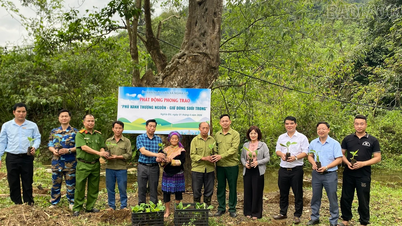
During his visit to Quang Ninh province for the Lunar New Year of 1965, on his way from Hon Gai to Uong Bi, President Ho Chi Minh stopped at the Yen Lap pine forest. There, he instructed: "You must not destroy the forest; you must plant trees, create forests, and green the barren land and hills." Following President Ho Chi Minh's instructions, over the years, the Party Committee, government, and people of all ethnic groups in Quang Ninh province have strived to plant trees and create forests, bringing greenery back to the landscape.
"Forests are gold."
Bang Anh village (Tan Dan commune, Ha Long city) has a special forest, covering an area of 32 hectares with over 3,000 agarwood trees, along with other precious timber trees such as ironwood, teak, rosewood, and other valuable species. There are approximately 200 primary teak trees in particular. This is the forest of Mr. Trieu Tai Cao's family, affectionately known by many as "Old Cao's" forest, who has dedicated his life to caring for, protecting, and restoring the forest's greenery. Mr. Trieu Tien Loc (Mr. Trieu Tai Cao's youngest son) recounts: In 1969, following President Ho Chi Minh's call for a tree-planting festival, my father chose to settle at the foot of Ha My pass and began planting valuable long-lived timber trees. In my memory, I still recall those years, with a basket on his back and rice balls in his pocket, he traveled throughout the vast forest to collect saplings and seeds to bring back to the hill behind our house to plant. By 1980, he was entrusted by the state with managing 32 hectares of forest. With the additional forest, he and we planted more valuable timber trees such as ironwood, teak, and rosewood, as well as low-growing medicinal plants under the forest canopy. Over nearly 60 years, those small teak trees have grown into massive trees so large that several people couldn't encircle them. The large trees shed their seeds, and new trees sprout, continuously enriching the forest with valuable timber. The medicinal plants also provide us with a stable income.
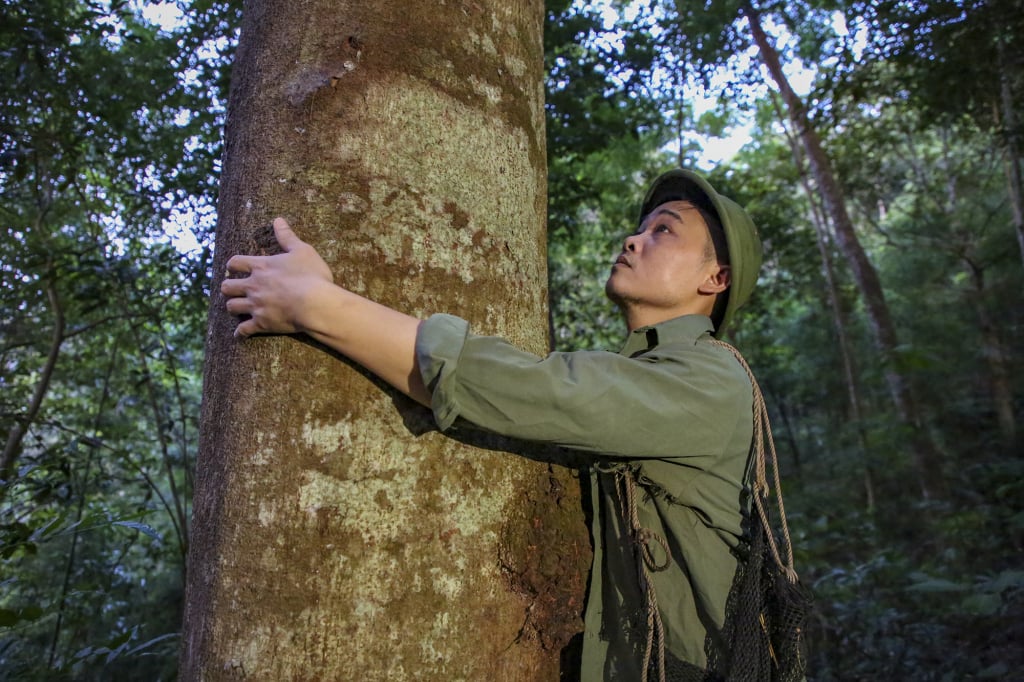
Deeply attached to the forest, considering it their "flesh and blood," the Trieu Tai Cao family remains determined to preserve it, even with numerous traders offering billions of dong to buy their timber. Following Uncle Ho's instructions and their father's dying wish, Trieu Tien Loc and his brothers continue to protect and develop the forest daily, while also researching ways to improve and transform this precious forest into an attractive ecotourism destination. "We will protect these vast forests until our last breath," Loc shared.
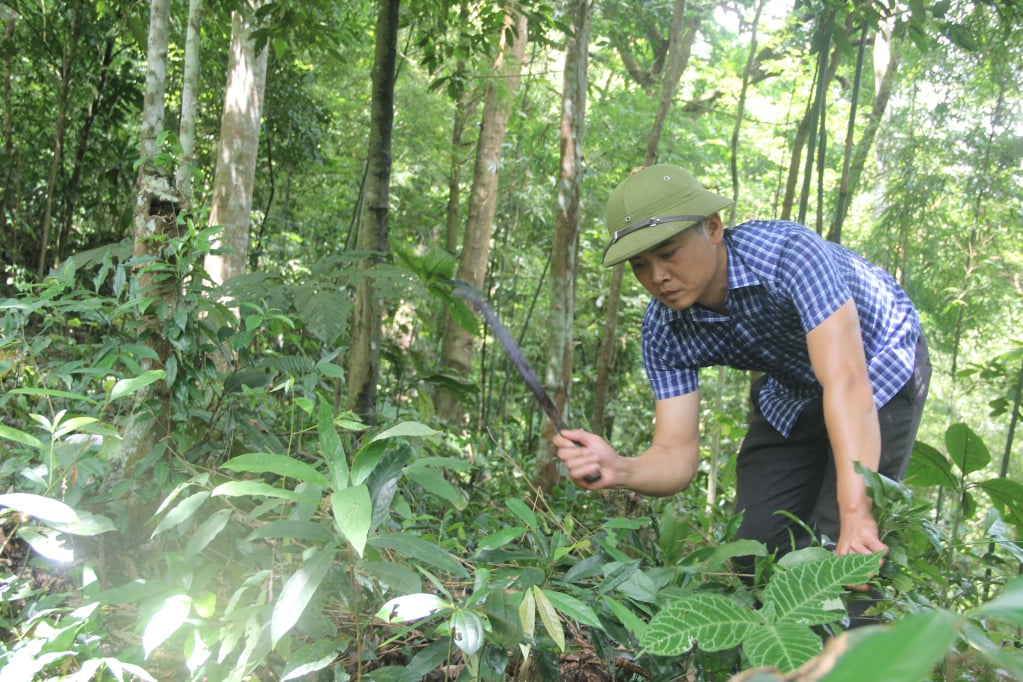
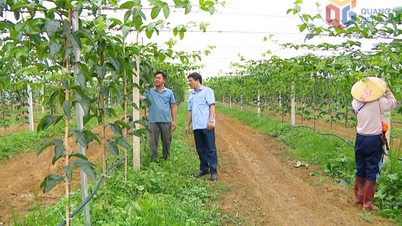
Loyal to the forest, "living off the forest" since starting their livelihoods, thousands of families in the province have escaped poverty and become wealthy from the forest. Taking the forest as a source of livelihood has become deeply ingrained in the blood of the people here, so deforestation is no longer common in Quang Ninh. Many forest owners have boldly replaced acacia forests to research and bring large timber trees to plant in their forest gardens. Organizations, households, and individuals have settled down and are confident in planting and protecting forests, connecting their lives to forestry. As a result, the area of planted forests has increased annually, averaging 10,000-12,000 hectares per year. Many households and individuals have earned hundreds of millions of dong each year from harvesting timber, non-timber forest products, and other products from their forest gardens, creating jobs for many workers and contributing to increased income and poverty reduction for a significant portion of the people in the mountainous areas. The province currently has over 10,000 medium and large-scale integrated forest-garden farms (RVAC) with tens of thousands of hectares of well-developed forestry trees, specialty trees, and fruit trees that have yielded multiple harvest cycles, increasingly contributing to the province's agricultural and rural development economy .
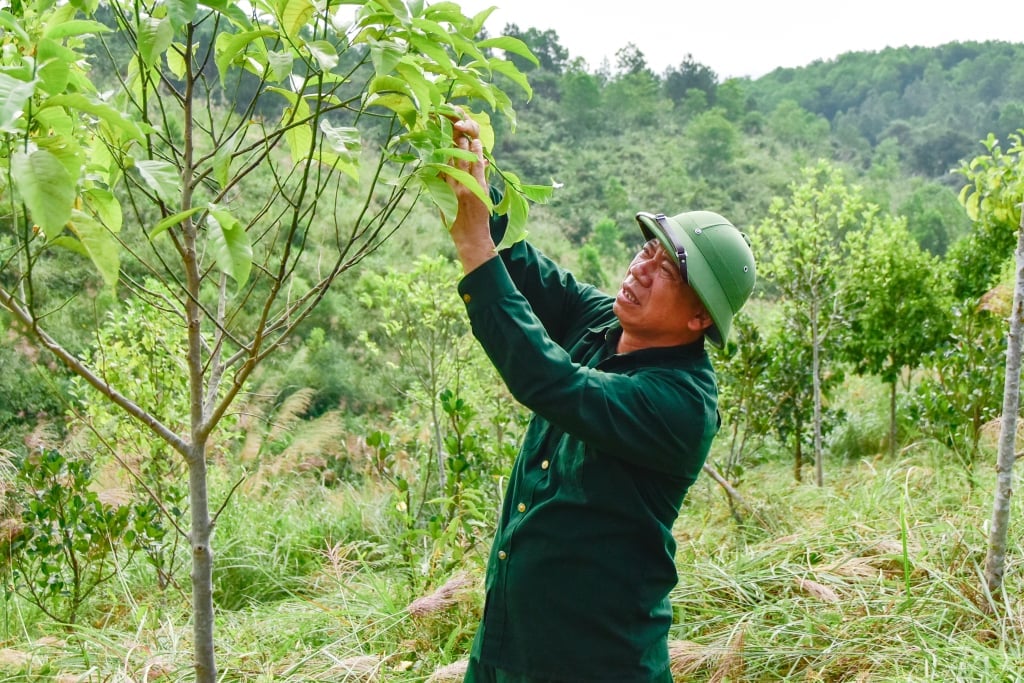
Many policies are correct, appropriate, and effective.
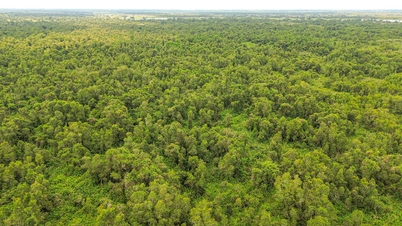
Quang Ninh province is considered one of the localities with a large proportion of forest and forestry land (approximately 70% of its natural area). The entire province has 434,378 hectares of forest and forestry land, of which 30,034 hectares are designated for special-use forestry; 132,855 hectares are designated for protection forestry; and 272,508 hectares are designated for production forestry.
Recognizing forestry as a unique economic and technical sector with a long production cycle, Quang Ninh has strengthened its planning and management of three types of forests. In particular, it has implemented long-term, strategic policies for sustainable forestry development. A prime example is Resolution No. 19-NQ/TU of the Provincial Party Committee, issued on November 28, 2019, on the sustainable forestry development of Quang Ninh province until 2025, with a vision to 2030. This is considered the first thematic resolution on forests in Quang Ninh, and also the first thematic resolution on forests in the entire country.
According to Mr. Nguyen Van Bong, Deputy Head of the Provincial Forest Protection Department: Quang Ninh province has made very timely, accurate, and correct decisions in investing in forests, so that forests have the value they have today and will have even greater value in the future. The great thing about Resolution 19 is that it clearly defines the goal of protecting and developing natural forests. This is the foundation for sustainable and high-value forest development, making forests a strong and vibrant economic sector.
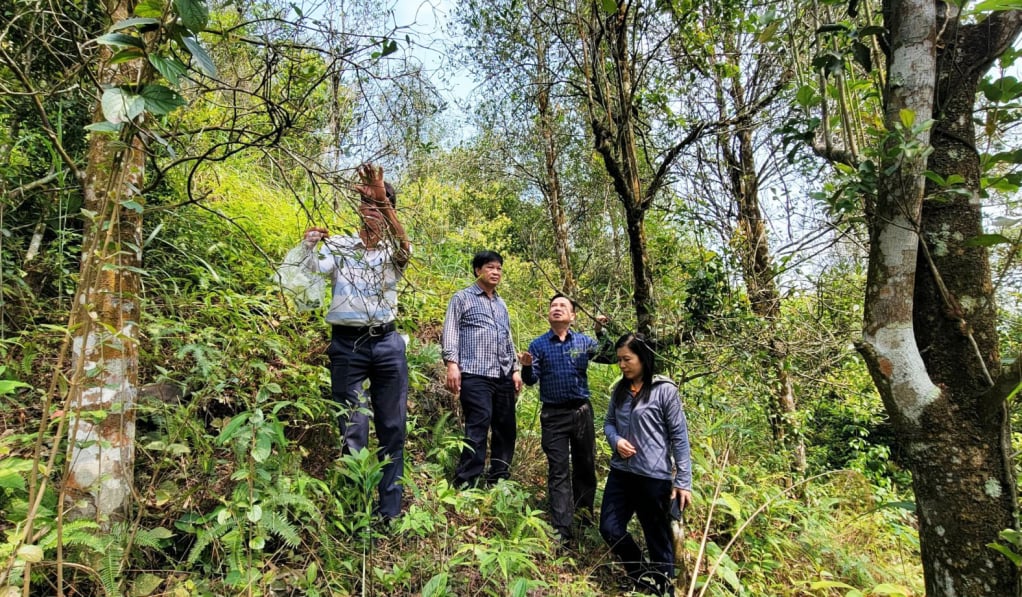
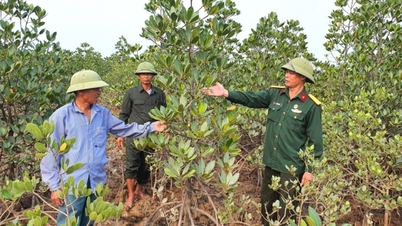
Thanks to sound and timely policies, the province's forest cover has increased significantly: from 26% in 1992, to 36% in 2000, 45% in 2005, 50.3% in 2010, 51.5% in 2011, and 52.5% in 2012. From 2019 to the present (before Typhoon Yagi struck), the province has consistently maintained a forest cover of 55%, ranking 14th nationwide. The province's forestry sector has achieved very positive, promising, and sustainable results, such as: The awareness, responsibility, and actions of Party committees, government agencies, organizations, units, communities, businesses, and the entire society in the management, protection, and use of forests and forest land have been enhanced and have undergone fundamental and profound changes; Livelihoods have been created for the people through policies on forest protection and commercial forestry production; there have been no instances of encroachment on forests, illegal exploitation of forest products and minerals. The province has established a special-use forest area to protect the landscape of Ha Long Bay; approved the establishment of the Dong Rui Wetland Conservation Area (Tien Yen), the Red Trâm and Trôi primary forest protection areas (Co To), Trâm forest (Van Don), and the Quang Nam Chau Habitat Conservation Area (Hai Ha, Dam Ha, Binh Lieu); the structure of forestry crops has shifted towards increasing native species and large timber trees; the average annual production value of the forestry sector has increased by nearly 100 billion VND.
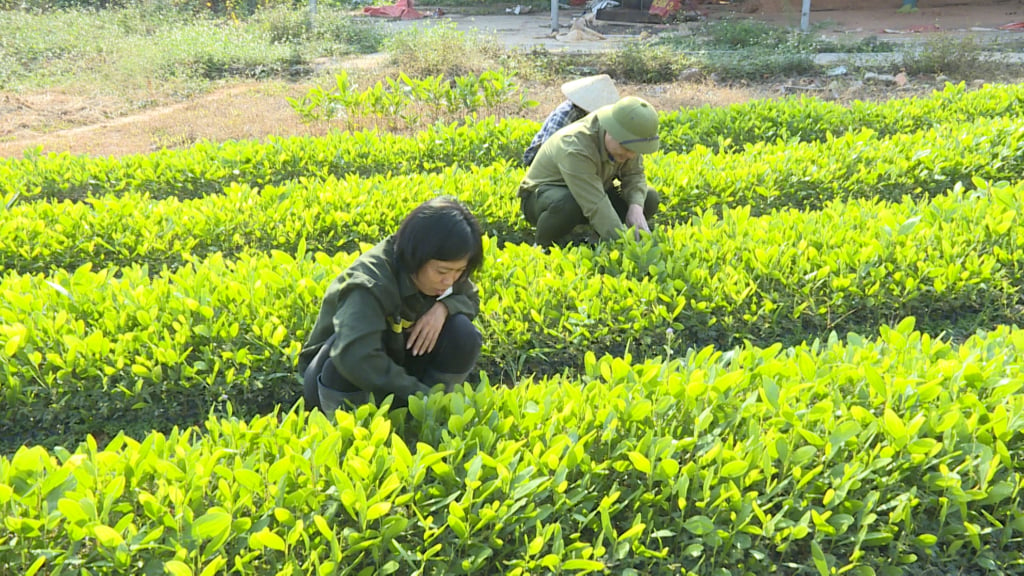
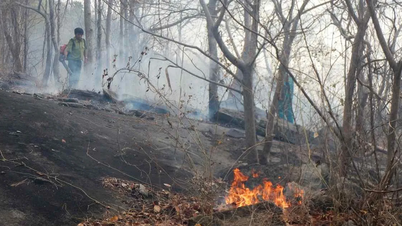
Continuing to leverage its forest strengths, Quang Ninh aims to maintain a stable forest cover rate of over 55% during the 2025-2030 period, achieve a forestry sector growth rate of 4-5%, and reduce the number of small-scale processing facilities to below 170. In particular, during this period, the province will focus on developing medicinal plants, which are local strengths, including: 7,000 hectares of star anise, 3,790 hectares of cinnamon, 1,700 hectares of Sophora japonica, 2,179 hectares of Morinda officinalis, and 2,135 hectares of other medicinal plants. Simultaneously, it aims to maintain 24,000 hectares of large timber forests, 70,000 hectares of small timber and raw material forests, and convert 6,000 hectares of small acacia forests into large timber forests. However, in September 2024, Typhoon Yagi devastated over 133,000 hectares of forest, making the task of replanting and restoring the forest cover anything but simple.
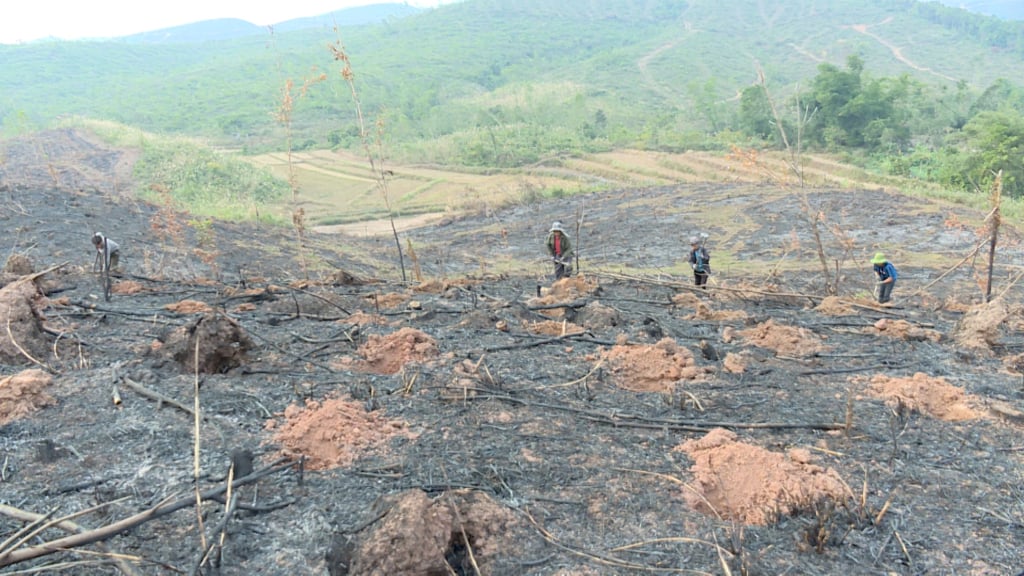
Mr. Vu Duy Van, Deputy Director of the Department of Agriculture and Rural Development, affirmed: "For the benefit of a hundred years, plant trees; for the benefit of a hundred years, cultivate people." Rebuilding forests after the storm is the top priority of the agricultural sector in this period. Initially, the sector will work with localities to focus on restoring forests after Typhoon No. 3, striving to complete reforestation across the entire province, covering approximately 98,000 hectares of damaged forest. Of this, by 2025, over 32,090 hectares will be reforested in concentrated areas. Forest owners, especially the One-Member Limited Liability Forestry Companies, will be encouraged to allocate a certain amount of land for planting large timber trees and native species. Simultaneously, the sustainable forest management plan will be effectively implemented; the area of certified forests will be increased, aiming for over 30,000 hectares of sustainably managed forests throughout the province by the end of 2025. To complete the restructuring, innovation, and development, and improve the operational efficiency of agricultural and forestry companies in accordance with the directives of the Central Government and the province.
With the determination of the province, localities, and forest owners, these new forests will surely continue to flourish, a testament to the unity and solidarity, affirming the will and resilience of the people of Quang Ninh in overcoming difficulties and resolutely fulfilling Uncle Ho's teachings from years ago.
Source



































































Comment (0)