I was born, raised, and live in the countryside, yet I still yearn for home. It's not just being far from home that makes you miss it. What people miss most are memories, images that were once familiar and close to them, gradually fading with time, or the same old scenes but with people no longer around.
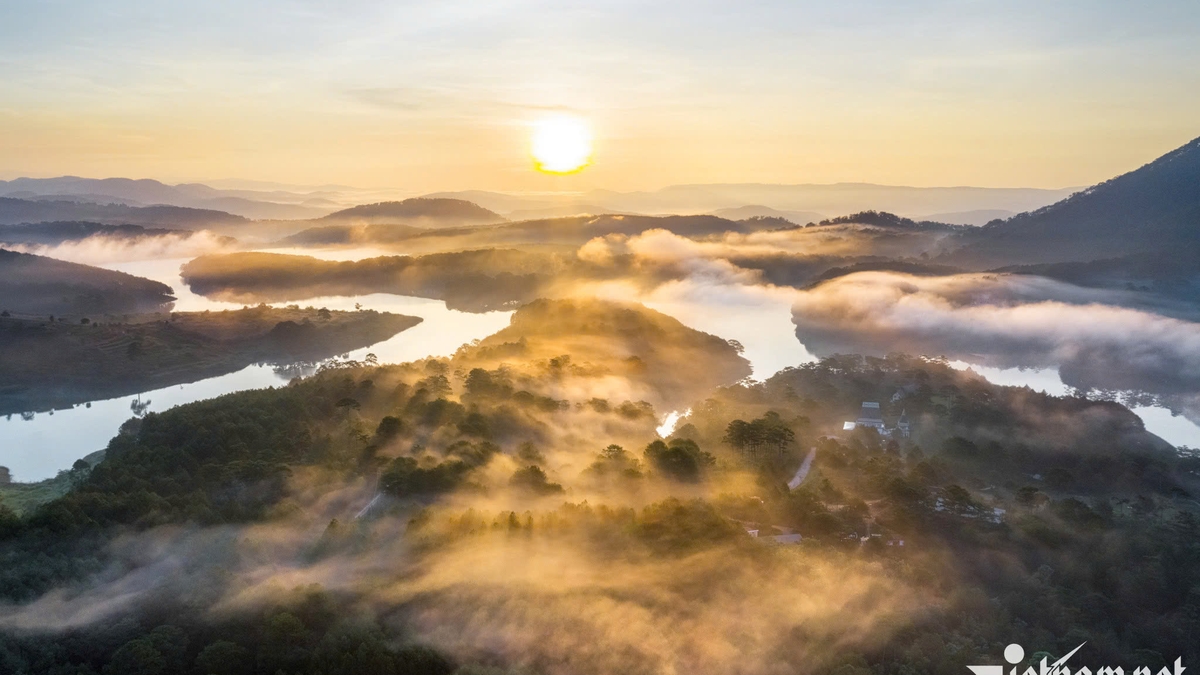
I remember the sandy village road in my hometown. In the early morning, as the sun was just beginning to cast its rosy glow in the east, I would wake up drowsily to my mother's call to go to the fields. Oh, what a blissful feeling it was to walk barefoot on that sandy road! The soft, white, smooth grains of sand seemed to melt under my tiny feet. I loved the feeling of pressing my feet against the sand, letting it completely cover them, feeling the coolness of the sand seep into my skin. The village road I used every day to go to school, to herd cattle, or to trot along with my mother to the district market is now just a memory. My village now has all its roads paved with concrete. On both sides of the road, houses are built close together, with high walls and closed gates; there are no more rows of red hibiscus flowers or lush green tea bushes. People who have been away from home for a long time return to visit and constantly praise how prosperous and beautiful my hometown is now, but I, a person still in the countryside, feel a sense of emptiness and disorientation.
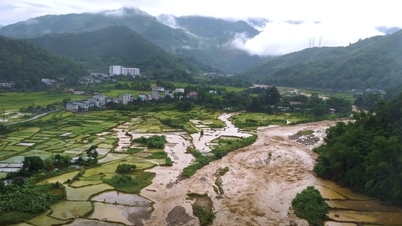
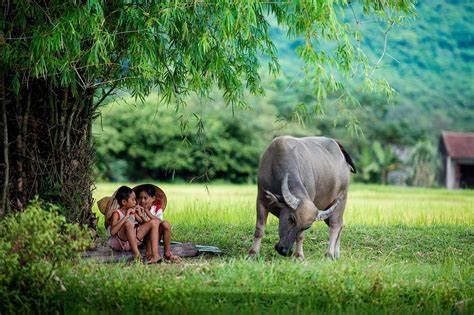
I remember the village fields behind my house. My hometown is a semi-mountainous region, without the endless, sprawling rice paddies where egrets fly freely. But that doesn't mean I didn't love the fields of my mother's village. Back then, children like us spent more time in the fields than at home, outside of school hours. The village fields were like a big friend, sheltering us, nurturing our dreams, and forgiving our mistakes. From a very young age, my mother carried me to the fields. One side of her carrying pole held a basket of rice seeds, the other held me. Under the shade of the banyan tree, I would leisurely play alone, sometimes curling up and falling asleep beside the old banyan tree. As I grew older, the village fields were where we played hide-and-seek, jump rope, blindfolded tag, and where kites carrying our dreams soared into the vast sky, beyond the smoke of the village. Occasionally, remembering those old days, I often wander to the village fields.
I sat silently, inhaling the damp, earthy scent of the soil, the pungent smell of fresh mud, remembering the dark, sun-scorched faces and hair of Tí and Tèo, remembering the ball made of pandan leaves thrown at me, the stinging pain, yet the joyful laughter of the countryside afternoons. Now, I long for those fading afternoons, but there are no longer the children's shouts calling to each other as they run to the fields to play; the games of yesteryear are no longer played. I sat for a long time by the field, silent, the field silent too, only the rustling of the wind playing with the swaying rice stalks. Occasionally, a few gusts of wind blew into my eyes, making them red and stinging.


I remember my grandmother's thatched house with its fragrant garden. The garden, which I treasured throughout my childhood, was a place I proudly showed off to my cousins from the city whenever I returned home. In the summer, the cool breeze from the fields blew in. The wind carried the sweet scent of wild jasmine, wafting into the afternoon dreams of a little girl sound asleep to my grandmother's lullabies. The scent of ripe guavas, jackfruit, and wild berries filled my summer afternoon naps. There were also afternoons when I refused to sleep, secretly following my siblings to the backyard to climb the trees and pick guavas. The guavas were covered with fingernail marks from us checking if they were ripe. And the consequence of those sleepless afternoons was a long scar on my knee from falling from the tree. Every time I look at the scar, I remember my grandmother, and that magical garden with a deep longing. I remember the stone well, the basin next to it, and the coconut shell ladle that my grandmother always placed on its rim. After our mischievous games, we would rush to the well, scooping water from the water jug to bathe and wash our faces. I remember that by that same water jug, I would scoop water to pour over my grandmother's hair. As I poured the water, I would sing cheerfully, "Grandma, Grandma, I love you so much, your hair is white, white like clouds." My grandmother passed away, the garden of my childhood was gone, the well, the water jug, the coconut shell ladle faded into the past. Only the fragrance from the old garden, the scent of the soapberry my grandmother used to wash her hair, lingers in my memory.
I remember the familiar sounds of my childhood. The crowing of roosters at dawn, the mooing of calves calling for their mothers, the mournful chirping of birds in the afternoon sky. The cry of "Anyone selling broken aluminum, plastic, pots, and pans?" in the scorching midday summer sun reminds me of the days my mother transported salt to the highlands on her rickety bicycle to earn money to raise my siblings and me. Occasionally, in my dreams, I still hear the tinkling of the bell at the end of the lane and the cry of "Ice cream, ice cream!" I remember the poor children running out with broken sandals, shattered basins, scrap metal, and bullet casings they had collected while tending cattle, to trade for cool, delicious ice cream.
It's not just being far from home that makes you miss your hometown. What people miss most are memories, images that were once familiar and close to them, gradually fading with time, or the same old scenery but with the people gone. Like me, walking along the village road, sitting in the countryside, I intensely miss the past, remembering the smoke rising from my grandmother's kitchen every morning and evening. I know that "tomorrow begins today," and my hometown will continue to change, but I hope that each person will still cherish a place to return to, a place to remember and love, a place to long to return to when far away, a place to return to when happy, and a place to return to even when suffering...
(According to Lam Khue/ tanvanhay.vn)

Source: https://baophutho.vn/giua-que-long-lai-nho-que-227647.htm