

Right in the middle of the hot season, my wife returned from the west, bringing gifts of homegrown produce: jackfruit, durian, perilla, coriander, even bird's eye green chili peppers and a bunch of green tea leaves.
She left her hometown to teach in Dak Lak in the late 1970s. Her garden was large, planted with all sorts of trees, and of course, there was no shortage of tea. It's true that for people from Nghe An, no matter where they go, they can lack anything else, but they can't lack green tea, also known as bitter tea.
 |
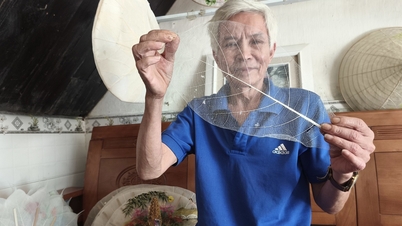
| Illustrative image |
My wife said, "Missing Nghe An green tea again, aren't you?" Then she went to brew green tea, following the recipe her mother-in-law had taught her during her visits home. It's the age-old recipe from Nghe An: Break the green tea leaves into small pieces / Remove any damaged leaves / Wash thoroughly, then crush them / Boil water for a long time / Steep in a basket / The tea will be a beautiful green color. To achieve the fragrant and long-lasting green tea flavor, enough to drink all day, even after finishing the entire pot, the people of Nghe An have a special secret that veteran journalist Phan Quang, former Director General of the Voice of Vietnam Radio , and President of the Vietnam Journalists Association, called the art of restoring the tea's flavor in an article several decades ago. That is, after pouring boiling water into the teapot or boiling the green tea in a pot, add a little cold water and then cover it. This art was highly praised by Lu Yu of the Tang Dynasty in China when he wrote "The Classic of Tea," but according to veteran journalist Phan Quang, the people of Nghe An in particular, and people in the Central Highlands in general, discovered this tea brewing art hundreds of years before.
After brewing the tea, the wife pours it into a small bowl and gives it to her husband. The tea in the bowl shimmers with a golden-green hue, emitting a fragrant aroma; each sip is refreshing. It's truly remarkable how just a few cups of green tea can make all the heat and fatigue disappear. It's no coincidence that the people of Nghe An, a land of scorching winds and hot weather, choose green tea as their daily drink.
I remember the old days of the subsidy period, when we were poor, but my mother's basket never lacked a bunch of tea leaves when she came home from the market. In Nghe An province, whether big or small, there was always a stall selling green tea. There are many brands of green tea, but the best is still Gay tea from Anh Son, Nghe An . This tea isn't smooth and silky; the leaves are small but thick and crisp, the liquor is yellowish-green, and it's much more fragrant and delicious than tea from other places.
In Nghe An province, children as young as three or four years old already drink green tea. They've been drinking it since childhood, so they're addicted. When they're far from home, a cup of green tea feels bland, making them miss it and long to return. In my village, the old farmers, in the morning, always bring a teapot with them to the fields. After plowing a few dozen furrows, they go ashore for a cup of tea, and before they know it, the whole field is finished. During harvest season, with all the farm work, a bowl of green tea as a side dish, accompanied by a cup of pickled eggplant, is enough for a meal. Eggplant and soup are like brother and sister; the more rice and pickled eggplant, the more you crave green tea.
More than just a daily beverage, green tea symbolizes community spirit and neighborly affection. "On hot summer afternoons, people call out for green tea," and a few nearby houses form a green tea gathering. Today it's one house, tomorrow it's another; after lunch or dinner, a call is made, and soon people arrive. A steaming pot of green tea, along with baskets of boiled potatoes and peanuts, fills the air with endless chatter about village life, neighborhood affairs, and the harvest. Then, children joining the army or going to university, the same green tea gathering continues. In the old days, when people were poor, weddings consisted only of betel leaves and a cup of green tea; if they were wealthier, they might have a piece of candy or a cigarette, yet these gestures of affection and commitment remained strong.
"Tell those in the upstream areas to send down young jackfruit and flying fish," now, every trip back and forth by people from the eastern part of Dak Lak working in the western part carries with it the sentiment of bringing up shrimp and fish from the south, and fruits and vegetables from the north. Our family also brings green tea and honey.
In Nghe An, braised fish is incomplete without molasses and green tea, as these ingredients make the fish firmer and more flavorful. When the sea fish is abundant and the green tea is scarce, our houses are filled with the fragrant aroma of molasses and green tea in our braised fish. And as for honey: "To have smooth, beautiful skin, mix bitter tea with honey" is an old remedy my mother taught me, then my daughter-in-law, and it's incredibly effective. In the old days, when we were poor, we mainly used green tea mixed with molasses, which was good; now that we have the means, mixing it with honey is even better. And Dak Lak honey is unmatched anywhere else, so my sister sent me a bottle of Dak Lak forest honey as a gift…
Source: https://baodaklak.vn/du-lich/202508/goi-nhau-ram-ran-che-xanh-be41d1e/



















































































Comment (0)