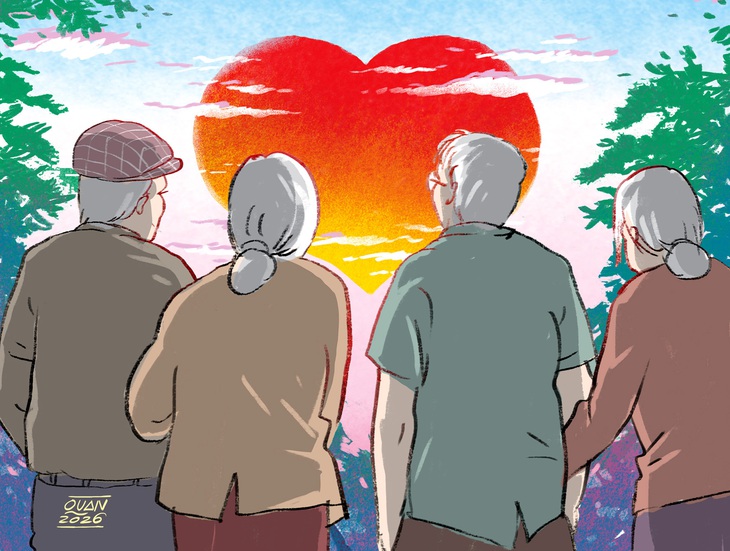
Illustration: DANG HONG QUAN
Our understanding of happiness changes at different stages of life.
My biological father used to be a shield protecting our family after my mother passed away. Yet, during the COVID-19 pandemic, it seemed as though he had collapsed. The man with the strong back who used to carry me for walks and let me ride him like a horse when I was little, now had thin, straight muscles.
Since the stroke, my father's health has deteriorated rapidly. He has become emaciated, his muscles flabby, and the left side of his body has become significantly weaker. Every day, he has to bravely use a cane to take slow, laborious steps, encouraged enthusiastically by his two grandchildren.
My mother-in-law was fortunate to survive the war against America. She is a war invalid with lasting physical scars from the war and torture. Every day, she sits and tells her grandchildren about the war with pride and a powerful voice, even though she is nearly 80 years old.

Being affectionate and warm-hearted, she treated me like her own child, always asking about my well-being and encouraging me whenever I faced difficulties or felt tired. Perhaps fearing that she would become useless in her old age and that I would have a hard time, she always found ways to help with chores like picking vegetables, clearing the table, and folding clothes... as if to compensate for the loss of my biological mother.
Seeing that I was always worried about my father's health and uneasy about leaving him alone, my grandmother told me to bring him to live with us so I could take better care of him. My father was about the same age as her younger brother who died in the war. Therefore, she always treated him like a younger brother in the family, someone to keep her company day and night.
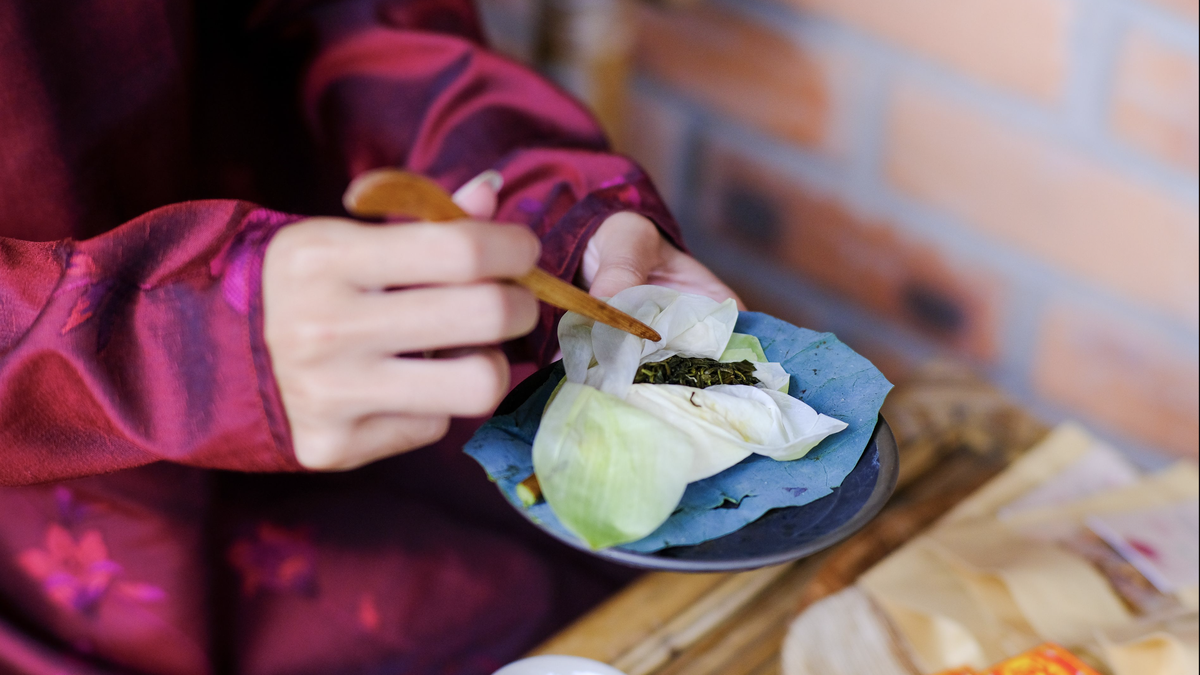
Every day, the old couple would brew a pot of tea and sit in the yard, discussing how brutal the war was in the past, and how difficult the subsidy period was...
My neighbors often shake their heads in disapproval when I have to take care of both my young child and my elderly, sick parents. I often jokingly say that my house has four "babies," and that each baby is cooperative and loving towards the other.
And my two "older children" don't become irritable or grumpy with their grandchildren because of their aches and pains or illnesses. Perhaps it's because my parents are afraid I'll have to work too hard, so they don't demand or complain about anything.
Therefore, I consider myself very lucky, because not everyone has the opportunity to be close to and care for their parents in their old age, and then constantly worry about them from afar. When the lamp goes out, the thread of life ends, and the children who want to be close to and care for them will no longer have the chance.
Every morning, in front of the gate, I see my father-in-law toddling along with his cane under the early morning sunlight shining down on the porch, and my mother-in-law meticulously counting how many chili peppers have grown on the plant. They both rejoice when they see me return from the market. I know they've been waiting for me, just like when I used to sit in front of the door waiting for my mother to come home from the market.



Then I slowly took things out of the basket—sometimes a few fruits, sometimes a few small cakes. My father-in-law and mother-in-law smiled knowingly. Ultimately, the elderly, like children, are frail, anxious, and fearful, so they also need to be loved, protected, sheltered, and cared for.
I want to be bathed, cared for from meals to sleep, I want my parents to always be present, to talk with me for a long time, to wait for me every morning instead of silently observing through the faint, lingering smoke of incense. At middle age, that's all I need to feel warm, peaceful, and happy.
Source: https://tuoitre.vn/hai-ben-cha-me-du-day-yeu-thuong-2026061410494903.htm





















![[Photo] Thousands of people participate in a run to show their support for the campaign "Sharing a common determination to build drug-free communes, wards, and special zones".](https://vphoto.vietnam.vn/thumb/1200x675/vietnam/resource/IMAGE/2026/06/27/1782554475933_0673e2a3df7b5e25076a-8283-jpg.webp)