
The most obvious reason for this in both of these footballing nations is the lack of world-class players capable of deciding matches. The Netherlands used to be home to outstanding strikers, but at the 2026 World Cup, they entered the tournament with only average attacking options. When opponents shut down their attacking options, the Netherlands almost lacked a single individual with the caliber to decide the game.
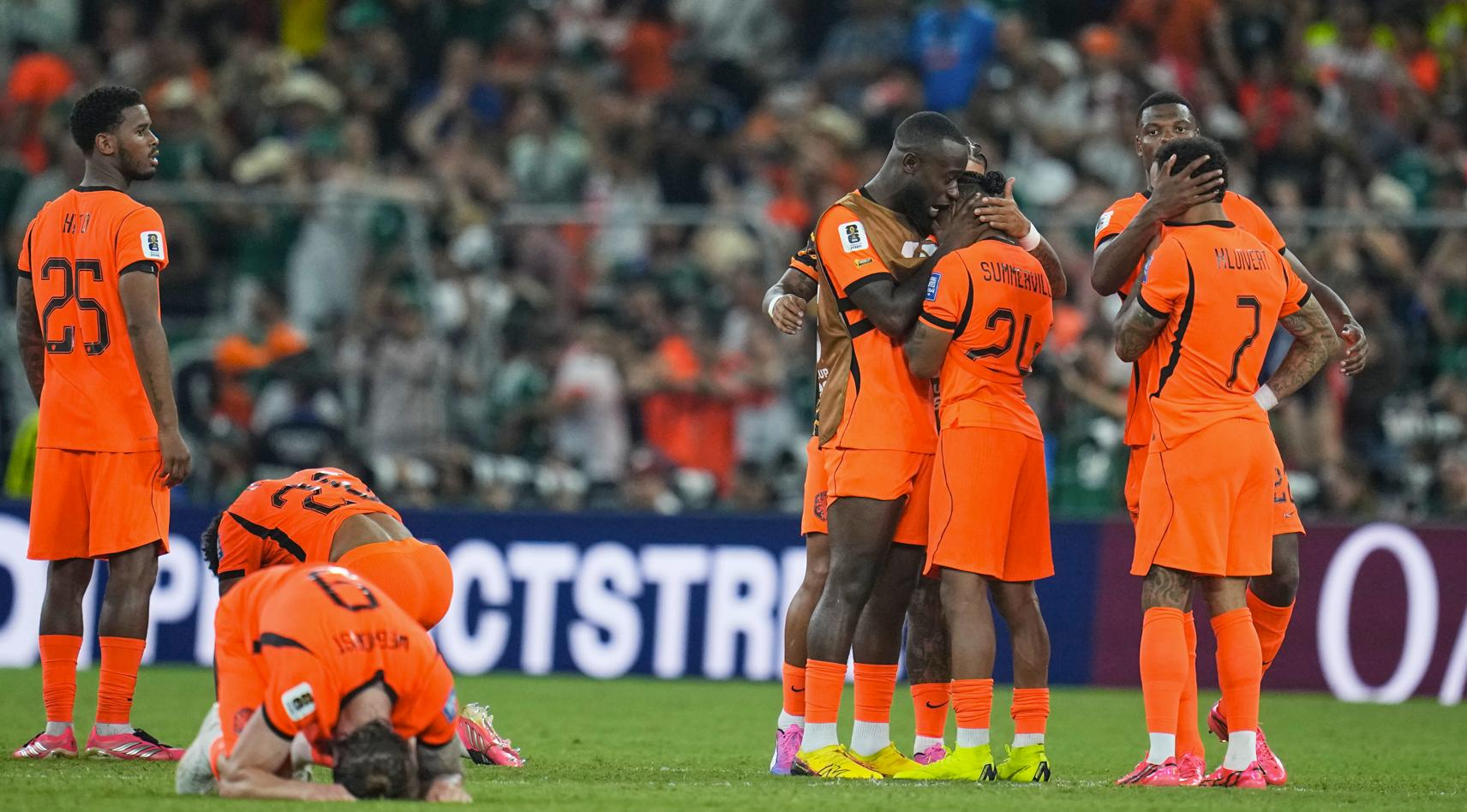 |
The Dutch players collapsed after their defeat to Morocco in a penalty shootout in the round of 16. Photo: AP |
The German team is in a similar situation. Their 7-1 victory against Curacao in the group stage gave the impression that the "German Panzer" had returned to form, but as the tournament progressed, their attack became increasingly ineffective. Coach Nagelsmann's team controlled possession and played systematically, but lacked decisive plays and a player capable of finishing off the game.



After failing to qualify for the 2018 and 2022 World Cups , where they were eliminated in the group stage, the German national team recognized problems in its youth development system. The country's football association has implemented numerous reforms, from coaching methods to game planning and even changing head coaches. However, football development is never a problem that can be solved in just a few years. Therefore, the 2026 World Cup will remain a transitional period, as the gap between the 2014 winning generation and the next generation has yet to be filled.
The problem in Dutch football is similar, with a significant gap in the next generation of players. While proud of their renowned attacking football philosophy, the Netherlands' most promising players are often defenders. For decades, the Ajax Amsterdam football academy was the breeding ground for numerous stars who brought glory to European football. However, in recent years, players who have come through this academy have struggled to compete with talents from Spain, England, France, or Portugal.
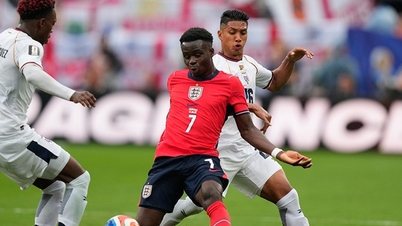
Although German and Dutch football still possess top-class goalkeepers and central defenders, they lack talented midfielders and sharp enough forwards to make their attacking play effective. At the 2010 World Cup, the Netherlands finished as runners-up with world-class players like Sneijder, Robben, and Van Persie. Similarly, in their 2014 World Cup victory, Germany boasted talented midfielders and forwards such as Gotze, Muller, and Kroos...
Where can German football find players who resemble Lothar Matthaus or Michael Ballack these days? And where can Dutch football find players like Van Basten, Van Nistelrooy, or Van Persie? The obvious lesson from Italian football remains. Speaking of Italy today, fans can't find a single player of sufficient caliber to inspire hope, and proof of this is their three consecutive World Cup absences.



Following their failures at the 2026 World Cup, German and Dutch football need to confront the issues head-on and undertake a comprehensive overhaul of their youth development systems. They need to innovate their methods, patiently nurture talent, and send young players to various tournaments to gain experience and mature. This is the way to address the root of the problem, allowing the German and Dutch national teams to return to a high level of competition sooner.
Source: https://www.qdnd.vn/the-thao/worldcup-2026/hai-that-bai-mot-can-benh-1047031
![[Photo] Strengthening character and expertise: Intense training for artillery soldiers.](https://vphoto.vietnam.vn/thumb/1200x675/vietnam/resource/IMAGE/2026/06/30/1782815602541_lu-368-1875-4571-jpg.webp)