



Peace weaves happiness.
Sharing her story with us, Ms. Nguyen Thi Hien (Dao Thinh village) said that in this area with limited land and steep slopes, the people of Tran Yen choose to cultivate cinnamon trees because it is the only tree that truly cares for the poor, clinging to the rocky soil and growing there. No part of the cinnamon tree is wasted; the bark is used as medicine and spice; the leaves and small branches are used to distill essential oils; and the wood is used in construction and for making household items. With its high canopy cover, the cinnamon tree plays a crucial role in soil conservation, erosion control, and water regulation. Because of this, despite numerous natural disasters and floods, the cinnamon forests of the villagers remain unharmed, and the people's economy continues to develop steadily. With loans from the Social Policy Bank, many households have proactively expanded their planted forest areas, developed nurseries, and boosted the production of cinnamon products for export.
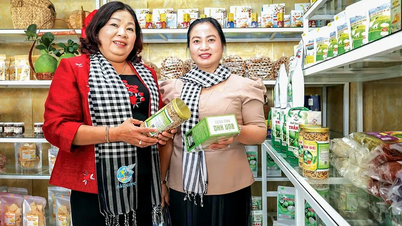
It is thanks to the sturdy cinnamon "wall" that a safe buffer zone is created, protecting the lush green mulberry fields in the flatter areas. Ms. Nguyen Thi Tuyet Nga, Standing Vice Chairman of the Fatherland Front Committee and Chairwoman of the Farmers' Association of Tran Yen commune, said that the mulberry fields here are over 15 years old. To maintain these decades-old mulberry fields, the people have applied a circular economy model, utilizing mulberry stems and residues composted with silkworm manure to create a nutrient-rich organic fertilizer to return to the soil. Each year, farmers harvest two main crops of leaves to support the traditional silkworm farming and weaving industry. Beyond silkworm farming for cocoons, mulberry trees also create value-added products such as "Mulberry Wine for Couples" - an elegant beverage that not only nourishes health but also carries the unique and warm cultural beauty of the people in this cinnamon-growing region.

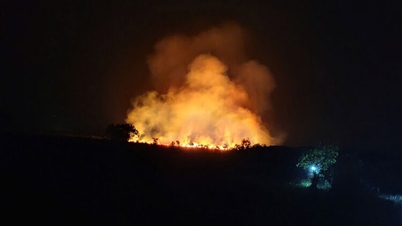
But life is not a calm lake. When the cinnamon plantations and mulberry fields were in their prime, natural disasters suddenly struck like a cruel test, turning the lives of the highlanders upside down amidst countless difficulties. This was even harder to accept for elderly farmer Nguyen Van Ha (Lan Dinh village), who had been involved in mulberry cultivation and silkworm farming for over 20 years. Owning more than 2 acres of mulberry land, along with his house and workshop, Mr. Nguyen Van Ha witnessed for the first time that all his family's assets and hard work were submerged under floodwaters. The silkworms were fortunately moved to safety, but they couldn't survive long because they are very sensitive and need cleanliness. Mulberry leaves were covered in mud and silt, many young mulberry trees rotted, and silkworm farming equipment was severely damaged. The flood not only swept away his property but also nearly crushed the faith and will of the most experienced farmer in the region, as his bank loan was still due.
 |
| Mulberry cultivation and silkworm rearing have become a highly profitable occupation for farmers in Tran Yen. |
The Chairwoman of the Farmers' Association of Tran Yen commune said that after the merger and implementation of the two-tiered government model, 55 out of 61 villages in Tran Yen suffered damage, affecting production, business, and people's livelihoods due to recent storms and floods such as Typhoon Yagi and Typhoon No. 10 (Typhoon Bualoi). In particular, the mulberry growing area suffered up to 90% damage, and the cinnamon growing and production area was severely damaged by landslides and floods. “In just one night, more than 2,000 cinnamon trees ready for harvest were buried under rocks and soil, and more than 300 kg of finished dried cinnamon were swept away by the muddy water. At that moment, I felt like I had fallen into a deep abyss. 300 million dong… everything was gone. Machinery was damaged, the cinnamon hill was lost. Looking at my neighbors, everyone was left penniless like me. I didn't know where to turn to get back on my feet,” whispered Ms. Nguyen Thi Hien, her voice choked with emotion.
The strength to rise again stems from a foundation of belief.
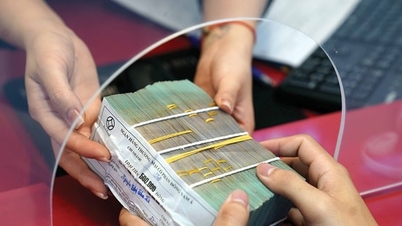
Understanding the difficulties faced by simple farmers during the disaster, Ms. Nguyen Thi Bich Ngan, Director of the Tran Yen Branch of the Vietnam Bank for Social Policies (VBSP), stated that the area frequently faces storms and floods, seriously affecting the lives and livelihoods of the people, especially poor and near-poor households and policy beneficiaries. Following the directives of the Party Committee, the government, and the VBSP at all levels, the branch has proactively implemented many comprehensive measures to handle risky debts and meet the capital needs for production restoration. In addition, the bank flexibly applies post-disaster support policies such as: extending loan repayment periods for loans with less than 40% damage; freezing loans for up to 3 years for loans with 40% to less than 80% damage; freezing loans for up to 5 years for loans with 80-100% damage; during the debt freezing period, customers are not required to repay principal or interest.

According to Do Long Thao, Deputy Director of the Lao Cai Provincial Branch of the Vietnam Bank for Social Policies (VBSP), the VBSP operates on the principle of "serving at home, disbursing and collecting loans at the commune level" and always prioritizes "serving the people wholeheartedly." Whether in favorable or difficult times, coordination with socio-political organizations has been very effective, especially in the areas of disseminating information, providing guidance, and supporting people in borrowing capital. After the natural disasters, 560 households in the province who borrowed from the VBSP suffered losses with a total outstanding debt of approximately 50 billion VND. The branch reported to the VBSP and the Provincial People's Committee to request an additional 400 billion VND in post-flood recovery capital, helping people to quickly stabilize their lives and production. In addition, we have proposed debt restructuring for 57 customers, totaling 2.2 billion VND. Furthermore, various policy credit programs have almost completely covered the province. The entrusted lending model has also proven its superiority by mobilizing the strength of the entire political system, ensuring that policy credit capital reaches the right people at the right time; at the same time, it enhances borrowers' awareness of capital utilization, strengthens the bond between members and the association, and reinforces people's trust in the policies of the Party and the State.
 |
| The close connection between the Party's will and the people's aspirations, facilitated through the credit bridge provided by the Vietnam Bank for Social Policies, creates a strong impetus for people to stand firm on their journey to overcome difficulties. |
These efforts yielded results right from the beginning of the new spring. Upon receiving a 100 million VND loan from the job creation program, along with a 60-month debt deferral policy with no interest payments, Ms. Nguyen Thi Hien's family quickly repaired machinery, reinforced the eroded cinnamon plantation, and restored production. To date, her production has stabilized, harvesting over 400 kg of fresh and dried cinnamon each month. The reconstruction of the model has also created regular employment for 5 local workers, with an income of 7-8 million VND per person per month.
"Thanks to the financial support from the Vietnam Bank for Social Policies, we cherish even more the solidarity among our fellow citizens and strive harder in economic development," said Ms. Nguyen Thi Hien emotionally.
Moreover, joy was evident on Mr. Nguyen Van Ha's face. “Thanks to the timely assistance, encouragement, and support from the Social Policy Bank officials, including a 3-year debt deferral, I regained the confidence to strive for recovery and production development. If I didn't try, wouldn't I be betraying everyone's kindness?” Taking advantage of the favorable weather, he busily prepared the land, fertilized, and cared for the young mulberry trees in time for the Lunar New Year. As a result, his family's silkworm farming model quickly stabilized, yielding 3 quintals of cocoons per month, selling for 21 million VND per quintal, creating a sustainable income for his family and four local workers.
The recovery is not only measured by output or income figures, but by the resilience of people to rise again after natural disasters, when faith is strengthened at the right time and in the right way. This result clearly illustrates the broader picture of poverty reduction and sustainable development in the mountainous region. Identifying poverty reduction as a central task of the entire political system, in each stage, Lao Cai province strongly supports commodity production and regional connectivity, promoting production, improving living standards, and creating momentum for sustainable poverty reduction. By the end of 2025, Lao Cai province had achieved impressive poverty reduction results, with the provincial poverty rate projected to decrease to 2.68%. For the entire period of 2021-2025, Lao Cai reduced the poverty rate by 15.74%, exceeding the government's target by 0.44%. In ethnic minority areas alone, the poverty rate decreased by an average of 4.46% per year. The percentage of rural population with access to safe water sources is estimated at 98%, and many centralized water supply systems have been newly invested in or upgraded.
Despite achieving impressive results, Lao Cai still faces a significant challenge: 23 communes in the province still have poverty rates ranging from 20-40%. Meanwhile, the Resolution of the First Lao Cai Provincial Party Congress (2025-2030) identifies "putting people at the center," comprehensively caring for the seven pillars of happiness: health, education, housing, clean water, electricity, information, employment, and income.
To improve the effectiveness of poverty reduction efforts, in 2026, Lao Cai will continue to effectively implement policies for poor and near-poor households according to the poverty standards for the 2026-2030 period; gradually narrow the income and living standard gap between urban and rural areas, and between lowland and highland regions; create conditions for poor people and poor households to access basic social services; and strive to reduce the poverty rate by 3.9%.
On that journey, "the close connection between the Party's will and the people's aspirations through this credit bridge not only strengthens confidence in the political system but also creates a strong impetus for people to stand firm on their journey to overcome difficulties and reach a happy and sustainable prosperous future," affirmed the Deputy Director of the Lao Cai Provincial Branch of the Vietnam Bank for Social Policies.
Source: https://thoibaonganhang.vn/hanh-phuc-o-xu-yen-178012.html
![[Photo] Prime Minister Pham Minh Chinh working with the Vietnam Academy of Science and Technology](https://vphoto.vietnam.vn/thumb/1200x675/vietnam/resource/IMAGE/2026/02/23/1771832245861_image-2-6431-jpg.webp)












































































Comment (0)