

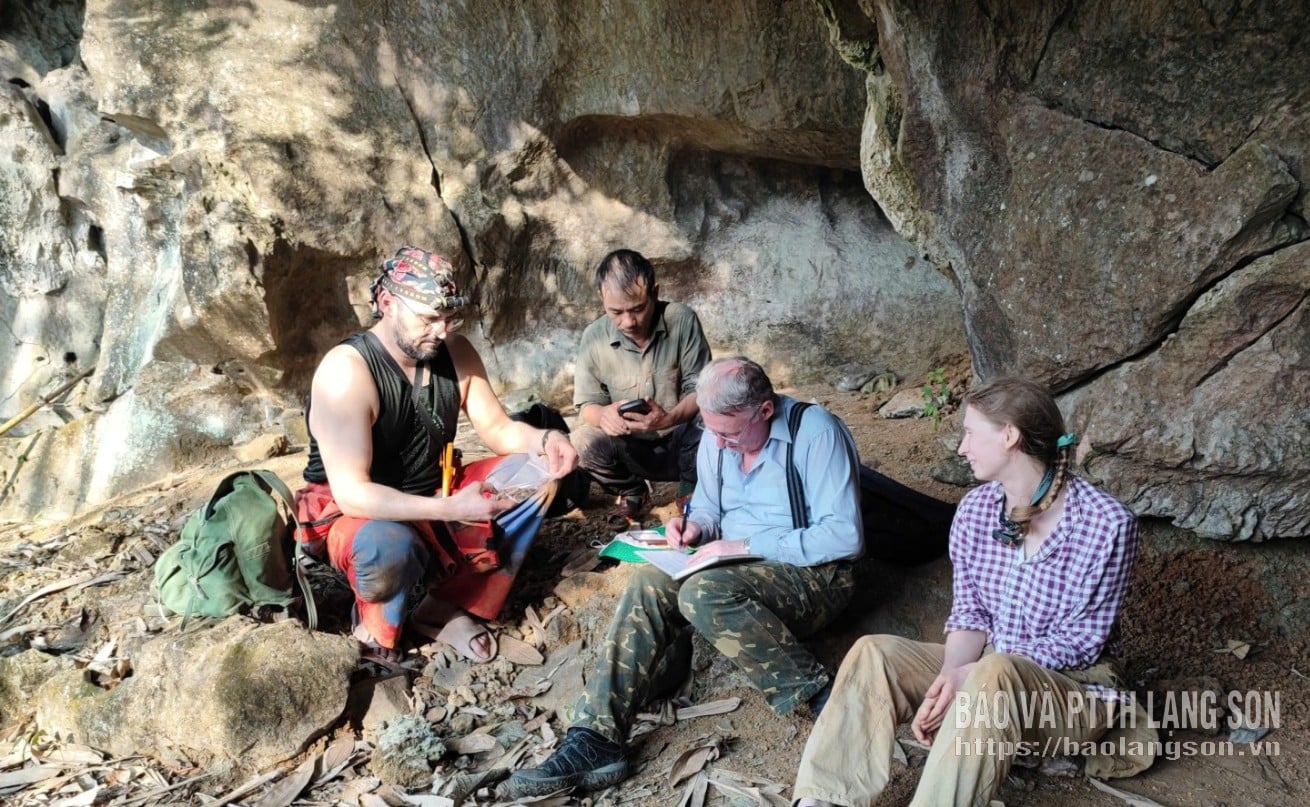
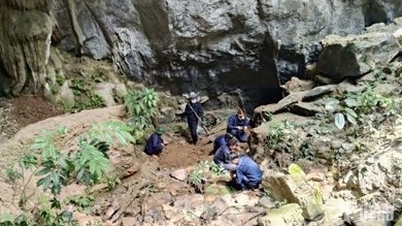
In 2025, Na Duong Valley (Na Duong commune) was the site where the provincial museum's survey team conducted numerous surveys and explorations after discovering traces of several fossil specimens. Mr. Nguyen The Vinh, from the Museum Operations Department of the provincial museum, said: "After many days of searching, relying on experience and sometimes intuition to discover and confirm that these were indeed paleontological specimens, I was truly excited and happy. Each time I found a specimen, I felt like I was bringing the past back to the present."
A remarkable achievement following the surveys at Na Duong Basin was the discovery of fossilized specimens of two ancient crocodiles, found deep within the sediment layers. This confirmed that the area was once home to many creatures millions of years ago, opening up new insights into the natural history of Lang Son .
In 2024, the Provincial Museum acquired over 300 artifacts; in 2025, it is expected to acquire over 500 artifacts, including archaeological specimens, documents, images, and artifacts related to various historical periods. Currently, the Provincial Museum houses more than 75,000 artifacts. Of these, approximately 16,000 have been scientifically documented for display and research purposes. |
Currently, the Provincial Museum has a museum operations department that conducts surveys and explorations of archaeological sites. With only three staff members, and given the vast geographical area of the province, where sites are not only found in paleontological strata or prehistoric caves but often appear in the daily lives of the people, the Provincial Museum has built a network of over 50 collaborators in various communes throughout the province. These silent "eyes and ears" are regularly met with and guided by museum staff on how to identify signs and traces of archaeological sites during their work and production activities.
Based on information provided by collaborators and combined with research, the Museum Operations Department will review and evaluate the findings, then decide whether to proceed with exploration or collaborate with experts. From rocky mountains and prehistoric caves to areas still containing ancient sediments, armed only with rudimentary tools like exploration hammers, small hoes, maps, and burning passion, the museum staff set off. Each survey trip typically lasts from 4 to 6 days.
From the beginning of 2025 until now, the Provincial Museum has conducted and coordinated 15 field trips. Mr. Nguyen Gia Quyen, Head of the Museum Operations Department of the Provincial Museum, shared about his work as if it were an endless adventure: “Each field trip is a memorable experience, because the survey conditions are often very difficult, with treacherous terrain. Sometimes the whole team has to crawl along jagged cliffs to check; or unexpectedly encounter snakes and centipedes while surveying; and sometimes sit for hours in a cave just to listen to the sounds of the rocks. Although it is difficult and arduous, when we find even just a small artifact, we are as happy as if we found gold.”
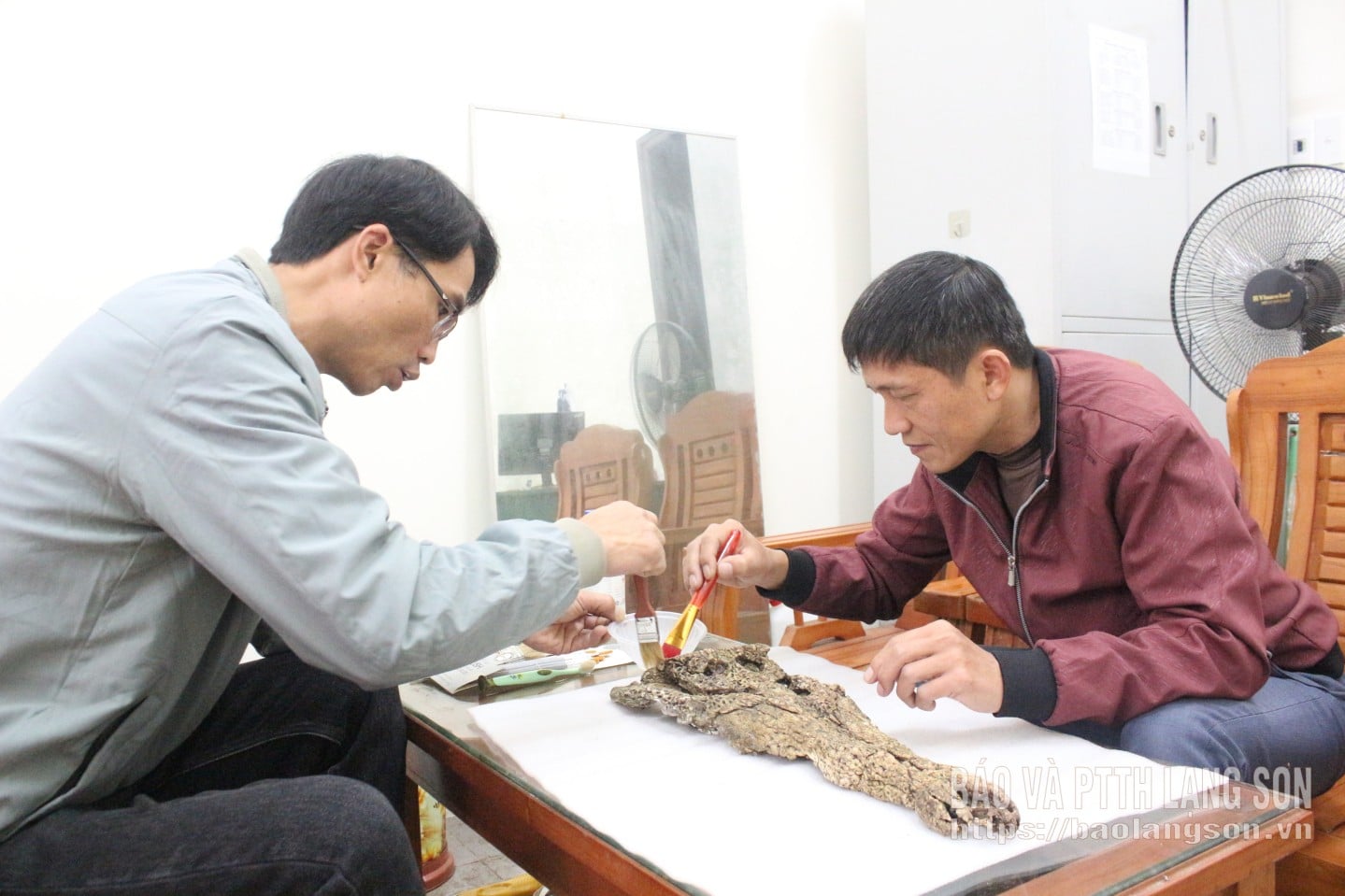
Thanks to the enthusiasm and perseverance of the museum staff, in 2024, the Provincial Museum acquired over 300 artifacts; in 2025, it is expected to acquire over 500 artifacts, including archaeological specimens, documents, images, and artifacts related to various historical periods. Currently, the Provincial Museum houses more than 75,000 artifacts. Of these, approximately 16,000 have been scientifically documented for display and research purposes.
The large number of artifacts, the vast geographical area, and the limited manpower require the professional team to continuously improve their appraisal and excavation capabilities. Mr. Nong Duc Kien, Director of the Provincial Museum, stated: "The museum always prioritizes and coordinates with survey and excavation teams to learn from experts. We encourage young staff members to travel extensively, because only through fieldwork can they fully understand how to identify sediments, stratigraphic layers, or handle paleontological artifacts. At the same time, the museum always provides equipment, resources, and coordination mechanisms to ensure staff feel secure in their work, confidently discovering and proposing new directions for investigation."
Mr. Luu Ba Mac, Deputy Director of the Department of Culture, Sports and Tourism, said: "Over the years, the Provincial Museum has proactively, seriously, and persistently carried out surveys, explorations, and collection of artifacts, thereby gradually supplementing valuable documentation for the province. Despite limited personnel and resources, the unit has maintained a high frequency of professional activities, ensuring scientific rigor in the appraisal and preservation process. The results achieved demonstrate the great efforts of the staff and affirm the important role of the museum in serving research, exhibitions, and community education. The Department will continue to pay attention and create conditions for the museum to further improve its professional capacity, meeting the requirements of heritage preservation in the new phase."
The artifacts found are not just tools, bone fragments, or traces of ancient culture; they tell the story of things and events that once existed but have been obscured by time. Each specimen, each exploration, each trace brought to the museum is a step that opens the door to the past, helping the community better understand the land they live in. For this reason, museum workers persevere year after year in their work, believing that somewhere deep within Lang Son, there are still pieces of history waiting to be unearthed to tell the story of the past to future generations.
Source: https://baolangson.vn/hanh-trinh-tim-ve-qua-khu-5066775.html























































Comment (0)