A craft passed down through generations.
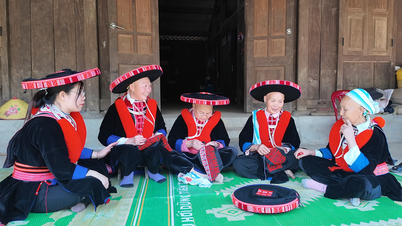
In her simple house, Neáng Chanh Ty meticulously adjusts each silk thread on the loom. This familiar action has been her constant companion for many years. Chanh Ty says that the art of brocade weaving came to her very naturally. When she was little, she often sat next to her grandmother and mother to watch them weave. As she grew up, she learned how to use the shuttle and create patterns. Gradually, this craft became an indispensable part of her life. "My grandmother taught my mother how to weave brocade, and then my mother taught me. When I became proficient, I also taught my daughter and a few other women in the neighborhood so that everyone could preserve the craft," Ty said.

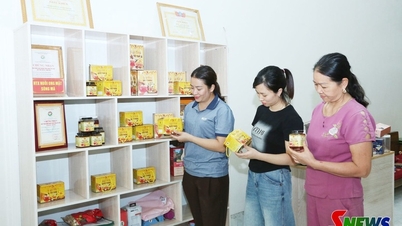
Ms. Neáng Chanh Ty (on the left) with brocade products from the Khmer Brocade Weaving Cooperative in the commune. Photo: DANH THÀNH
To adapt to market demands, Ms. Ty and many households in the hamlet have diversified their products. Some families even combine weaving with showcasing the craft to tourists visiting the area. According to Ms. Chanh Ty, in the past, to obtain silk for weaving, weavers had to grow mulberry trees, raise silkworms, and spin the threads themselves. The work was quite arduous and time-consuming. Nowadays, the silk raw material is supplied elsewhere, making the weaving process more convenient, while still maintaining the soft, smooth quality and beautiful sheen of the fabric. "Each complete brocade piece usually takes 5-7 days of work. The weavers earn 3-6 million VND per month, contributing to the family's livelihood," Ms. Chanh Ty said.
You may also like

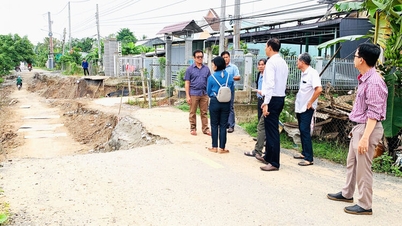
Chau Phu commune begins construction of Tu Anh bridge.On July 6th, the Party Committee, People's Council, People's Committee, and Vietnam Fatherland Front Committee of Chau Phu commune (An Giang province) held a groundbreaking ceremony for the construction of Tu Anh bridge (Canal 1 - north of Chu My canal). Ms. Dinh Thi Viet Huynh, Vice Chairman of the An Giang Provincial People's Council, attended the ceremony. Ms. Neàng Dưm is one of the elderly artisans in the traditional brocade weaving craft who has been associated with the Khmer people here for many generations. According to Ms. Dưm, many families still have three generations working together at the loom. The patterns on the brocade are often related to the cultural life of the Khmer people, such as images of temples, flowers, or familiar symbols in their beliefs. These patterns create a unique character for the handicraft products of the village. "The weavers also use many kinds of natural plants, roots, and fruits from the region to dye the fabric, so the products have rich colors and a unique characteristic," Ms. Dưm said.
Reaching further step by step
The traditional brocade weaving craft in An Cu commune once faced difficulties due to a shrinking market. However, thanks to support from craft village restoration programs, the brocade weaving craft of the Khmer people in the Bay Nui region has gradually been restored. Notably, in 1998, the project to restore the Khmer brocade weaving village, implemented by the CARE organization (Australia) in collaboration with the Provincial Women's Union, created a significant turning point.
In 2002, the Khmer Brocade Weaving Cooperative in Van Giao commune (now An Cu commune) was established, bringing together many households to participate in production. Currently, the cooperative has 63 members, including artisans and skilled craftsmen who play a role in teaching traditional weaving techniques. The goal of the Khmer Brocade Weaving Cooperative is to maintain production and enhance the cultural value of the products. “Each brocade fabric contains the hard work and creativity of the artisans. We hope that through these products, more people will learn about Khmer culture in An Giang, ” shared Ms. Neang Chanh Da Ty, Director of the Khmer Brocade Weaving Cooperative in An Cu commune.
In 2006, Van Giao brocade silk products were granted collective trademark protection. In 2007, the local brocade weaving craft was recognized as a traditional handicraft village. In early 2023, the brocade sarongs from the village were recognized as achieving OCOP 3-star standards, contributing to enhancing the reputation and value of the products in the market.
Currently, Khmer brocade products from An Cu commune are available in many localities nationwide and are exported to several countries such as Thailand , Cambodia, and Myanmar. Some high-end products are even chosen by international tourists when visiting the Bay Nui region.

Strengthening the friendship between Vietnam and the United States.On July 3rd, as part of the Pacific Partnership - Friends of the Pacific 2026 program, the U.S. Army Pacific delegation, led by Lieutenant General Joel Vowell, Deputy Commander of the U.S. Army Pacific, paid a courtesy visit to the Quang Tri Provincial Military Command. These days, the Sray Skoth brocade weaving village is even more bustling as artisans focus on weaving many products to meet the shopping demands for the traditional Chôl Chnăm Thmây New Year of the Khmer people. This is the time when people often choose to buy traditional clothing to wear when visiting temples and participating in New Year rituals. According to Mr. Nguyen Duy Phong - Chairman of the People's Committee of An Cu commune, the locality is continuing to support the cooperative to improve its production capacity, while also linking the craft village with tourism activities. Developing the craft village not only helps create jobs for people but also contributes to preserving the traditional culture of the Khmer community.
RENOWNED CITY
Source: https://baoangiang.com.vn/giu-hon-tho-cam-sray-skoth-a478963.html









![[Photo] General Secretary and President To Lam working with the Technical and Professional Center, Ministry of Public Security](https://vphoto.vietnam.vn/thumb/1200x675/vietnam/resource/IMAGE/2026/07/06/1783318005842_a1-bnd-1129-2263-jpg.webp)