

The 2025 scientific conference and international forum on “Global Coffee Industry Value Chain - Global, Local and Sustainable Development” not only discusses the global coffee industry value chain but also aims for sustainable development linked to local cultural identity and knowledge.
Coffee, a strategic crop and the pride of the people of Dak Lak.
This international scientific conference and forum took place over two days, December 5th and 6th, at the World Coffee Museum in Buon Ma Thuot ward, Dak Lak province. It was organized by the Dak Lak Provincial Department of Culture, Sports and Tourism, Ho Chi Minh City University of Culture, UNESCO, and Yunnan University (China), and sponsored by Trung Nguyen Group Joint Stock Company. The conference attracted a large number of managers, scientists, experts, businesses, and organizations from both within and outside Vietnam.
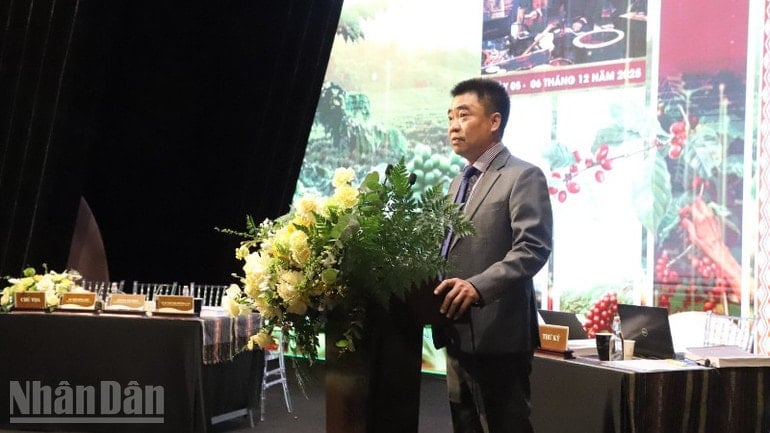
In his opening remarks at the workshop, Associate Professor, Dr. Lam Nhan, Rector of Ho Chi Minh City University of Culture, stated that coffee is a strategic industrial crop and a source of pride for Dak Lak and the Central Highlands. However, it is also a crop with specific ecological requirements and is highly sensitive to climate change. Furthermore, while the expansion of coffee cultivation over the past years has generated immediate economic benefits, it also raises crucial issues such as whether to continue expanding the area or to shift towards improving quality, increasing value, enhancing processing technology, and managing the value chain.
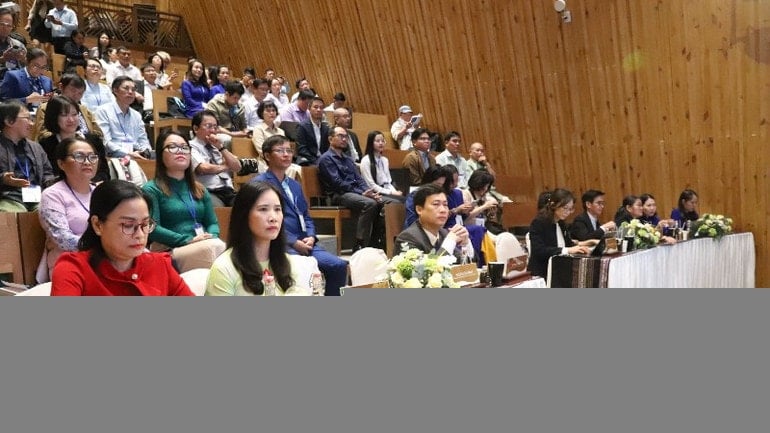
Therefore, the workshop is not only a scientific forum but also an opportunity to create a new vision for the development of Vietnam's coffee industry within the global value chain; to discuss coffee heritage, from knowledge of cultivation, care, and processing to the culture of enjoyment; about the coffee industry, technology, and branding; about social responsibility, environmental protection, natural resource restoration, and sustainable development. In particular, the workshop is also of significant importance in the process of building the dossier "Knowledge of Cultivation, Processing, and Enjoyment of Coffee in the Central Highlands" to be submitted to UNESCO for inscription on the List of Good Practices for the Protection of Intangible Cultural Heritage . This is a great opportunity to honor indigenous knowledge, increase the brand value of Vietnamese coffee, and affirm the contribution of the Central Highlands to the world cultural heritage map.
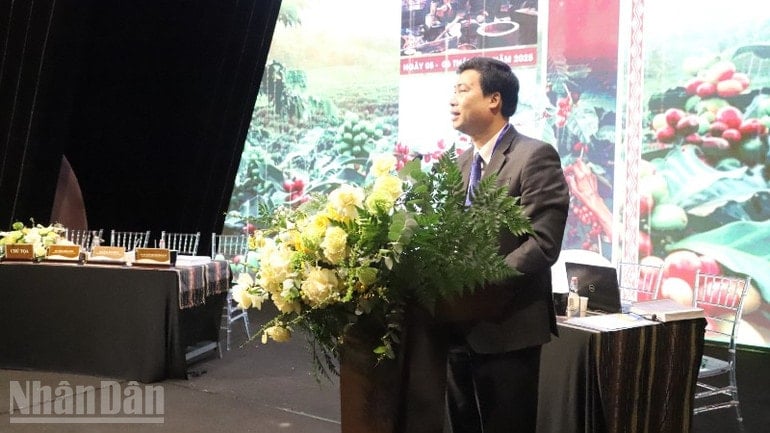
According to Tran Hong Tien, Director of the Department of Culture, Sports and Tourism of Dak Lak province: Buon Ma Thuot is the "heart" of Vietnam's coffee industry and has long left a strong mark on the world coffee map. Dak Lak Robusta coffee beans are not only an agricultural product but also a symbol of a unique culture; the culmination of knowledge, experience, and creativity that the ethnic communities of the Central Highlands have cultivated, preserved, and passed down through many generations.
Dak Lak province aims to promote the value of its coffee heritage by harmoniously integrating green economy - sustainable agriculture, agricultural and cultural tourism, creative ecosystems and cultural industries, while honoring community knowledge and improving people's livelihoods. This orientation aligns with UNESCO's philosophy of "community-based conservation - heritage-based development - culture-based sustainability". Especially in the context of increasingly complex climate change, traditional farming techniques such as intercropping, water-saving irrigation, and regenerative farming become valuable knowledge sources that help communities adapt effectively.
Beginning its journey to becoming an intangible cultural heritage of humanity.
According to Tran Hong Tien, Director of the Department of Culture, Sports and Tourism of Dak Lak province: Currently, the Ministry of Culture, Sports and Tourism is submitting a proposal to the Prime Minister for consideration and approval to prepare a scientific dossier on the intangible cultural heritage " Knowledge of planting and processing coffee in Dak Lak " to be inscribed on UNESCO's List of Good Practices for the Protection of Intangible Cultural Heritage of Humanity. This is an important milestone demonstrating the concern of the Party, State and Government for the preservation and promotion of the value of Vietnam's coffee cultural heritage, with Dak Lak playing a central role.
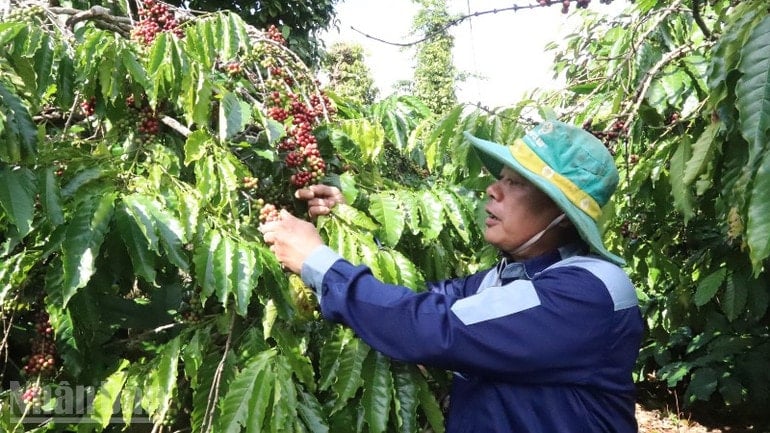
This workshop marks the first important step in the journey of building the dossier "Knowledge of Coffee Cultivation and Processing in Dak Lak" to be submitted to UNESCO for inscription on the List of Good Practices for the Protection of Intangible Cultural Heritage of Humanity. However, the workshop organizers received 67 diverse papers covering many fields from economics, society, culture, anthropology, heritage studies to processing technology, global value chains and sustainable development.
At the workshop, delegates focused on discussing important topics such as: the process of cultural exchange and transformation through coffee; the localization of coffee practices in the era of integration; positioning coffee heritage in socio-economic development and tourism; solutions for preserving and promoting local knowledge in coffee cultivation, care, processing, and enjoyment… Particularly, the approach to coffee from the perspective of intangible cultural heritage, with the goal of highlighting the global value of the heritage while preserving local identity, the core element that makes up the vitality of Central Highlands culture…
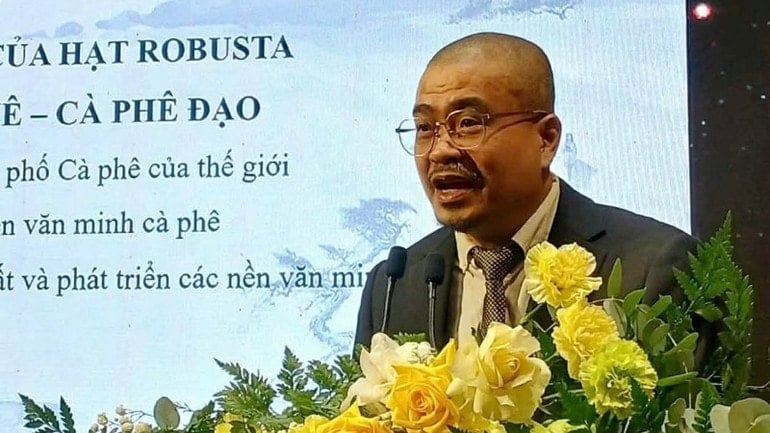
According to experts, the knowledge of coffee cultivation and processing in Dak Lak is not only passed down through generations as understanding and skills linked to customs, ethics, and social behavior, but is also crystallized in stories about the journey of coffee cultivation and processing – a place where tradition and global culture intersect. Through this, shared memories and identity are formed for the community, contributing to the transmission of cultural values and norms, while promoting sustainable development, creating livelihoods, and ensuring social security.
Knowledge-based practices related to coffee are not limited to cultivation or processing; they also encompass core values that connect communities, enhance dialogue, strengthen social structures, and foster a spirit of solidarity across generations and regions. Therefore, coffee is not just an agricultural product or a popular beverage, but a cultural symbol, the embodiment of the labor, creativity, and soul of the people of Dak Lak in particular, and the Central Highlands in general.
In the process of exchange and integration, indigenous knowledge about coffee has been forming a rich cultural value system where people find empathy, a sense of community, and pride in their identity, while also opening up spaces for the exchange and sharing of knowledge and emotions between cultures. From there, coffee becomes a catalyst for dialogue, creativity, and development, contributing to building a green, inclusive, and sustainable culture – a new direction affirming Vietnam's position in preserving, honoring, and promoting contemporary cultural heritage.
Associate Professor, Dr. Le Thi Ngoc Diep from the University of Social Sciences and Humanities, Vietnam National University Ho Chi Minh City, assessed: The heritage preservation of coffee in Buon Ma Thuot is taking place in the context of Dak Lak holding a central position in Vietnam's coffee industry. In this context, linking coffee with "heritage" and "local identity" is not only a cultural choice but also a strategy to upgrade its value in the global value chain. However, to achieve sustainable development, a community-based heritage preservation model is necessary, in which local residents are empowered to participate in the process of identifying, managing, and benefiting from the heritage. At the same time, a balance must be maintained between the performance aspect for tourism and the authenticity of the culture to ensure that coffee is both an economic resource and continues to be a living cultural element of the Central Highlands.
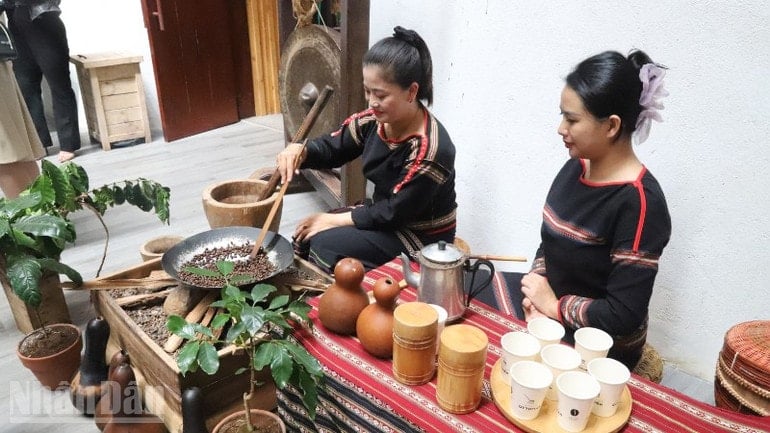
After two days of serious, urgent, and scientific work, the 2025 International Conference and Forum on “Global Coffee Industry Value Chain – Global, Local, and Sustainable Development” concluded successfully. “The conference was not only a scientific forum to share international knowledge and experience in the global coffee industry value chain, but also an important starting point in the process of building a dossier to submit to UNESCO for inscription of “Dak Lak Coffee Cultivation and Processing Knowledge” on the List of Good Practices for the Protection of Intangible Cultural Heritage. The conference generated many creative ideas and effective development strategies, contributing to making Dak Lak coffee a global symbol of living heritage, a green and sustainable economy, creating stable livelihoods and improving the lives of people in the province,” shared Comrade Tran Hong Tien.
During the workshop, delegates also had the opportunity to experience Coffee Meditation, interact with cultural practitioners who excel in this heritage at coffee farms, explore the World Coffee Museum, and learn about three coffee civilizations: Ottoman, Roman, and Zen…
This workshop and forum also serves as a bridge between heritage and contemporary creativity, contributing to positioning Dak Lak – Vietnam's coffee "capital" – on the global map of cultural heritage and creative industries.
Source: https://baolamdong.vn/hanh-trinh-tri-thuc-trong-va-che-bien-ca-phe-tro-thanh-di-san-van-hoa-phi-vat-the-cua-nhan-loai-408625.html

![[Photo] Prime Minister Pham Minh Chinh receives the Chinese Ambassador to Vietnam](https://vphoto.vietnam.vn/thumb/1200x675/vietnam/resource/IMAGE/2026/04/05/1775397481797_ndo_br_dsc-5512-jpg.webp)
















































Comment (0)