|
| Introducing the organizational chart of the Eastern South Vietnam Regional Party Committee. Photo: Archival material. |
Regarding the D War Zone, anyone will feel proud of the courage and fighting spirit of our ancestors. The heroic spirit of the "arduous yet courageous" land of the Eastern region of the past is being continued today, transforming historical and cultural values into important driving forces for Dong Nai's development and integration in the new era.
A revolutionary base of strategic importance.
In his book "Literature of Dong Nai - History and Appearance," researcher Bui Quang Huy states: From the 1940s, the D War Zone was a vast area connecting the northeastern part of Bien Hoa with the Central Highlands and the South Central region. Much of this area was dense, rugged forest, and the lives of the people were extremely difficult. However, the D War Zone was also a land rich in historical traditions of the Southern people's struggle against foreign invaders, a place where patriotic heroes with unwavering, indomitable spirit gathered, vowing to "not coexist" with the enemy.
The Zone D revolutionary base is closely associated with the name of poet and soldier Huynh Van Nghe. According to Master Tran Quang Toai, Chairman of the Dong Nai Historical Science Association: In late 1944, Tran Van Giau, Secretary of the Southern Regional Party Committee, assigned Huynh Van Nghe to survey the area to build a long-term base for the revolution. With his understanding of the terrain, Huynh Van Nghe, along with many revolutionary cadres, laid the foundation for the formation of this strategic base.
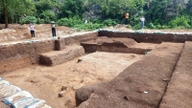
Currently, national-level historical sites include: the Central Committee of the Southern Region (Phu Ly commune); the Suoi Linh Tunnel, the Eastern Southern Region Party Committee (Tri An commune); and two provincial-level sites: the Suoi Linh Archaeological Site and the Eastern Southern Region Security Committee Base (Tri An commune). These sites are managed, protected, and their value promoted by the Dong Nai Nature and Culture Conservation Area. Investment in restoration and preservation of these sites is being linked to activities related to historical roots, traditional education , and sustainable tourism development in Dong Nai in the new era.
"In addition, the role of Lieutenant General Nguyen Binh - who was appointed by President Ho Chi Minh to be the Commander of the Southern Region - was also particularly important in the process of building and developing the Zone D War Zone," Mr. Toai shared.
With its rugged mountainous terrain and proximity to the Dong Nai River, War Zone D possessed a particularly important strategic location, serving as a springboard for attacks on the enemy's nerve center in Bien Hoa and the southeastern region. The forests of War Zone D, with their abundant natural resources, could partially meet the logistical needs of the resistance forces in the East. War Zone D is the site of many glorious victories achieved by our army and people during the two wars of resistance against French colonialism and American imperialism.


In the final stages of the national liberation struggle, Zone D served as a strategic logistical preparation area, forming the 4th Corps, the main unit that achieved the Victory on Highway 14 - Phuoc Long, liberating the provincial capital of Phuoc Long - a strategic reconnaissance operation that led the Central Party Politburo to decide to liberate the South as soon as possible.
From Zone D, the armed forces of the Eastern region gained control of important highways such as 12, 14, and 20, isolating and cutting off the enemy's strategic territory between Saigon and the provinces in the East. At the same time, it was the starting point for the victory at Xuan Loc, shattering the enemy's defense line in the northeast of Saigon and paving the way for the revolutionary forces to carry out the historic Ho Chi Minh Campaign.
The driving force comes from natural, historical, and cultural connections.
Visiting the former revolutionary base area today, anyone who has ever set foot there cannot help but be amazed by the dramatic changes. The red dirt roads have been paved with concrete, schools are modern, and electricity illuminates every home. The hardworking and creative people of this former revolutionary base area, unwilling to succumb to poverty, have strived to develop the economy and improve their material and spiritual lives.
 |
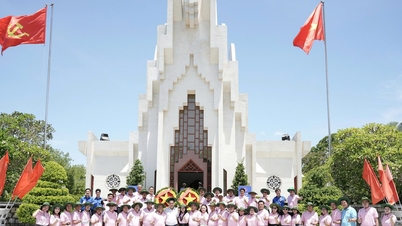
| Youth union members in Dong Nai city visited and paid respects at the Central Committee of the Southern Region historical site in Phu Ly commune. Photo: My Ny |
Not only has the D War Zone undergone a dramatic transformation in appearance, but it has also become a vibrant repository of historical memories. Currently, it boasts three national-level historical sites: the Central Committee of the Southern Region, the Suoi Linh Tunnels, and the Eastern Southern Region Party Committee. Each site is a living testament to the fierce years of war, serving as a significant historical landmark attracting numerous visitors, especially students, who come to explore and learn about history.
According to Master Tran Quang Toai, based on historical practice and in the current development context, especially after the province's merger and the implementation of a two-tiered local government model, the D War Zone is facing a great opportunity to promote its value. It is not only a historical and cultural space but also a unique heritage space, notable for its system of resistance war relics.
“If effectively exploited, linking historical sites such as the Central Committee of the Southern Region, the Eastern Southern Region Party Committee with other revolutionary bases in northern Dong Nai such as the Headquarters of the Southern Vietnam Liberation Army (Ta Thiet Base, Loc Thanh commune), will form a unique chain of eco-tourism and spiritual-cultural tourism products. This is an important foundation to create momentum for the socio-economic development of Dong Nai city in the coming time,” Mr. Toai shared.
According to Deputy Director of the Dong Nai Nature and Culture Reserve, Dinh Thi Lan Huong, what gives the D War Zone its appeal is its unique natural, historical, and cultural value. This is also an important direction in the local tourism development.



Ms. Huong shared: “In recent years, the number of visitors to the D War Zone has been increasing. Many programs on historical origins and traditional education are regularly organized, contributing to spreading historical and cultural values to the younger generation. These activities are especially meaningful as they lead up to the 80th anniversary of the establishment of the D War Zone and the 65th anniversary of the establishment of the Central Committee of the Southern Region.”
Eighty years have passed, yet the heroic spirit of the D War Zone has never faded, but continues to burn brightly, transforming from a fighting will into a desire to build the homeland. On the sacred land of the former base, new projects and new opportunities are emerging from the strong connection between history, culture, and tourism. Promoting the heritage values of the D War Zone is not only a matter of "drinking water, remembering the source" but also a crucial resource for Dong Nai's development and integration.
My Ny
Source: https://baodongnai.com.vn/dong-nai-cuoi-tuan/202605/hao-khi-chien-khu-8e701c6/



![[Photo] "Hanoi Lotus Festival" honors the lotus flower that has been associated with Vietnam for thousands of years.](https://vphoto.vietnam.vn/thumb/1200x675/vietnam/resource/IMAGE/2026/06/27/1782516943048_sen-ha-noi-2026-minh-duy-1-jpg.webp)