The world is entering a period of great upheaval with structural changes. After decades of strengthening connectivity and deep integration, the current global economic and political landscape is witnessing a dramatic reversal characterized by global fragmentation.
In this context, Vietnam's strategic goal of becoming a developed, high-income country by 2045 places an urgent demand on reshaping its growth model, improving its economic institutions, and especially upgrading its national governance capacity.
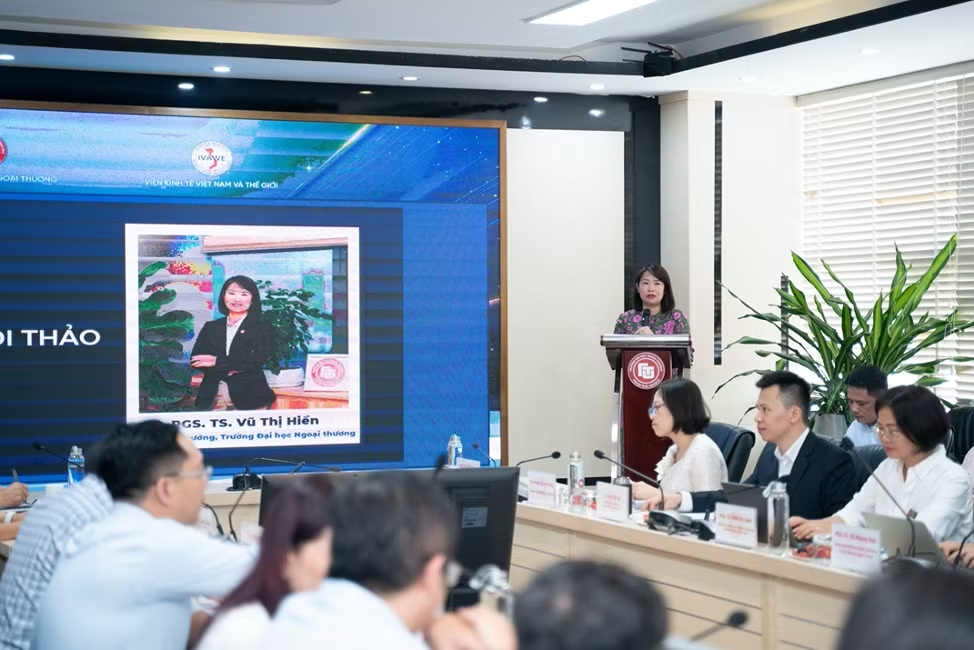
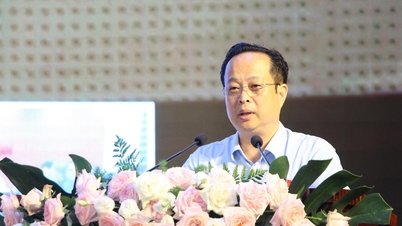
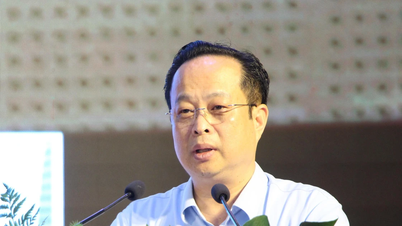
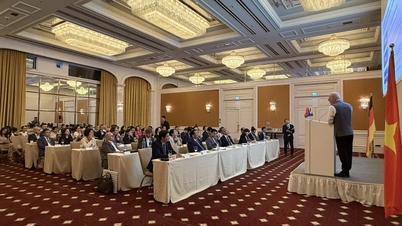
In her opening remarks at the seminar, Associate Professor Dr. Vu Thi Hien, Vice Rector of the Foreign Trade University, emphasized that the world is undergoing profound geopolitical and technological changes. These changes are placing new demands on the role of the State in development.
For Vietnam, this context presents both opportunities and significant challenges. In this context, the State not only needs to regulate the market but also become a development-oriented state, capable of formulating strategic visions, building effective institutions, promoting innovation, and creating a favorable environment for the development of all economic sectors. This is precisely why this conference holds particular theoretical and practical significance. For the Foreign Trade University, this conference also reflects the university's academic development orientation in the field of international political economy. The university is one of the pioneering educational institutions in Vietnam to develop a Bachelor of International Political Economy program.
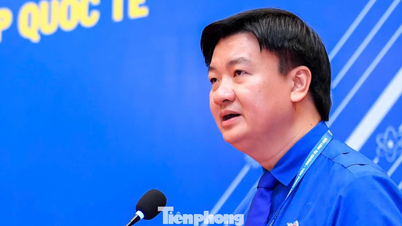
Speaking on behalf of the co-organizing unit of the seminar, Dr. Nguyen Dinh Chuc, Director of the Vietnam and World Economics Institute, stated that the post-trade war world order is experiencing political tensions, and the fragmentation is a manifestation of global disparity. Currently, issues concerning the developmental state are more important than ever.



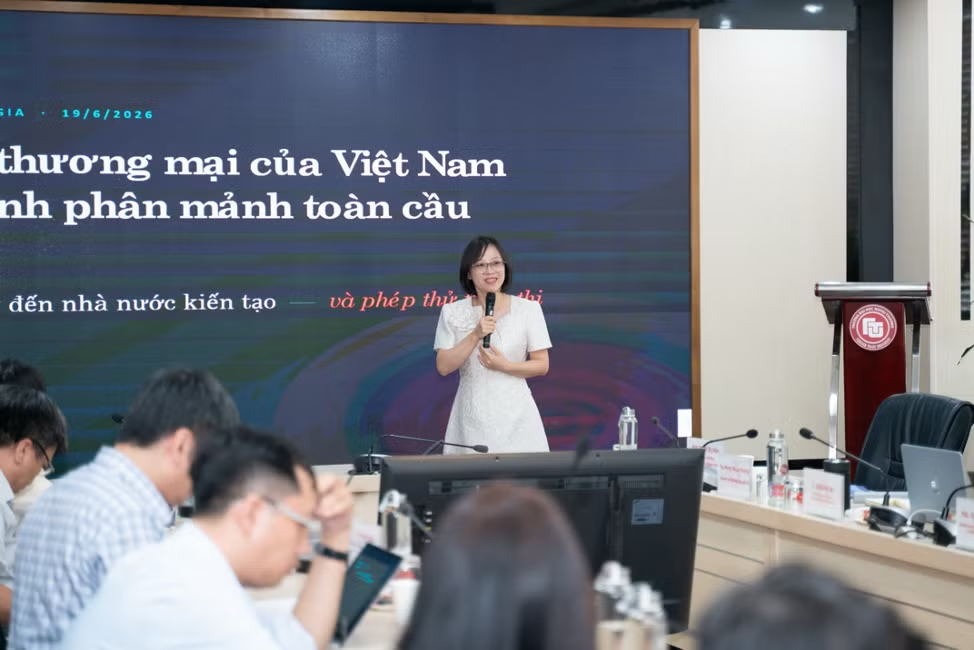
The conference program consists of two main working sessions. The discussion session focuses on theoretical and practical issues concerning the context of global fragmentation and the role of the developmental state.
In her opening remarks, Ms. Phung Thi Lan Phuong presented her research on Vietnam's trade policy in the context of global fragmentation. From a business perspective, Ms. Phung Thi Lan Phuong argued that although Vietnam's trade growth is higher than the world's, over 70% of its trade turnover comes from FDI enterprises. Vietnamese trade is facing several challenges due to increasing barriers from trade protection measures and technical standards. Ms. Phuong suggested that the true test of a trade-oriented state is not how many policies it enacts, but rather how it transforms ambition into substantive implementation and enhances the competitiveness of businesses.
Associate Professor Dr. Nguyen Ngoc Ha from the Foreign Trade University presented research on improving legislation to build a developmental state in Vietnam in the context of global fragmentation. The speaker pointed out that the shift from pre-approval to post-approval has increased the number of newly established businesses and reduced the time required for business establishment. However, the state still needs to address several key bottlenecks such as overlapping and fragmented laws, ineffective inter-sectoral coordination, high compliance and procedural costs, and uneven enforcement across different levels. Associate Professor Dr. Nguyen Ngoc Ha proposed five legal pillars for a developmental state and suggested seven institutional groups that need prior improvement.
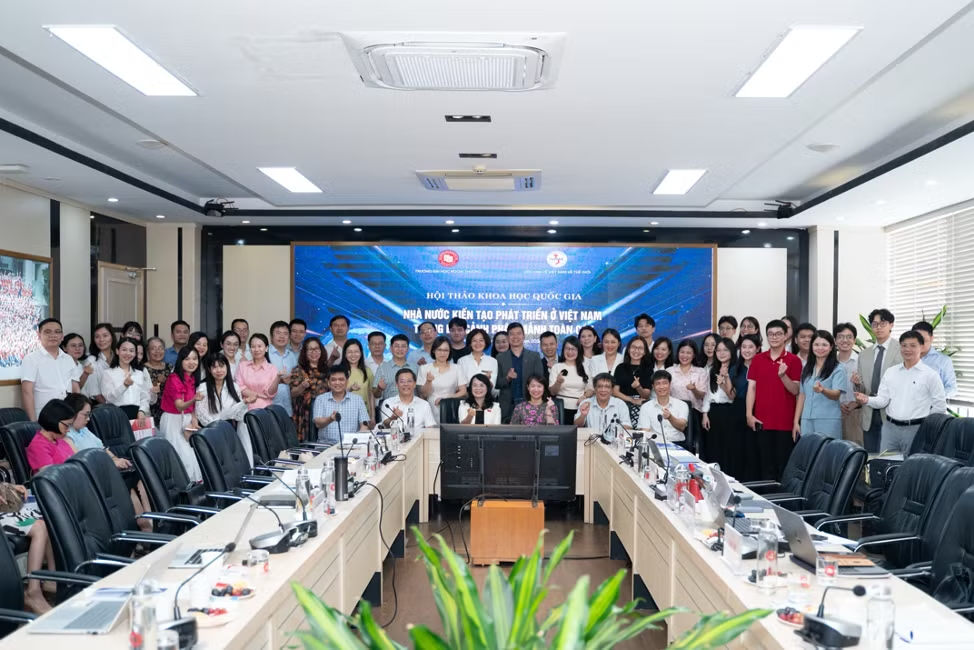
From a legislative perspective, Associate Professor, Dr. Pham Thi Hong Yen, a full-time member of the National Assembly's Economic and Financial Committee, pointed out the role of the proactive state in the current period. To fulfill that role, the State has been implementing a revolution to streamline its apparatus in order to enhance its adaptability to external influences.



Regarding some key bottlenecks in the development process, Dr. Duong Duc Dai believes that the state needs to focus on removing three bottlenecks related to labor supply, institutions, and infrastructure, especially digital infrastructure. The current labor supply issue is no longer simply a matter of "shortage of people," but rather a matter of "shortage of the right people, with the right skills, at the right time."
The Vietnamese workforce needs both improved skills and government-created job opportunities for unskilled workers. Institutionally, the current bottleneck lies in the capacity of institutions to adapt to the rapid changes in the global economy. Regarding infrastructure, the bottleneck extends to digital infrastructure, a crucial factor determining national competitiveness. A key solution is to accelerate investment in national digital infrastructure through public or private investment.
Source: https://tienphong.vn/hien-ke-cho-phat-trien-ben-vung-post1853817.tpo