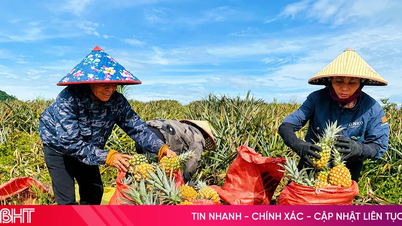
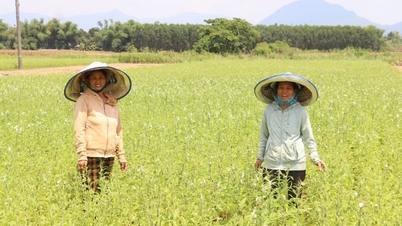
The model garden initiative helps people increase their income, contributing to the sustainable development of the locality and the construction of new rural areas. Aimed at encouraging rural households to maximize the use of their garden land for production, increase income, and create green, clean, and beautiful spaces, the model garden initiative has received strong support from local authorities and the people.
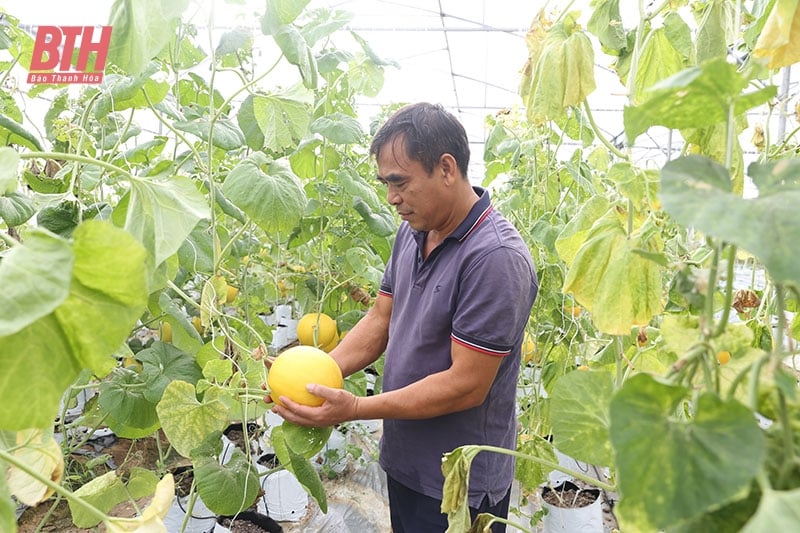
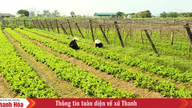
As one of many model gardens in Tho Xuan district that have yielded significant economic benefits, the family of Mr. Tran Van Hung in Xuan Phu commune previously cultivated crops haphazardly without specific planning, resulting in low yields and poor product quality. In 2019, his family converted 0.5 hectares of rice paddy land to organic vegetable farming, using natural organic fertilizers and biological pest management methods. Thanks to the application of drip irrigation technology and a closed-loop management system, Mr. Hung's vegetable garden has high yields and superior quality, selling to major markets such as Hanoi and neighboring provinces. By participating in the model garden project and using organic fertilizers and biological pest management methods, Mr. Hung's crop yields and family income have increased significantly, averaging around 200-300 million VND per year, many times more than his previous rice farming.

In Nhu Thanh district, the model of dragon fruit and orange orchards has generated higher economic value. Many orchard owners have switched from traditional crops like corn and rice to fruit trees and medicinal plants. Ms. Nguyen Thi Ly, one of the pioneers in Mau Lam commune, converted 0.7 hectares of her family's corn land to red-fleshed dragon fruit in 2018. Thanks to the application of advanced cultivation techniques and organic fertilizers, her dragon fruit orchard produces large, beautiful, and sweet fruits. Ms. Ly's dragon fruit products bring her family a stable income of about 250 million VND per year, creating seasonal jobs for many local laborers.
Model gardens typically employ organic farming methods, minimizing the use of chemical fertilizers and pesticides, thereby reducing soil, water, and air pollution. In particular, in model gardens growing clean vegetables, people prioritize sustainable farming practices, helping to maintain clean soil and water sources. This not only creates a better living environment for the community but also protects the health of residents and consumers, as the products are free from harmful chemicals.
Model gardens in Thanh Hoa are proving highly effective, representing an important direction for sustainable agricultural development. Not only do they bring high economic benefits to the people, but these model gardens also contribute to environmental protection and the creation of green, clean, and beautiful rural areas. The image of lush, clean gardens and high-quality produce not only enhances the value of the products but also breathes new life into the countryside and improves the quality of life for the community.



Text and photos: Chi Pham
Source: https://baothanhhoa.vn/hieu-qua-tu-nhung-khu-vuon-mau-229364.htm














































































![[Infographic] Which types of behaviors are strictly prohibited in digital transformation from July 1, 2026?](https://vphoto.vietnam.vn/thumb/402x226/vietnam/resource/IMAGE/2026/07/02/1783004068098_thumb_5_hanh_vi_nghiem_cam_20260702184923.jpeg)