

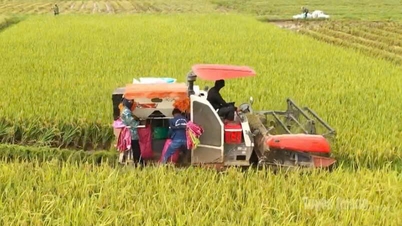
For decades, the Mekong Delta has served as the "backbone" of Vietnamese agriculture . Over 90% of the country's rice exports, more than 70% of its fruit, and approximately 60% of its seafood production originate from this region. The Mekong Delta not only ensures national food security and contributes to global food security, but also plays a crucial role in the trade balance and livelihoods of tens of millions of people.
However, behind these impressive figures lies a long-standing reality: the majority of agricultural products entering the market have low added value. The development model, based on natural advantages and traditional experience, has clearly revealed its limitations. Farmers produce a lot of agricultural products, but their income is not commensurate; the locality contributes significantly to the nation's agriculture and fisheries, but investment in regional development is not commensurate.
The new development landscape is turning existing limitations into bottlenecks. Challenges are compounded as the region faces climate change, rising sea levels, deeper saltwater intrusion, increased land subsidence, and increasingly uncertain water resources. Traditional agricultural production spaces are shrinking, input costs are rising, market fluctuations are frequent, and competition is intensifying. Meanwhile, the global market is shifting strongly towards green and responsible consumption, placing stringent demands on food safety, traceability, carbon emissions, and social responsibility.
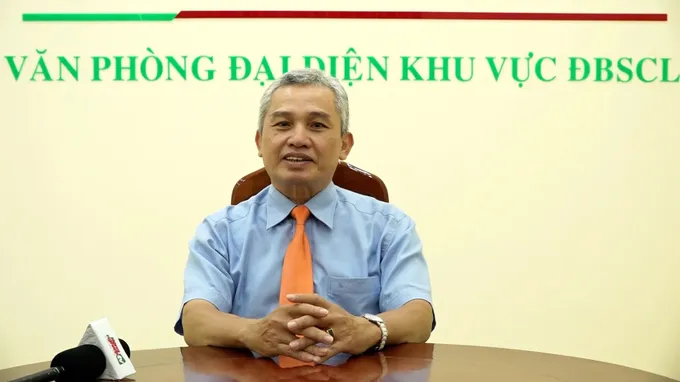
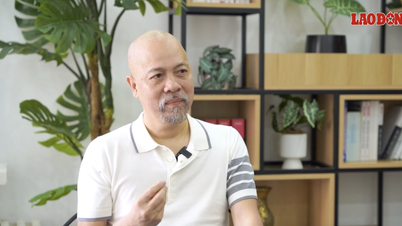
Dr. Tran Huu Hiep
In this context, the strategic question for the Mekong Delta is no longer "how much to produce," but "what value to create" and "how much value to retain for the region." Therefore, the path of agricultural production in the delta cannot be limited to fields, orchards, fish ponds, or processing plants, but must be expanded into an integrated economic space – where agriculture is linked to processing industries, logistics, green transformation, trade, tourism, and digital technology.
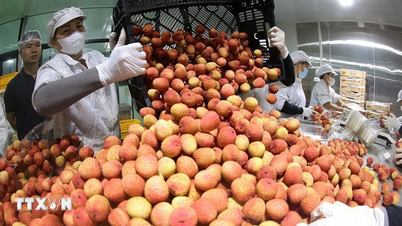
Practical experience shows positive signs when some sectors boldly "change direction." High-quality Vietnamese rice, with brands like ST24, ST25, and other "green rice, healthy living" brands, has gradually conquered the high-end segment. Durian, after being reorganized in production, granted planting area codes, and exported through official channels, has created a strong breakthrough in value. The shrimp value chain has enhanced its competitiveness in the world market, standing alongside leading countries in this billion-dollar export industry. These practical results show that by changing the approach, agricultural products from the Mekong Delta can completely elevate their position in the world.
From traditional production to agricultural economics
Shifting from a traditional agricultural production mindset to an agricultural economic mindset is a fundamental turning point for the Mekong Delta. While traditional production primarily focuses on productivity and output, agricultural economics places emphasis on the value chain, on the linkages between various actors including farmers, cooperatives, businesses, markets, and the State.
For the Mekong Delta, this transformation becomes even more urgent as the potential for extensive growth is gradually dwindling. Agricultural land is shrinking, water resources are under immense pressure, while market demands are becoming increasingly stringent. To increase farmers' income, it's not enough to simply "work more," but to "work smarter" and "sell at higher value."
Agricultural economics requires the reorganization of production on a large scale, with close and transparent linkages. Large-scale farming models, high-quality rice raw material areas of 1 million hectares, and concentrated farming areas need to be upgraded from "formal linkages" to "value linkages." In An Giang and Dong Thap provinces, many high-quality rice linkage models have helped farmers reduce input costs, stabilize output, and better meet export standards.

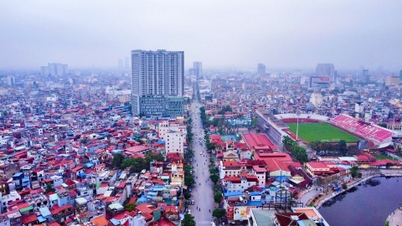
A view of Can Tho City from above.
High-tech shrimp farming models in Bac Lieu and Soc Trang (now Can Tho and Ca Mau) have shown clear effectiveness in controlling the farming environment, reducing disease risks, and increasing productivity. Notably, these models are not only based on experience but are increasingly operating according to market data and standards – a clear manifestation of a forward-thinking approach to agricultural economics.
Agricultural economics also opens up space for deep processing and the circular economy. Agricultural by-products such as straw, rice husks, shrimp shells, and fish heads, if properly utilized with appropriate technology, can generate significantly higher added value. Low-emission rice production linked to the carbon credit market, circular aquaculture, and organic-ecological agriculture are gradually forming new value chains where economic benefits are intertwined with environmental responsibility.
More importantly, the agricultural economy places new demands on human resources and institutions. Farmers need to be not just producers, but also "professional farmers," knowledgeable about the market, technology, and risk management. Businesses need a stable investment environment, land policies, credit, and insurance tailored to the specifics of agriculture. The state plays a facilitating and guiding role, rather than an administrative intervention in market activities.
Digital transformation - Value integration
In the process of transitioning to an agricultural economy, digital transformation is the most important lever to enhance the competitiveness of agricultural products in the Mekong Delta. Digital transformation is not just about introducing technology into production, but about restructuring the entire value chain, from resource management and production organization to market connectivity.
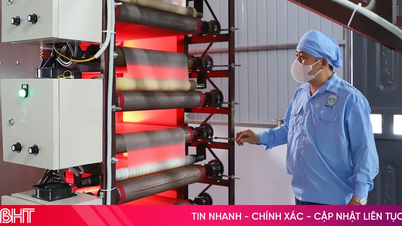
In agricultural production, the application of sensors, IoT, big data, and artificial intelligence is gradually changing the way farming is done. In Can Tho, Dong Thap, and Vinh Long, systems monitoring salinity, water levels, and weather have helped farmers proactively adjust crop seasons and reduce risks from climate change. In shrimp farming, many high-tech farms in Ca Mau use sensors to monitor water quality and automate feeding, thereby reducing costs and improving production efficiency.
A highlight of digital transformation is the issuance of planting area codes and agricultural product traceability. The issuance of planting area codes not only meets export requirements but also serves as a tool for managing quality, food safety, and brand building. For products such as durian, mango, banana, and passion fruit, production organized according to planting area codes has significantly reduced the risk of product returns and enhanced their reputation in the international market.
In Dong Thap province, the mango industry has built a database of growing areas linked to traceability. Consumers can simply scan a QR code to find out where the product was grown, the production process, the harvesting time, and the packaging date. This is essentially a "digital passport" for agricultural products in the new era, and also a tool to protect legitimate producers from counterfeiting and imitation.
Digital transformation also plays a crucial role in ensuring food safety and hygiene. When the entire production process – from the use of materials and pesticides to harvesting and processing – is recorded and controlled on a digital platform, accountability and risk management become more transparent. This not only meets market demands but also enhances the trust of domestic consumers.
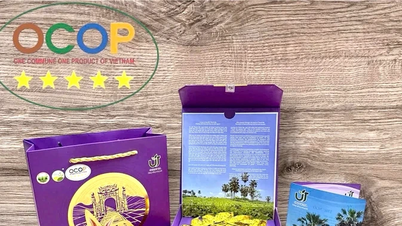
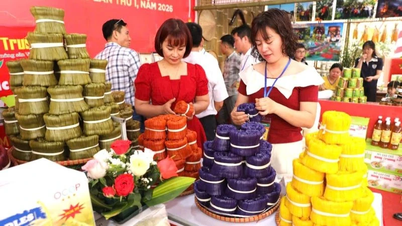
E-commerce is opening up new opportunities for agricultural products from the Mekong Delta. Many cooperatives and businesses have brought their products to e-commerce platforms, directly reaching consumers and reducing reliance on intermediaries. Although still modest in scale, this is a promising direction, especially for specialty products, OCOP products, and processed agricultural products with distinct local stories and values.
More importantly, digitalization allows for the integration of economic, cultural, tourism, and environmental values. Rice fields linked to experiential tourism, orchards combined with sightseeing and on-site consumption, OCOP products linked to local stories… When retold through digital technology, these intangible values can create a superior competitive advantage for agricultural products in the Mekong Delta.
However, for digitalization to truly become a driving force for development, the Mekong Delta needs to overcome bottlenecks in digital infrastructure and regional connectivity. Digital transformation cannot succeed without telecommunications infrastructure, data centers, and shared platforms. Digitalization, therefore, needs to be viewed as a new development infrastructure, just as important as transportation or irrigation, with leading investment from the State and participation from the private sector.
At a time when development trends are being reshaped, agriculture in the Mekong Delta also faces a rare opportunity to reinvent itself. As agricultural economic thinking spreads, as digitalization becomes the foundation and multi-value integration becomes the dominant approach, agricultural products from the delta are no longer limited to supplying raw materials, but are gradually participating more deeply in value chains with high levels of knowledge, technology, and innovation.
Today, fields, shrimp farms, and orchards are not just production spaces; they are gradually becoming spaces for data, connectivity, and long-term investment decisions. Opportunities are not only available to farmers but also open up for businesses, investors, and scientific and technological organizations to participate in creating a more modern, transparent, and sustainable agricultural sector.
|
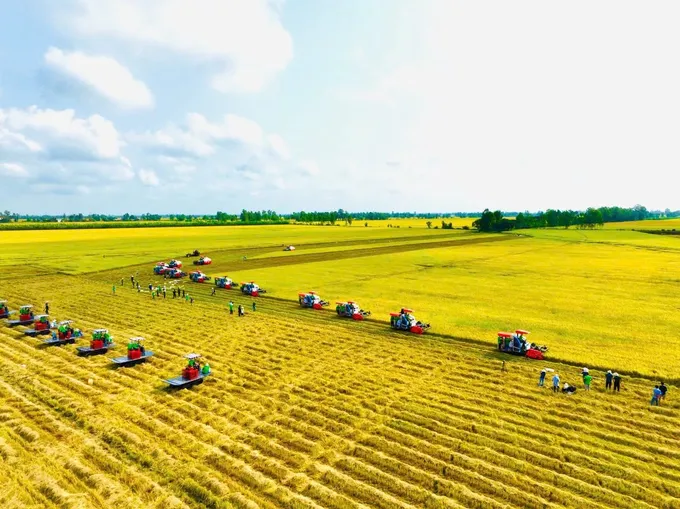
Once the path of digitalization and value integration is fully realized, agricultural products from the Mekong Delta have a solid foundation to enter the market with a new position: competing on quality, reputation, and a story of responsible development. |
According to sggp.org.vn
Source: https://baodongthap.vn/-ho-chieu-so-cho-dong-bang-song-cuu-long-a237114.html
![[Photo] National Assembly Chairman Tran Thanh Man successfully concludes his participation in IPU-152](https://vphoto.vietnam.vn/thumb/1200x675/vietnam/resource/IMAGE/2026/04/18/1776502638199_vna-potal-chu-tich-quoc-hoi-ket-thuc-tot-dep-chuong-trinh-tham-du-ipu-152-8709975-jpg.webp)


























































Comment (0)