

The exhibition "Friendship," currently open at the Van Duong Thanh Fine Arts Museum ( Hanoi ), continues this spirit, creating a space for visual dialogue between five artists from various countries and generations. Artist Van Duong Thanh shared with HanoiMoi Weekend about the exhibition and the role of painting in connecting cultures.
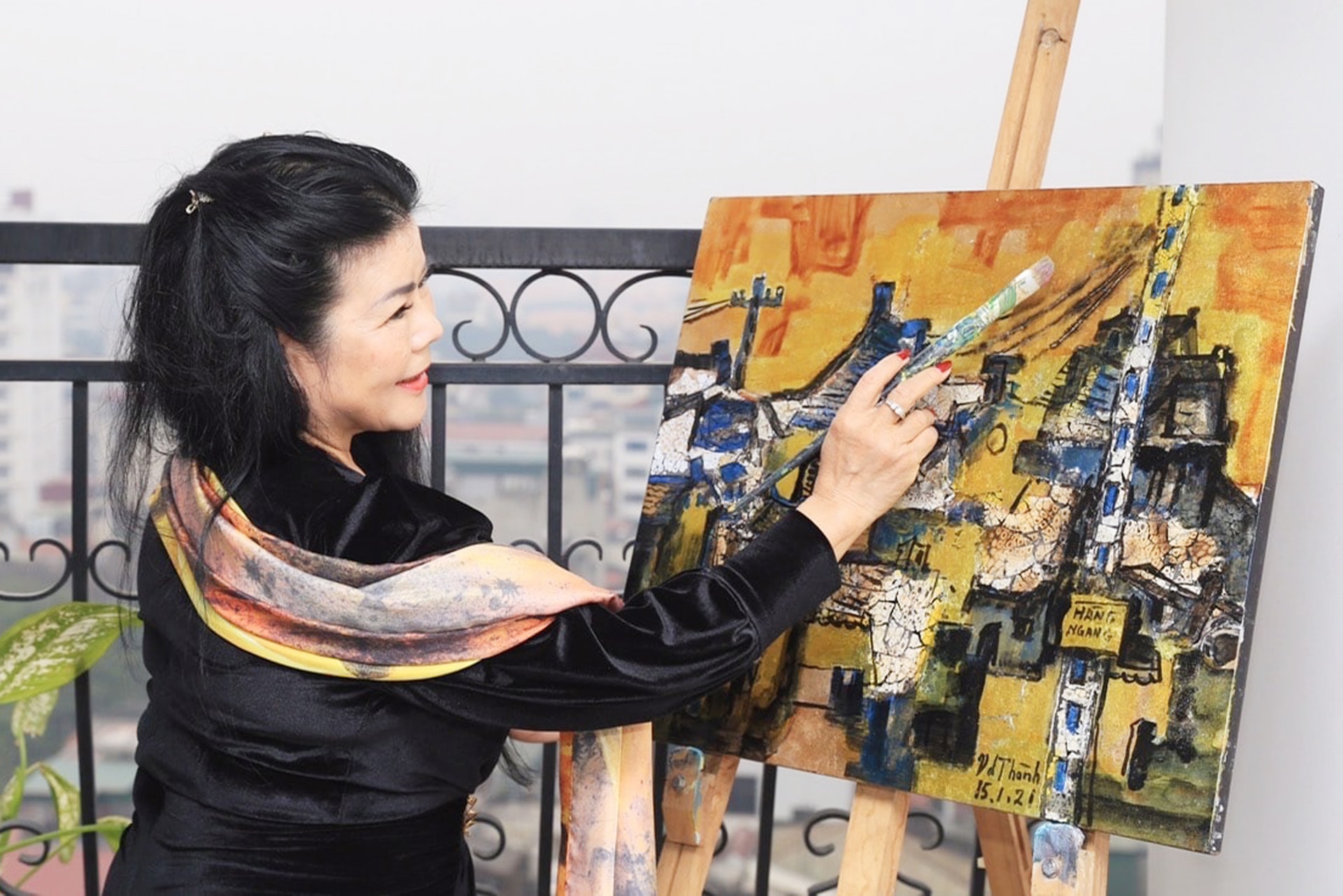
- The "Friendship" exhibition is considered a highly symbolic gathering. Could you share the idea and motivation behind organizing this exhibition?
- For me, "friendship" is first and foremost an expression of gratitude. Gratitude to the generations before me, those who have left a profound mark on my life and artistic journey; gratitude to the artist friends who have accompanied me from childhood to the present day. This exhibition comprises 50 works, with the participation of four generations of creators, giving the Hanoi public an opportunity to access the humanistic values, emotions, and close friendships between Vietnam and the international community.
Among them, I particularly cherish my friendship with the Spanish artist and diplomat Soledad Fuentes, a person who deeply loves and cares about art. During my term as Ambassador to Vietnam, she and I frequently talked about painting, painted together, and organized many joint exhibitions. With the German artist Claudia Borchers – the daughter of journalist Erwin Borchers, who served in the Vietnam People's Army and dedicated his youth to the cause of peace in Vietnam – our friendship has lasted for more than half a century. We were close from our school days when we were 12 years old, during evacuations, working together, and painting in Vietnamese villages. Later, we both aspired to be artists and have maintained contact for over 55 years.
The exhibition features the work of stone sculptor Nguyen Tien Dung, a diligent, passionate, and humble individual. He has created numerous statues of General Vo Nguyen Giap and hundreds of Buddha and temple statues. He has taught his craft to underprivileged children, many of whom have become sculptors. He has also been my companion in many years of artistic activity.
- The exhibition is emphasized by the artist as a "space for visual dialogue." How is this dialogue expressed through the artworks?
- I don't aim to find stylistic similarities. What I strive for is the possibility of dialogue between different creative personalities. In the same space, painting and sculpture, emotion and structure, intuition and reflection coexist. Each artist brings their own visual language, reflecting their cultural background, history, and creative experience.
The paintings of diplomat Soledad Fuentes embody the free spirit of modern Western art, where color becomes the structural element, organizing the entire canvas. Claudia Borchers' paintings lean towards contemplative depth, bearing the mark of European philosophy blended with an Eastern sensibility formed during her years living in Vietnam. The appearance of Nguyen Tien Dung's stone sculpture creates an important counterpoint, where forms and spaces are handled to evoke feelings rather than tell a story. The works of young artist Minh Nguyen – born in 1999 in Russia, currently residing in the US, and the great-grandson of journalist Erwin Borchers – also broaden the scope of interesting dialogue between generations of artistic creators.
In my role as a connector, I selected paintings that harmonize Eastern lyricism with Western compositional thinking for the exhibition.
- You have organized and conducted over 100 exhibitions, many of which were cultural exchange and diplomatic events. What message do you want to convey through these exhibitions?
- I have always believed that painting is a bridge that strengthens friendships. Art has the ability to touch emotions that words sometimes cannot. For many years, I have co-organized more than 50 exhibitions with ambassadors and diplomats to celebrate Vietnam's National Day in many countries. Through each exhibition, I use my artwork to tell the story of the people, culture, and beauty of Vietnam.
When viewers find something relatable, they develop positive feelings, which in turn leads to positive actions. Some audience members have adopted Vietnamese children after the exhibition, while others have returned to Vietnam to teach underprivileged children for free. To me, that is the clearest evidence of the power of art to connect people.
- In her paintings, viewers often notice a blend of Eastern and Western styles. How does she reconcile these two elements?
- I was born and raised in a purely Vietnamese cultural environment, from the communal house and pagoda to the patterns on the bronze drums; everything is deeply ingrained in my mind. Studying and living abroad, I was exposed to many modern art movements, but the source of traditional culture remained, nurturing my emotions and shaping my visual language.
I believe that painting knows no boundaries. Each painting is a direct language from the artist's heart to the viewer. I believe that art does not discriminate by class or nationality, as long as the work conveys a message and evokes emotion. "Friendship" is also built on that spirit, as a meeting of different artistic minds, all striving towards the enduring values of beauty, humanity, and sharing.
- We sincerely thank artist Van Duong Thanh!
Source: https://hanoimoi.vn/hoa-si-van-duong-thanh-hoi-hoa-la-cau-noi-that-chat-tinh-huu-nghi-728479.html


![OCOP during Tet season: [Part 1] Ba Den custard apples in their 'golden season'](/_next/image?url=https%3A%2F%2Fvphoto.vietnam.vn%2Fthumb%2F402x226%2Fvietnam%2Fresource%2FIMAGE%2F2026%2F01%2F26%2F1769417540049_03-174213_554-154843.jpeg&w=3840&q=75)



Comment (0)