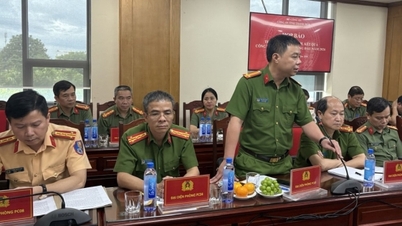
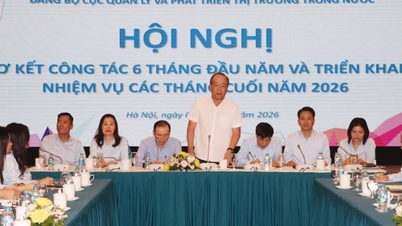
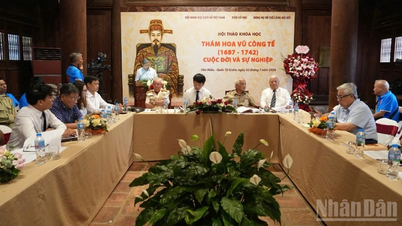
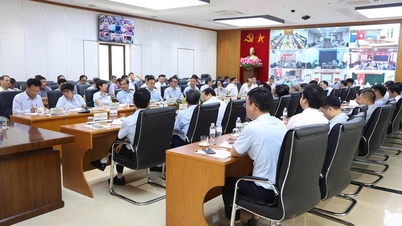
Many suggestions were made based on practical experience in production and traceability.
With only a few months remaining before the European Union's Regulation on Deforestation Prevention (EUDR) officially comes into effect, the finalization of implementation guidelines for the rubber industry is being accelerated. At a consultation workshop on the draft EUDR compliance guidelines for the Vietnamese rubber industry, businesses, experts, and local authorities unanimously agreed on the need for early issuance of the guidelines, but also requested further review to ensure consistency, feasibility, and alignment with production practices.
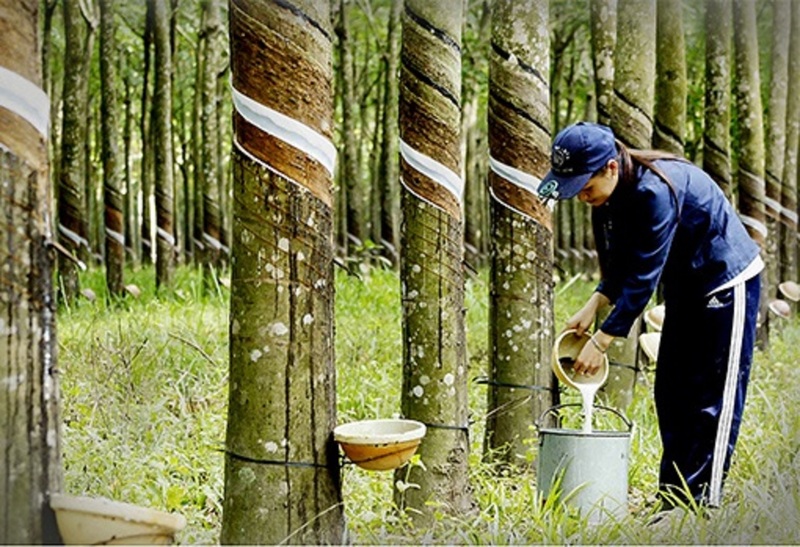
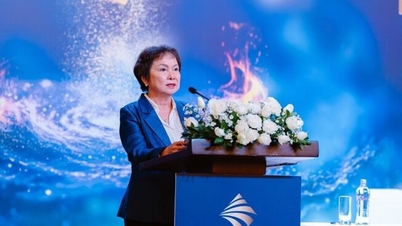
Guidelines for implementing the EUDR regulations for the rubber industry are being finalized as time is running out. Feedback from local authorities, businesses, and experts all point towards a common goal: regulations that are consistent, feasible, and minimize compliance costs. (Illustrative image)
One of the issues of concern to businesses is the scope of application of HS codes for rubber products. Ms. Tran Thi Thuy Hoa, Director of CMO Vietnam Compliance Management Co., Ltd., believes that the draft needs to consider guidance for HS code 4002.80 (mixed rubber). According to Ms. Hoa, this type of product contains approximately 95% natural rubber. Without early guidance, businesses exporting products under this HS code may not be prepared to comply with EUDR regulations, leading to risks when importers later conduct traceability checks.
Furthermore, it is necessary to standardize the use of the term "lot" instead of "parcel" or "section" throughout the entire guidance document. In practice, businesses use the term "rubber plantation" to refer to the entire area of the business, which is then divided into many "lots." This terminology aligns with the EUDR's specialized term "land plot" and is consistent with how land is presented in many current land records.
Another point that many delegates agreed on was that too many technical requirements should not be imposed on small-scale rubber farmers. According to Ms. Hoa, in reality, farmers only need to provide information about the land owner and the location of the plantation. The entire process of polygon measurement, technical documentation, and explanatory reports should be carried out by processing or importing companies in coordination with consulting firms.
"This model has now been adopted by many supply chains. Importers are accountable, so they proactively invest and provide guidance from processing companies and distributors down to individual households. As a result, farmers don't have to meet overly complex technical requirements, making the implementation process more feasible," Ms. Hoa shared.


Not only businesses, but many localities have also requested clarification on several issues to ensure a consistent understanding and implementation nationwide. Ms. Dinh Thi Phuong Khanh, Deputy Director of the Department of Agriculture and Environment of Tay Ninh province, suggested that the definition of "deforestation" needs to be reviewed more thoroughly. She argued that simply defining deforestation as conversion to agricultural land does not fully reflect the essence of the concept. Local authorities also requested more detailed guidance on the method of determining coordinates for plots under 4 hectares. "If the regulation only requires one coordinate point, then it is necessary to clearly specify where that point is located within the plot, to avoid different local applications and difficulties for businesses in proving their claims," Ms. Khanh stated.
Mountainous localities such as Son La and Dien Bien also shared many practical experiences. According to a representative of the Son La Provincial Department of Crop Production and Plant Protection, most of the rubber plantations in the province were established between 2007 and 2009 through land contributions from local people to businesses, so meeting the requirement of not converting forests is not very difficult. However, the locality still hopes for official guidelines soon to standardize the method of building a database and tracing the origin of the plantations.
Meanwhile, Ms. Chu Thi Thanh Xuan, Deputy Director of the Department of Agriculture and Environment of Dien Bien province, said that the province currently has more than 5,000 hectares of rubber plantations, mainly concentrated raw material areas managed by businesses. The majority of the area has complete legal documentation, facilitating the establishment of a traceability system.
However, the Dien Bien representative also suggested adding regulations on updating data when raw material areas change, clarifying the principle of prioritizing the use of official data sources in cases of discrepancies between cadastral maps, forest status maps, satellite imagery, and GPS data. The locality also proposed establishing a mechanism for data sharing between businesses and state management agencies to reduce investment costs and avoid the creation of multiple separate data systems.
Standardize approaches to prepare the rubber industry for the next phase.
Responding to comments at the workshop, Mr. Nguyen Vinh Quang, Policy Analyst at Forest Trends and representative of the drafting committee, stated that the principle behind developing the guidelines is to adhere closely to EUDR regulations and not require businesses to implement more than what the European Union stipulates. Regarding the proposal to add HS code 4002.80, the drafting committee affirmed that EUDR only applies to HS codes listed in Appendix I of the regulations. HS code 4002.80 is currently not included in this list and therefore is not within the scope of regulation.
Regarding the concept of "deforestation," the drafting committee stated that the EUDR regulations only consider cases of forest conversion for agricultural production, as this activity produces products within the scope of the regulations. Concerning changes in raw material areas, the drafting committee emphasized that any changes such as land subdivision, changes in land ownership, or adjustments to area must be updated and risk assessed. If compliance cannot be demonstrated, products from that area will be removed from the supply chain to the EU. Regarding data storage, the drafting committee recommended that businesses in the supply chain proactively retain records for a minimum of five years for easy reference or provision to other partners in the future.
According to Mr. Nguyen Quoc Manh, Deputy Director of the Department of Crop Production and Plant Protection, the rubber industry has many advantages over other sectors, as nearly half of its area consists of large-scale rubber plantations managed by businesses, making traceability easier. However, the remaining 50% of the area, belonging to small-scale farming, still presents a significant challenge.


Although the proportion of direct rubber exports to the EU is not large, many products exported to intermediary markets such as China are then processed and exported to Europe. Therefore, if Vietnamese businesses do not meet EUDR requirements from the beginning of the supply chain, they still risk being subject to traceability checks and losing market share. Consequently, Mr. Nguyen Quoc Manh suggested that localities should intensify propaganda efforts to help people understand the role of traceability, and continue to provide feedback to improve the draft guidelines before official issuance. The early completion of a unified, easily applicable set of guidelines is expected to help businesses reduce compliance costs, mitigate risks in traceability, and maintain access to the EU market amidst increasingly stringent sustainable development requirements.
According to the plan, all feedback will be incorporated before July 10th to finalize the document, aiming for the official issuance of the guidelines in July 2026, creating a basis for localities and businesses to implement them synchronously before the EUDR comes into effect.
Source: https://congthuong.vn/hoan-thien-huong-dan-eudr-can-thong-nhat-de-de-thuc-thi-463378.html