


Reforming land finance policies regarding land use fees and land lease fees under the Land Law, Resolution No. 254/2025/QH15, and Decree No. 50/2026/ND-CP is creating a more comprehensive and transparent legal framework.
Institutionalizing the 2024 Land Law
The National Assembly has passed Resolution No. 254/2025/QH15, effective from January 1, 2026, stipulating a number of specific mechanisms and policies to address difficulties and obstacles in the process of implementing the Land Law.
Resolutions issued during the implementation of the law contain provisions related to land administration and land finance, including land allocation, land leasing, land reclamation, land valuation, collection of land use fees and land rent for various groups of subjects.
To implement this resolution, the Government issued Decree No. 50/2026/ND-CP dated January 31, 2026, detailing regulations on land use fees and land lease fees. Simultaneously, Decree No. 49/2026/ND-CP and related guiding documents were issued to regulate the procedures, processes, and principles for fulfilling financial obligations related to land.
These documents stipulate the basis for calculating land use fees and land lease fees; the principles for determining financial obligations; the authority to decide on exemptions and reductions; and the responsibilities of state agencies and land users in the implementation process.
Regulations on preferential land lease rates in the socialized sector.
According to the provisions of Resolution No. 254/2025/QH15 and Decree No. 50/2026/ND-CP, projects belonging to the list of types and criteria for socialized projects issued by the Prime Minister are considered for exemption from land rent.
The provincial People's Committee shall submit to the provincial People's Council for decision the level of land rent exemption for each area and sector to be applied to socialized projects in the province.
The amount of land rent exemption is determined according to general regulations and may be applied to the entire land lease term.
After the project becomes operational, the competent authority will inspect whether it meets the criteria for socialized development as outlined in the approved dossier. If the conditions are not met or the land is used for purposes other than those intended, the entity must repay the exempted or reduced land lease fees and late payment penalties as stipulated by tax management laws.
Land rent exemption applies to land used for constructing laboratories, technology incubation centers, science and technology business incubators; experimental and pilot production facilities; institutes and centers for digital technology research and development; and key digital technology product manufacturing projects, software, semiconductor chips, and artificial intelligence.
The National Innovation Center and the concentrated digital technology zone are exempt from land rent for the entire lease term as stipulated.
Developers of concentrated digital technology park infrastructure are not allowed to include exempted land lease fees in the infrastructure lease price.
For projects in high-tech zones, the land rent exemption period ranges from 15 to 19 years after the basic construction period is implemented according to regulations; projects in industries and professions with special investment incentives may be exempt from land rent for the entire lease term.
In cases where land is used for purposes other than those permitted or in violation of the exemption conditions, all exempted or reduced land rent and late payment penalties must be repaid as prescribed.
According to the regulations in Resolution No. 254/2025/QH15 and Decree No. 50/2026/ND-CP, when a household or individual is permitted to change the land use purpose from agricultural land to residential land, the land use fee is determined as a percentage difference between the land use fee calculated based on the price of residential land and the land use fee calculated based on the price of agricultural land at the time the change of purpose is permitted.
Specifically, the fee is 30% of the difference for the area within the allocated residential land limit; 50% of the difference for the area exceeding the limit but not more than once the limit; and 100% of the difference for the area exceeding once the limit.
This regulation applies once to each household or individual on a plot of land. Land users can choose one plot of land to benefit from this policy and must commit to this in their application for land use conversion.
For cases where a decision permitting land use conversion was made between August 1, 2024, and before January 1, 2026, land users may request a recalculation of land use fees according to the new regulations. If the fee has already been paid at the old rate, the difference will be refunded or offset against other financial obligations, provided that the application is submitted before January 1, 2027.
Administrative procedure reform
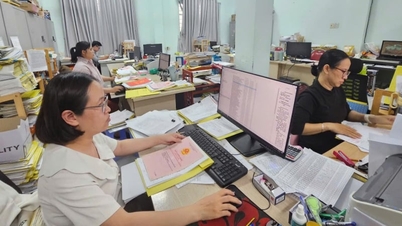
Land users who are eligible for exemption from land rent for the entire lease term are not required to go through the land valuation procedure and do not need to submit an application for exemption.
For cases eligible for land rent reduction, the application process follows the integrated one-stop mechanism as stipulated.

Provincial People's Committees are tasked with regulating administrative procedures regarding land, including the process for circulating documents to determine financial obligations, based on the principles stipulated in Decree No. 49/2026/ND-CP and Decree No. 50/2026/ND-CP.
For public non-business units, for land areas used for the construction of public service facilities that are converted from leased land to allocated land without land use fees, if the land lease fees have not been paid or have not been fully paid, then no land lease fees or late payment penalties are required for the period of land use before January 1, 2026.
For land used for production, business, joint ventures, and partnerships, the unit is not required to pay land rent from August 1, 2024, until the completion of the land use conversion procedures.
The provincial People's Committee is responsible for directing the tax authorities to review and adjust the issued land lease payment notices, completing this task before January 1, 2027.
Mr. Minh
Source: https://baochinhphu.vn/hoan-thien-khuon-kho-phap-ly-doi-moi-tai-chinh-dat-dai-102260211161438667.htm



















































![[Video] Sunset at Lap An Lagoon – Where the sun sets over the fishing nets](https://vphoto.vietnam.vn/thumb/1200x675/vietnam/resource/IMAGE/2026/05/31/1780192137701_beach-landscape-sea-water-nature-grass-745871-pxhere-com.jpeg)

































Comment (0)