

Resolution No. 80-NQ/TW dated January 7, 2026, of the Politburo on the development of Vietnamese culture defines culture as being on par with politics, economics, and society; considering culture as the foundation, an endogenous resource, and an important driving force for national development.
Furthermore, the Party and State have always identified the preservation and promotion of national cultural values as a strategic task. Although many policies and guidelines on national culture have been implemented, this field has not yet been fully institutionalized through laws or specialized decrees. In the context of urbanization and socio -economic development, many valuable traditional values, especially in ethnic minority areas, are facing the risk of disappearing, requiring comprehensive solutions, among which perfecting the institutional framework is an urgent necessity.
According to experts and cultural researchers, Vietnam's advantage lies in being a member state and having participated in many important international conventions of the United Nations Educational , Scientific and Cultural Organization (UNESCO) on cultural heritage, such as the 1972 Convention on the Protection of the World Cultural and Natural Heritage, the 2003 Convention on the Protection of Intangible Cultural Heritage, and the 2005 Convention on the Protection and Promotion of the Diversity of Cultural Expressions…
However, the application of these legal frameworks in practice has not been consistent and its effectiveness has been low. Mr. Bui Quang Thanh (Vietnam Institute of Culture, Arts, Sports and Tourism) observes that from Decree No. 65 dated November 23, 1945, of the Provisional Government on the preservation of historical relics to the policies and guidelines of the Party and State, these legal aspects contribute to protecting, preserving, and promoting the cultural heritage of the Vietnamese people.
Recognizing that culture is a national asset and strength, Mr. Hoang Anh Tuan, Rector of the University of Social Sciences and Humanities (Vietnam National University, Hanoi), shared: The legal framework supporting the management and administration of ethnic cultures is still weak. The lack of a complete management system affects the effectiveness of managing, preserving, and promoting cultural values.
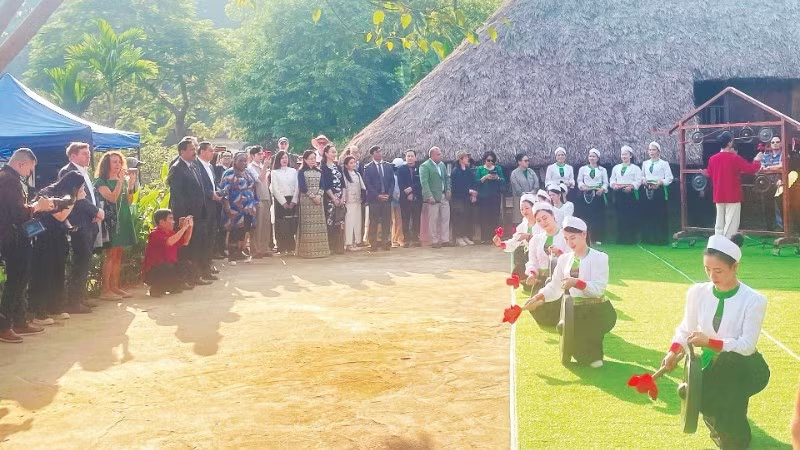
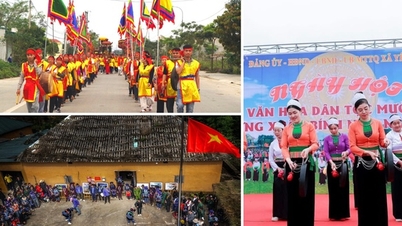
In fact, over the past period, the work of preserving and promoting the culture of ethnic minorities has achieved some positive results, integrated into programs such as Resolution No. 08-NQ/TW dated January 16, 2017 of the Politburo on developing tourism into a key economic sector, Project 6 under the National Target Program for socio-economic development in ethnic minority and mountainous areas… These policies have contributed to supporting many localities in preserving and promoting their cultural identity.
However, in this new stage of development, to gradually transform national cultural values into a resource for socio-economic development and create sustainable livelihoods for the people, it is necessary to establish a specific mechanism and ensure its unified operation. The lack of specific legal regulations is causing difficulties in management and limiting the ability to mobilize resources for cultural development through public-private partnership models. This situation also affects the development of preferential tax policies and financial support to restore and preserve the cultural values of ethnic minorities.
From a state management perspective, Trinh Ngoc Chung, Director of the Department of Ethnic Cultures of Vietnam (Ministry of Culture, Sports and Tourism), stated: Currently, there is no separate law governing the field of ethnic culture. Based on practical experience and the needs of ethnic minority communities, proposing the establishment of a specific legal mechanism for preserving and promoting the traditional values of ethnic minorities will not only serve management purposes but also contribute to preserving traditional values and promoting socio-economic development in localities.
Institutional reform efforts need to strike a balance between conservation and development, linking culture with tourism and economic activities, and contributing to building a healthy cultural life within the community.
This request is also consistent with the Government's action plan to implement Resolution No. 80-NQ/TW, which emphasizes reviewing and improving the legal framework for areas still regulated by sub-laws or not yet institutionalized, such as ethnic culture, mass culture, propaganda and promotion, and cultural management in the digital environment.
Given the practical situation, the development of laws or decrees on ethnic cultural affairs is necessary. This will serve as a basis for improving the effectiveness of state management, while simultaneously promoting the role of culture as an endogenous resource, ensuring sustainable development, and preserving Vietnamese cultural identity in the process of integration.
Source: https://nhandan.vn/hoan-thien-the-che-ve-van-hoa-dan-toc-post951852.html
































































Comment (0)