Cinnamon has two main harvest seasons each year: the third (from February to March in the lunar calendar) and the eighth (from August to October in the lunar calendar). These are the best times for harvesting because the bark is easy to peel and has a high essential oil content, contributing to the product's value.

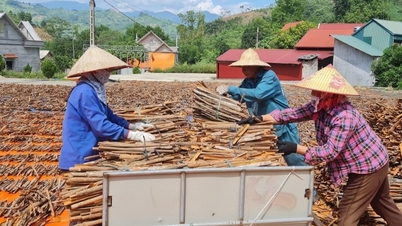
Arriving in Nghia Do commune – a key cinnamon-growing area of the province – right at harvest time, we easily felt the bustling rhythm of life of the local people. On the hillsides, laughter and chatter filled the air. In front of houses, cinnamon sticks drying in the sun were coiled like flutes. Bundles of dried cinnamon, selected according to orders, were neatly stacked, waiting for traders to come and buy them.
Carefully peeling cinnamon bark from the tree trunk, Mrs. Hoang Thi Ai from Nam Muoc village excitedly shared that her family is taking advantage of the favorable season to concentrate manpower on harvesting. “This season, the cinnamon bark is easy to peel and yields a lot, so my family has mobilized people to work. My family has over 5 hectares of cinnamon, and at the beginning of the season, we sold a section of the hillside, earning about 40 million VND. We will continue peeling the remaining area, and from now until the end of the season, we expect our income to double,” Mrs. Hoang Thi Ai shared. Thanks to cinnamon cultivation, Mrs. Ai's family has built a spacious house, provided for their children's education, and is gradually stabilizing their lives.
Nghia Do commune currently has over 7,000 hectares of cinnamon trees, of which more than 4,000 hectares are in the harvesting age. The third harvest is usually more extensive than the eighth harvest because cinnamon bark is easier to peel, and replanting can be done promptly after harvesting.
Mr. Do Van Luu, Chairman of the Nghia Do Commune People's Committee, said: "Cinnamon is the main crop of the locality, therefore, the commune government has propagated and encouraged people to develop it in conjunction with processing and consumption to increase its value. Currently, there are two cooperatives in the area participating in purchasing and selling cinnamon products, contributing to stabilizing output and increasing income for the people."

In Bao Ha commune, the cinnamon harvest is equally bustling. Ms. Nguyen Thi Mai's family in Khe Ban village is one of the large-scale cinnamon growers. Having started planting in 2014, her family has now expanded their area to over 20 hectares, of which 10 hectares are ready for harvesting. They plan to clear-cut about 5 hectares this year, with thinning the remaining area. To ensure timely harvesting, the family has hired approximately 10 additional laborers to assist with harvesting and processing the cinnamon bark.
Not only local people, but also cooperatives operating in the cinnamon sector are entering their main production season of the year. Demand for raw materials is high, and these units are concentrating manpower and equipment on purchasing and processing for export. This season, thanks to favorable weather conditions, the cinnamon bark is easy to peel and dry, and the product quality has improved significantly.
Mr. Ly Van Cau, Director of Cau May Agricultural and Service Cooperative, said: “The cooperative is currently collaborating with more than 20 cinnamon-growing households to purchase raw materials for processing and export to markets such as India, Bangladesh, and some European countries. The cooperative also regularly educates and guides people on organic cinnamon cultivation, ensuring quality standards. The link between the cooperative and the people helps stabilize output and ensures a proactive supply of raw materials for production.”

In Bao Ha commune, there are currently 4,709 hectares of cinnamon trees, accounting for nearly half of the area of production forests. This concentrated raw material area has created a clear advantage for the locality to develop its forest economy . On average, each hectare of cinnamon yields an income of 200 to 400 million VND, depending on the harvesting cycle and product quality. As a result, many households have become relatively well-off or wealthy, affirming the role of cinnamon trees in poverty reduction.
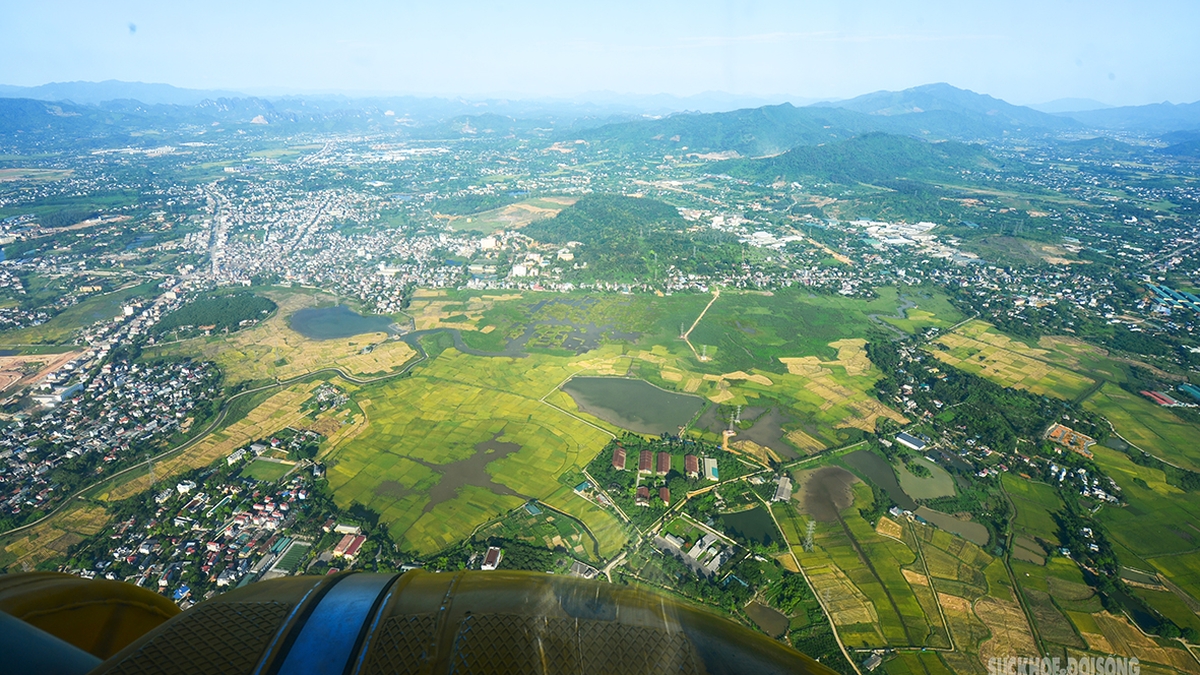
The province currently has over 147,000 hectares of cinnamon, widely distributed across various localities, replacing many less efficient crops. Cinnamon not only provides a stable source of income but also contributes to improving the ecological environment, reducing soil erosion, and minimizing damage from natural disasters. With two main harvests per year, cinnamon growers can proactively manage production, increasing the economic value of the same area of forest land.
Source: https://baolaocai.vn/ron-rang-mua-que-vu-3-post897221.html




![[Photo] Ba Lang An Lighthouse - the "eye of the sea" amidst the "rock museum" of Quang Ngai province.](https://vphoto.vietnam.vn/thumb/1200x675/vietnam/resource/IMAGE/2026/05/29/1780038698840_anh-man-hinh-2026-05-29-luc-14-10-42.png)
![[Image] Pleasant weather helps students enter the 10th grade entrance exam with confidence.](https://vphoto.vietnam.vn/thumb/1200x675/vietnam/resource/IMAGE/2026/05/29/1780034401612_ngay-1-thi-lop-10-minh-duy-8-5009-jpg.webp)
















































































Comment (0)