Article by: Thu Hoa
Photos: Thu Hoa, Quỳnh Anh, Tuấn Việt, Peter

Tanzania – a vast country in East Africa, approximately three times the size of Vietnam but with only half the population – boasts many of Africa's greatest treasures: Mount Kilimanjaro, the highest peak in Africa; Lake Victoria, Africa's largest freshwater lake; the Selous Wildlife Sanctuary (named after explorer Frederick Selous), located in southern Tanzania and covering 54,600 km², with the largest number of protected animals in Africa; and the Serengeti, the ultimate destination for those who want to witness wildlife in their natural habitat… But what ultimately led me to decide to travel there and persuade my friends to join me was a quote from a German nobleman from before World War II, promising his French singer lover in the film Cabaret: "I will take you to Tanzania to watch flamingos fill the sky at sunset. There is nothing more beautiful in the world than that."
Africa, which sounds so far away, was a childhood dream of mine when I read "In the Desert and in the Jungle" by the Polish writer Sienkiewicz, but it's actually much closer and easier to reach than many other countries. No proof of financial means is needed, nor are there the numerous documents that embassies of European, American, and Australian countries require. With my passport and a yellow fly vaccination certificate in hand, I took a direct flight from Hanoi to Nairobi, Kenya, then a connecting flight to Arusha – located in the north and known as the gateway to Tanzania, the most geographically convenient destination for tourists from all over the world. A brief declaration of information on the spot was all it took to enter Tanzania. The combined flight time was nearly nine hours, still less than traveling to Europe.
Traveling in September, during the dry season, Tanzania wasn't as hot as we'd imagined Africa to be. The temperature was quite pleasant, ranging from 20-32 degrees Celsius, with an average annual temperature of only 20 degrees Celsius. Even the hottest times were nothing compared to the intense heat in Vietnam, so the whole group wondered why they were so tanned when it wasn't that sunny?
Our exploration of Tanzania began in a jeep with an open roof, offering panoramic views along dusty roads that reminded us we were traveling through one of the world 's wildest and poorest countries. Along the way, endless plains stretched as far as the eye could see, and scattered indigenous people in their red headscarves waved in a friendly greeting, setting the stage for an exciting journey unlike anything we had ever experienced in our lives.


The Maasai people are isolated from the civilized world.
Living in the midst of a civilized world, the Maasai people's lives remain as primitive as they were hundreds of years ago, when they migrated from the Nile Delta to Tanzania and Kenya. Modern people can touch them through visits, learning about their lives, and talking to them, but this is only superficial contact; deep down, the Maasai are almost incapable of change, even though many members of this tribe can speak English due to daily interaction with tourists. Famous in Africa for their unique customs and traditions, the Maasai believe they are children of God and were born to herd and worship cattle. They enjoy drinking fresh blood, are quite tall, but live in small, dark houses made of dry wood plastered with mud and cow dung. The Maasai believe that cow dung repels mosquitoes and snakes. Squeezing into a house resembling a cylindrical earthen hut in broad daylight, I couldn't clearly see my surroundings. In the dim light, no possessions were visible, only a wood-burning stove in the middle of the house, surrounded by small alcoves made of tree trunks covered with cloth to serve as beds. The young Maasai man, missing a front tooth, spoke to me: “ Our custom is that when a man turns 16, he must have his front teeth pulled out to prove his maturity. We can have multiple wives. The higher a man jumps, the more he demonstrates his strength…” Sleeping and eating in their tents, with nothing else to do but breathe the streams and rivers, they were as carefree and wild as animals, despite being not far from the comfortable and beautiful campsites for tourists.
Watching the bald-headed Maasai women in their sky-blue attire adorned with numerous ornaments, and the tall men jumping high in place repeatedly to greet tourists, one realizes just how strange the world is. There are things that remain unchanged in a world that changes so rapidly every day.
The wildest place in the wild world.
Despite its poverty, the Tanzanian government and people are very conscious of preserving and protecting nature. There are many nature reserves and national parks worth exploring , such as the Selous Wildlife Sanctuary, Gombe Stream National Park, Kilimanjaro, Mikumi, Ruaha, Serengeti… Finally, the group decided to visit Ngorongoro Crater – a UNESCO World Heritage site, the world's largest extinct terrestrial volcanic crater, located at an altitude of 2000m, with a depth of 600m, a diameter of over 22km, and an area of over 260 square kilometers. It is home to the world's highest concentration of wild animals year-round. Discovery Channel, National Geographic, and many other television channels, as well as archaeologists, writers, journalists, and photographers, have spent many years and effort researching the prehistoric animal species living here.
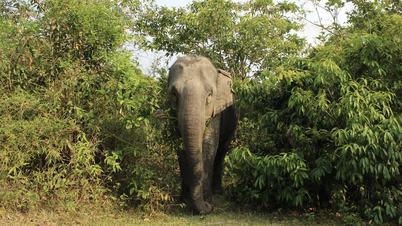
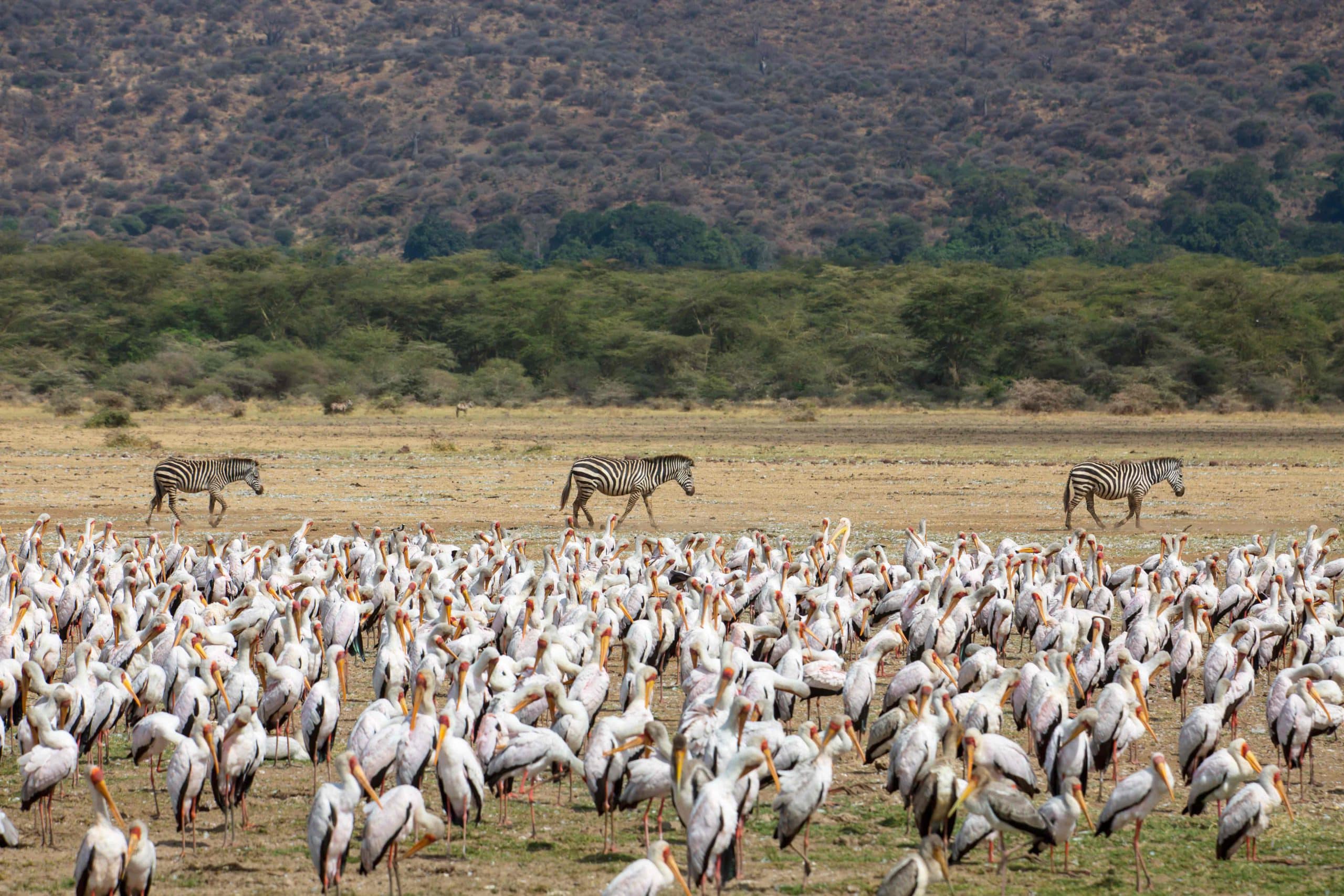
The scenery is even more beautiful than in the movies. Inside the crater, ranked number 1 among the 9 most magnificent craters in the world, under the brilliant African sun, with sparse vegetation, herds of wild animals roam freely as if in prehistoric times, peacefully enjoying their own tranquil world. Here, lions sleep soundly under the shade of ancient trees; there, herds of wildebeest graze; in the distance, majestic elephants drink water… Countless animal species can be seen in this giant crater. From small animals like birds (over 500 species) to large animals such as giraffes, elephants, hippos, rhinos, lions, leopards, panthers, zebras… an estimated 25,000 animal species live here. Sitting in the open-top Jeep, we were closer to the animals than ever before, watching them enjoy their wild lives: hunting, eating, sleeping, mating… Seeing the lions mating, the members of the group joked with each other: “ We don’t want to be as strong as lions, they’re so fast.”
A rosy dream on the African continent
And finally, I got to see the scene that the German nobleman promised his lover in the movie. Tens of thousands of flamingos, their vibrant pink hues illuminating the surface of Lake Manyara. Standing on the shore, watching the flamingos take flight, it was like tens of thousands of flying rubies sparkling in the afternoon sun. The dream had come true, yet it still seemed distant, as the whole group longed for more time to admire them, to get closer to the countless beautiful, shimmering pink flamingos floating on the lake's surface—a magical beauty unique to this place's nature.

Packing our bags, we set off for Kenya to witness “the most spectacular journey on Earth,” the migration of millions of wildebeest across the Mara River from Kenya to Tanzania in search of new food sources. The amazing trip began a new chapter. 
See more articles in the same category:
- Socotra – Dragon Blood Tree Island
- Costa Rica and the Pura Vida greeting
- Cloud hunting at Mount Bromo
Source: https://heritagevietnamairlines.com/hoang-da-tanzania/
![[Photo] General Secretary and President To Lam attends the 13th National Congress of the Ho Chi Minh Communist Youth Union](https://vphoto.vietnam.vn/thumb/1200x675/vietnam/resource/IMAGE/2026/06/25/1782356968989_ndo_br_1-jpg.webp)































![[Photo] General Secretary and President To Lam attends the Central Public Security Party Committee Conference](https://vphoto.vietnam.vn/thumb/1200x675/vietnam/resource/IMAGE/2026/06/24/1782302063612_a1-bnd-9302-9166-jpg.webp)