LACK OF EVIDENCE LEADS TO CHOOSING BASED ON EMOTION.
According to data provided by experts at the recent seminar "Looking back at 5 years of implementing the 2018 General Education Program" organized by the Association of Universities and Colleges of Vietnam, in many provinces, only 11-15% of students chose physics, chemistry, and biology as subjects when entering 10th grade.

Career counseling and guidance before students choose elective subjects in 10th grade is a crucial step in helping them make informed career choices.
According to the association, in principle, students are free to register for elective subjects to proactively create subject combinations that suit their abilities, strengths, and career orientations according to the expected admission combinations of universities (traditional combinations A00, A01, B00, B03, C00, D01…); however, in reality, the right to arrange elective subject combinations belongs to the school, depending on the specific teaching staff and facilities of each school.
At Nguyen Thi Minh Khai High School (Ha Tinh province), 318 out of 410 12th-grade students chose social science subjects for the 2025 high school graduation exam , accounting for 77.5%; only 22.5% chose natural science subjects. At Nguyen Hue High School (Thai Binh province), a recent survey on graduation exam subject registration showed that 80% of students chose social science subjects; only 20% chose natural science subjects.
At Thuan Thanh No. 1 High School (Bac Ninh), the number of students choosing subjects and exams leaning towards social sciences is overwhelmingly high. This has led the school to face a surplus of teachers in natural science subjects such as physics, chemistry, biology, and computer science. Mr. Nguyen Xuan Nang, the school's vice principal, pointed out some difficulties when 10th-grade students choose subjects; not all students have enough knowledge and information to independently orient their careers. The need to choose subject combinations causes many students and even parents a great deal of confusion and anxiety, especially when it is unclear how universities will change their admission criteria.
SHORTCOMINGS AND CONSEQUENCES
Associate Professor Tran Xuan Nhi, Permanent Vice President of the Association of Universities and Colleges of Vietnam, pointed out many shortcomings in the current organization of elective courses at the high school level. These include the requirement for students to choose elective subjects from the beginning of high school, meaning they must affirm their specialized field of study from the moment they enter high school. The number of students who wish to change their elective subjects during high school is quite limited.
Associate Professor Nhi stated: "Forcing students to choose elective subjects from the beginning of secondary school, most of which are difficult to adjust during their studies, means forcing students to prematurely define their specialization. Furthermore, students haven't received adequate career guidance at the lower secondary level to choose elective subjects at the upper secondary level, and then they base their decision on which higher education institution to apply to (while universities haven't even announced their admission plans) on these elective subjects. This is a very unreasonable demand."
Many elective subject combinations established by high schools may not match students' abilities, aptitudes, and career aspirations, leading to a decline in the number of incoming human resources in natural sciences and consequently, a decrease in the quantity of students in basic sciences and STEM fields, with long-term impacts on the quality of the system in the future.
According to Associate Professor Nhi, the immediate consequence is that teachers of natural science subjects at the high school level, especially biology and chemistry teachers, will have to perform other duties instead of teaching.
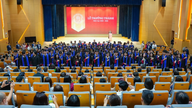

We need to create more opportunities for students to gain experience and develop their skills.
According to Ms. Huynh Thi Hong Hoa, a teacher at Kien Luong High School (Kien Giang province), in the career orientation survey at the beginning of 10th grade, most students had already identified their future exam subjects and professions. However, Ms. Hoa believes that the challenge in career guidance lies in the fact that students are not yet open to discussing their career goals with teachers, and also lack sharing with their families.
Another challenge in career guidance is the need for consultations with career counselors. According to Ms. Le Thi Thuy, a teacher at Kien Luong High School, students need to have talks with career guidance experts for more accurate guidance. However, the conditions for inviting experts to provide counseling at schools are still limited.
“The school is located in a district far from the centers of major cities. Students lack, or even do not have, the opportunity to experience diverse career activities in practice,” said Ms. Nguyen Thi Thu Ha, Principal of Kien Luong High School. Ms. Ha stated that in light of this situation, the school has organized visits to universities and colleges; held admissions counseling sessions with educational institutions; and invited alumni to share their experiences…
Regarding career guidance, Mr. Huynh Thanh Hoang, Deputy Principal of Ba Hon Secondary and High School (Kien Giang), believes that unstable psychology and easily changing interests and viewpoints are factors affecting students' career choices. He also suggested that schools should increase their attention to psychological issues so that students can choose careers more easily.
Tuan Ho
UNIVERSITIES SHOULD ANNOUNCE THEIR ADMISSION PLANS SOON.
In light of this situation, Mr. Nguyen Xuan Nang suggested that universities should soon announce their 2025 admission plans and those that align with the subject combinations they have developed and implemented since the 2021-2022 academic year. Similarly, Mr. Dam Tien Nam, Principal of Nguyen Binh Khiem High School (Hanoi), stated that universities urgently need to announce their admission plans earlier.
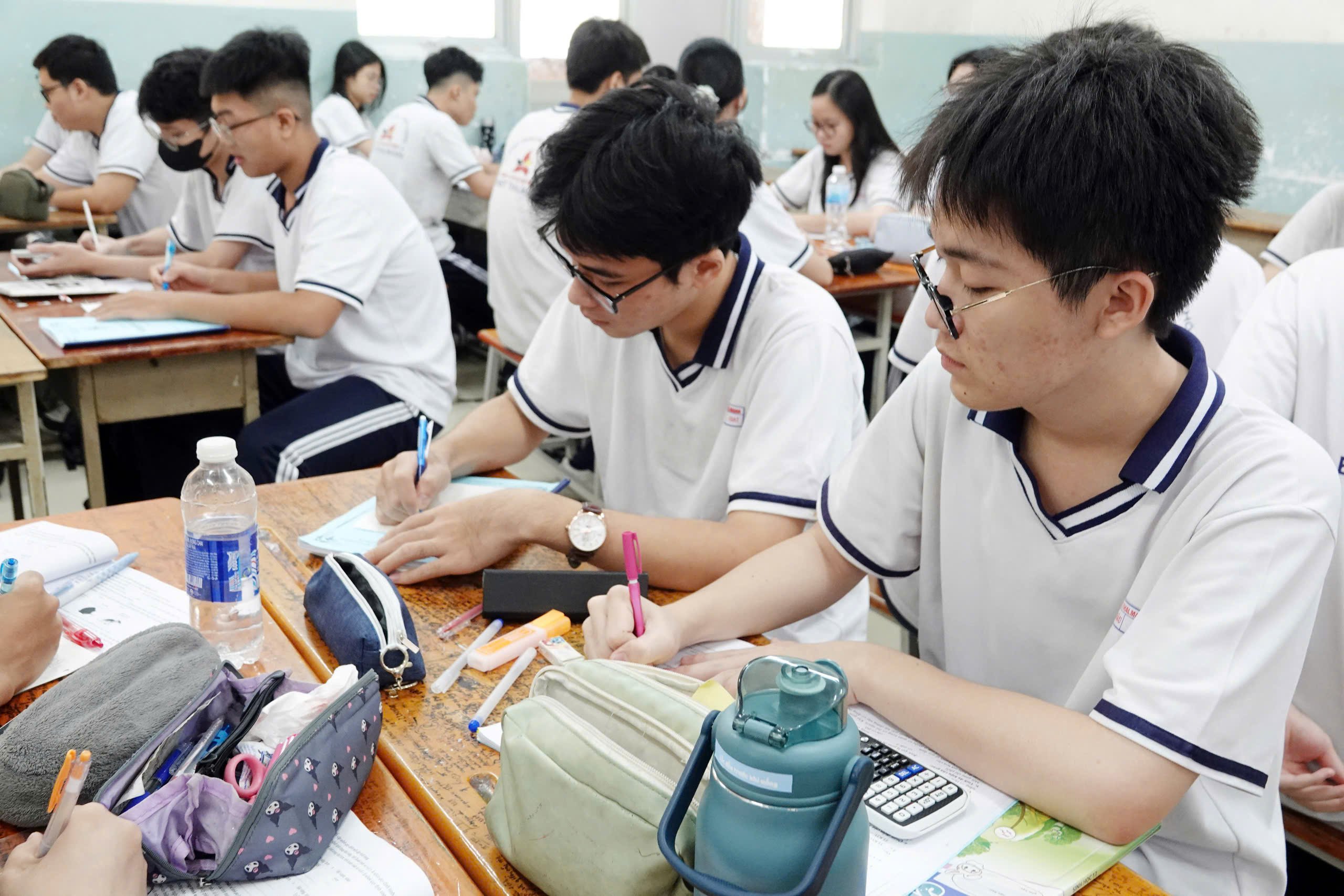
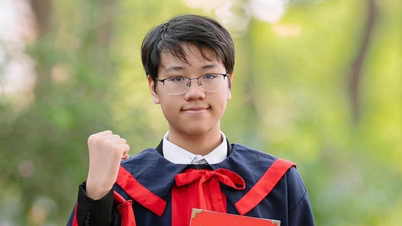
12th-grade students are preparing for their first high school graduation exam under the new general education program.
Photo: Jadeite
Ms. Nguyen Thi Nhiep, Principal of Chu Van An High School (Hanoi), shared that the imbalance between the choice of natural science and social science subjects is a worrying issue and forces schools to have better career guidance and counseling plans for students before they choose subjects. Chu Van An High School has 6 elective subject groups for 10th graders, all of whom must study physics and chemistry.
Similarly, Marie Curie School (Hanoi) offers quite a wide range of subject combinations for students to choose from. However, there are some subjects that students need to study regardless of which combination they choose. Specifically, computer science is included in all subject combinations. Or, for example, history appears in 4 out of 6 subject combinations, including those leaning towards natural sciences, and many combinations leaning towards social sciences also include physics…



Proposal to allow students to take additional elective subjects in exams.
The Association of Universities and Colleges of Vietnam signed a petition addressed to the Minister of Education and Training, Nguyen Kim Son, regarding the implementation of the 2018 General Education Program, the organization of the high school graduation exam, and university admissions starting in 2025.
Specifically, regarding the high school graduation exam, the association recommends reviewing the time allotted for elective subjects and implementing solutions to limit the possibility of "guessing" in true/false questions (which account for up to 40% of the total score for each subject) to fully assess students' abilities, ensuring the validity and discriminatory power of the exam so that universities can easily use high school graduation exam results for admissions.
Notably, the association suggested that the Ministry of Education and Training should allow candidates to choose additional elective subjects (even if they do not study the elective subjects in the school's prescribed curriculum) to ensure that learners develop their self-learning abilities to the fullest and have more opportunities to be admitted to universities while ensuring the quality of incoming students.
Regarding university admissions, the association recommends that the Ministry of Education and Training eliminate admission methods that do not guarantee the quality of incoming students. At the same time, universities should be required to explain their selection of subject combinations and aptitude tests in their separate entrance exams to ensure that the basic competency standards for successful university studies are met. In particular, there is a need to standardize reasonable subject combinations for admission consideration, resolutely eliminating any "unusual" combinations.
Source: https://thanhnien.vn/hoc-sinh-van-chon-mon-hoc-mon-thi-trong-mo-ho-185241205233631941.htm