

High productivity
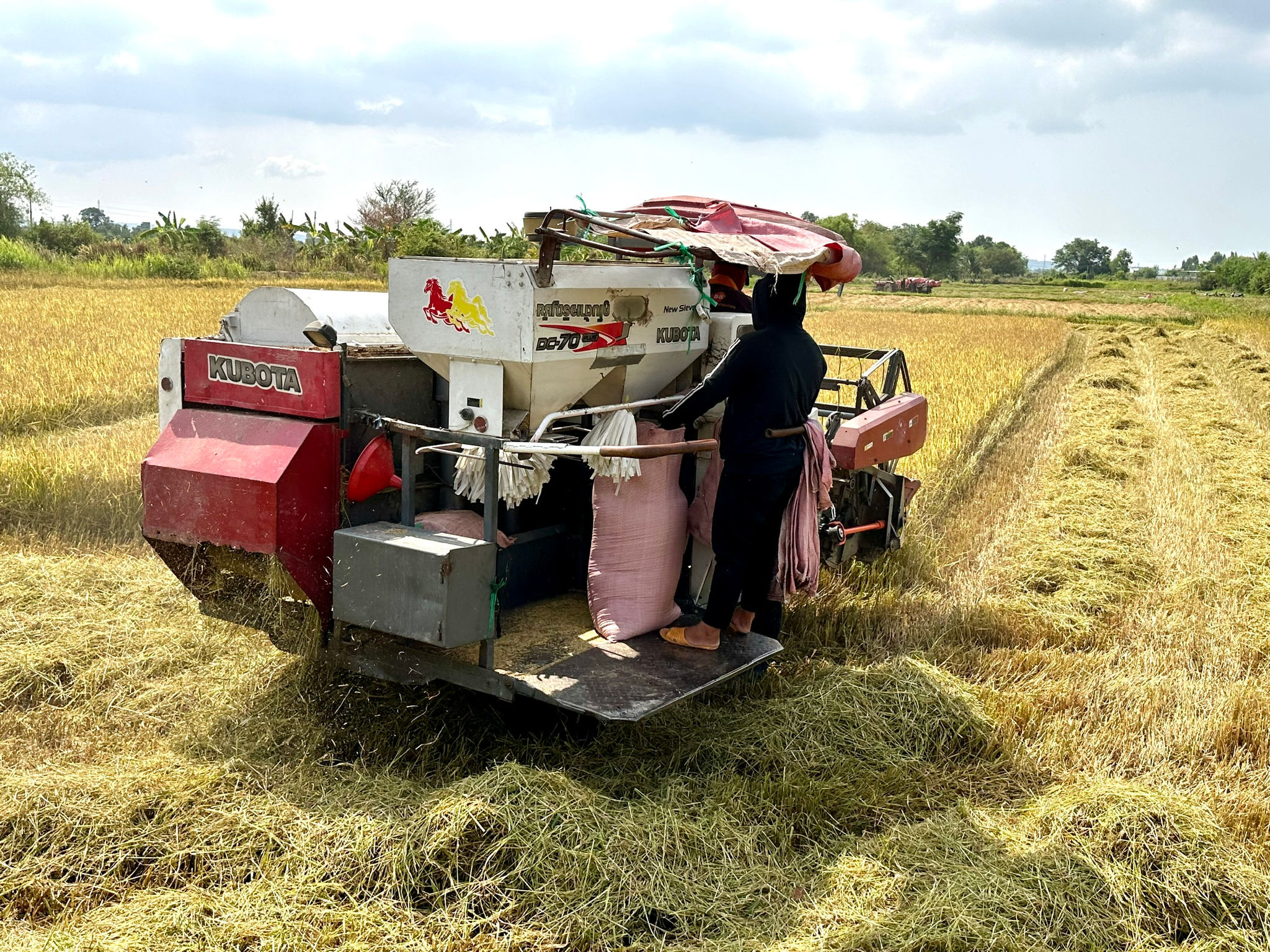
The winter-spring season is the main crop of the year, with favorable water resources and fewer pests and diseases. This is also a factor contributing to high-yield rice crops in growing areas such as the communes of Tánh Linh, Bắc Ruộng, Đồng Kho, etc. According to the general observations of many households that have just finished harvesting, this year's winter-spring rice crop has high yields, averaging 8 tons/ha, with some households achieving 10 tons/ha.
In recent days, despite the April 30th and May 1st holidays, the atmosphere in many rice fields throughout the province has remained bustling with activity. The sounds of harvesting and plowing machines fill the fields. Located in the province's key rice-growing area, Mr. Le Minh Ky's household in Dong Kho 1 village, Dong Kho commune, planted nearly 2 hectares of ST25 rice this winter-spring season, achieving a yield of 8 quintals per sao (approximately 800 kg per 1000 square meters). Mr. Ky said that thanks to simultaneous production and favorable irrigation, the rice yield was high and there were few pests and diseases. Meanwhile, Ms. Nguyen Thi Tam's household in village 2, Bac Ruong commune, just finished harvesting 9 hectares of OM 18 rice, achieving a yield of 1 ton per sao. Both households reported that this year's winter-spring rice yield was higher than in previous years. However, the paradox of "bumper harvest, low prices" still persists. At the beginning of the harvest season, selling prices were lower than the same period last year (only 5,400 - 5,700 VND/kg fresh rice at the field, while at the same time last year the price was over 6,000 VND/kg), resulting in low profits or even breaking even for farmers. Now, at the end of the season, the price of rice has risen to 6,200 VND/kg, so farmers are hoping for a more favorable market in the near future.
According to Mr. Tran Duc Thien, Deputy Head of the Provincial Department of Crop Production and Plant Protection, the total rice planting area in the province for the 2025-2026 winter-spring crop will reach 55,320 hectares, mainly concentrated in the southeastern region of the province. Currently, farmers in these localities are focusing on harvesting, with an estimated yield of 66.5 quintals/hectare, and an estimated production of approximately 367,880 tons, an increase of about 2,000 tons compared to the same period last year.
Field sanitation after harvest
Currently, for agricultural production in general and rice farming in particular, high production costs result in low profits, or even losses. For example, as shared by Mr. Nguyen Van Danh, from Hamlet 6, Thuan Thanh Village, Ham Liem Commune, due to the impact of the gasoline and oil market recently, the rental price for combine harvesters has increased from 250,000 VND/sao to 300,000 VND/sao, and for plows from 150,000 VND/sao to 170,000 VND/sao. Along with the increase in fertilizer costs, farmers are very worried. Mr. Danh's family, with 5 sao of rice currently being harvested, suffered a complete loss due to using seeds of unknown origin and pest infestations. He is currently having to rent a combine harvester to harvest and gather the straw to prepare the land for the next crop.
The provincial agricultural sector advises farmers to focus on harvesting the winter-spring rice crop and cleaning the fields after harvest. At the same time, they should prepare the land for early summer-autumn planting. In hot weather conditions, attention should be paid to pests and diseases such as brown planthoppers, thrips, stem borers, leaf rollers, and rats, which are likely to continue developing and spreading. Alongside completing the winter-spring harvest, farmers throughout the province are now beginning the summer-autumn planting season, which is the peak of the dry season. Therefore, the provincial agricultural sector urges localities to proactively review the planted area based on the actual water balance in reservoirs and streams. Specifically identify areas with stable rice production and areas at risk of drought to guide farmers in land preparation and concentrated, decisive planting. In fields with insufficient irrigation, farmers should be encouraged to switch to planting short-term, drought-resistant crops such as vegetables, flowers, or root crops. Arrange a specific planting schedule suitable for each region, ensuring that the summer-autumn crop is planted before June 30th.
Source: https://baolamdong.vn/hoi-ha-thu-hoach-lua-dong-xuan-cuoi-vu-439838.html




































































Comment (0)